
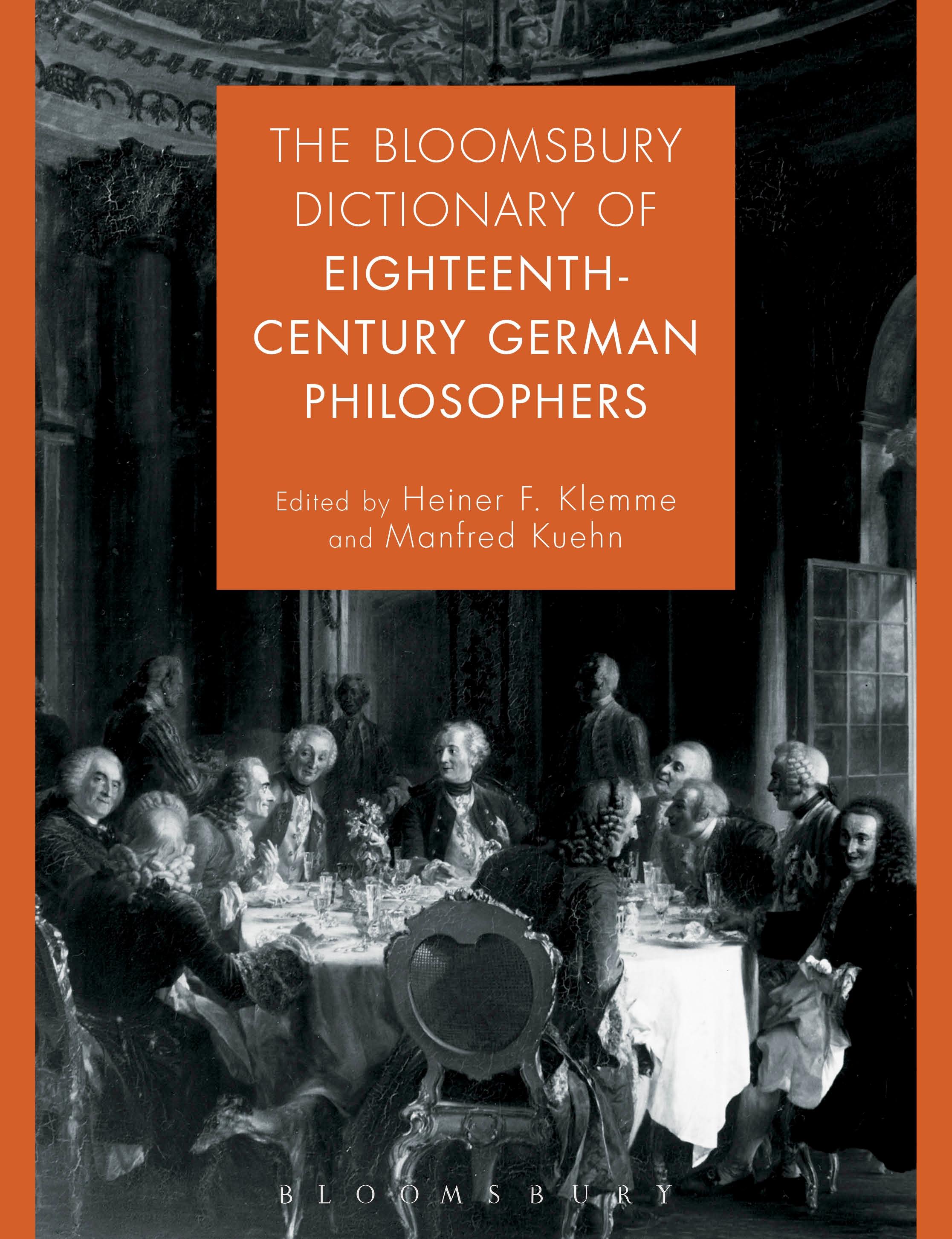
The Bloomsbury Dictionary of Eighteenth-Century German Philosophers is a landmark work. Covering one of the most innovative centuries for philosophical investigation, it features more than 650 entries on the eighteenth-century philosophers, theologians, jurists, physicians, scholars, writers, literary critics and historians whose work has had lasting philosophical significance.
Alongside well-known German philosophers of that era-Gottfried Wilhelm Leibniz, Immanuel Kant, and Georg Wilhelm Friedrich Hegel-the Dictionary provides rare insights into the lives and minds of lesser-known individuals who influenced the shape of philosophy.
Each entry discusses a particular philosopher's life, contributions to the world of thought, and later influences, focusing not only on their most important published writings, but on relevant minor works as well. Bibliographical references to primary and secondary source material are included at the end of entries to encourage further reading, while extensive cross-referencing allows comparisons to be easily made between different thinkers' ideas and practices. For anyone looking to understand more about the century when enlightenment thinking arrived in Germany and established conceits were challenged, The Bloomsbury Dictionary of Eighteenth-Century German Philosophers is a valuable, unparalleled resource.
Alongside well-known German philosophers of that era-Gottfried Wilhelm Leibniz, Immanuel Kant, and Georg Wilhelm Friedrich Hegel-the Dictionary provides rare insights into the lives and minds of lesser-known individuals who influenced the shape of philosophy.
Each entry discusses a particular philosopher's life, contributions to the world of thought, and later influences, focusing not only on their most important published writings, but on relevant minor works as well. Bibliographical references to primary and secondary source material are included at the end of entries to encourage further reading, while extensive cross-referencing allows comparisons to be easily made between different thinkers' ideas and practices. For anyone looking to understand more about the century when enlightenment thinking arrived in Germany and established conceits were challenged, The Bloomsbury Dictionary of Eighteenth-Century German Philosophers is a valuable, unparalleled resource.
Płać wygodnie kartą, Klarną, Apple Pay lub Google Pay. Nie jesteś zadowolony? Zawsze masz 14-dniową gwarancję zwrotu pieniędzy. Więcej przeczytasz w naszych warunkach. Masz pytania? Napisz do nas na hello@memmo.org.
Memmo ułatwia naukę – gdziekolwiek jesteś na świecie. U nas znajdziesz podręczniki i sprytne narzędzia do nauki w jednym miejscu: streszczenia, quizy, podcasty i fiszki. A do tego Ted, Twój kumpel do nauki, który odpowie na wszystko, co Cię nurtuje. Ponad 50 000 studentów już tu się uczy – stworzone, byś uczył się szybciej i mniej stresował.