
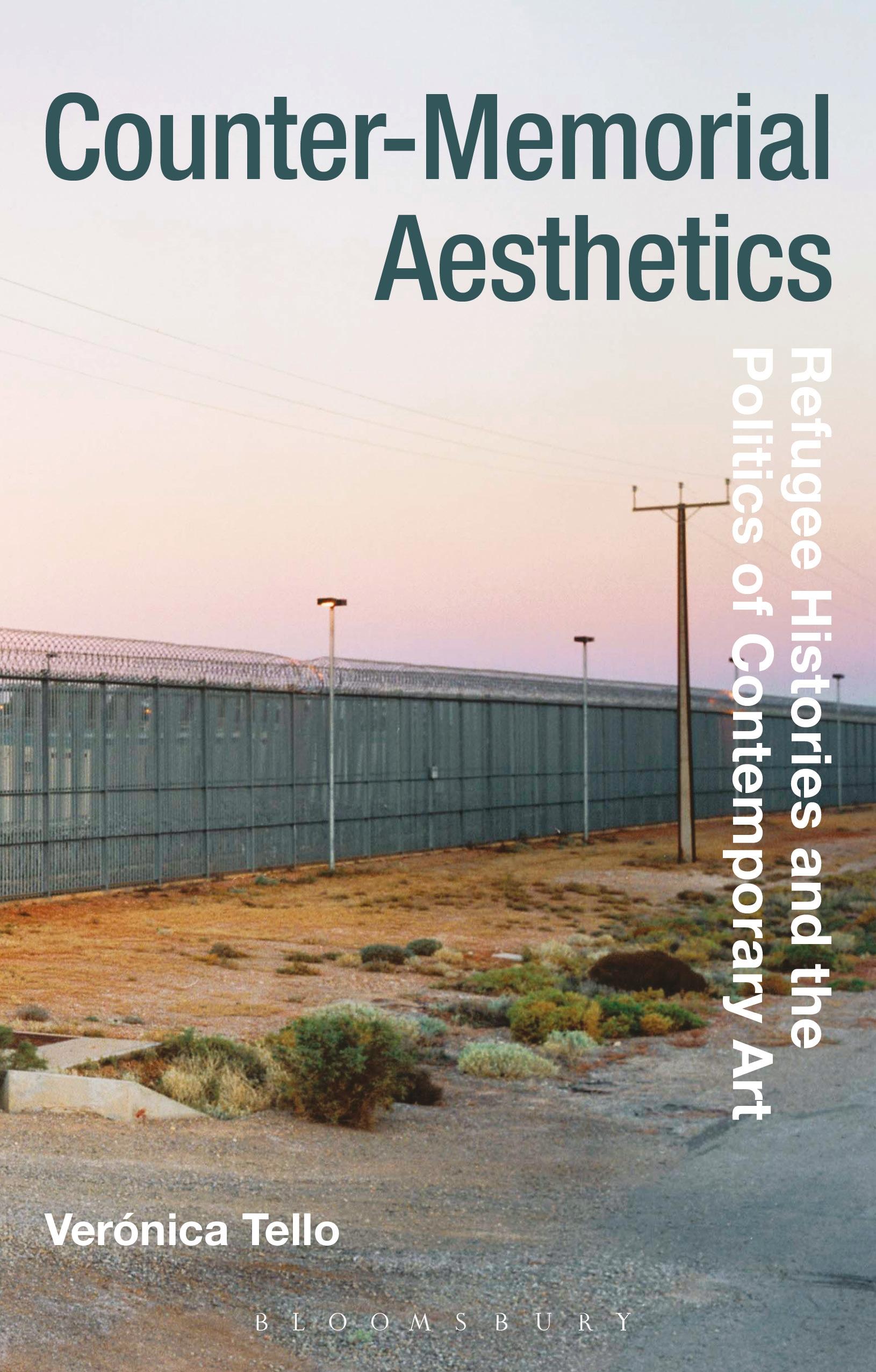
Restrictive border protection policies directed toward managing the flow of refugees coming into neoliberal democracies (and out of failing nation-states) are a defining feature of contemporary politics. In this book, Verónica Tello analyses how contemporary artists-such as Tania Bruguera, Isaac Julien, Rosemary Laing, Dinh Q. Lé, Dierk Schmidt, Hito Steyerl, Lyndell Brown and Charles Green-negotiate their diverse subject positions while addressing and taking part in the production of images associated with refugee experiences and histories. Tello argues that their practices, which manifest across a range of contexts including Cuba, the United States, Australia and Europe, represent an emergent, global paradigm of contemporary art, 'counter-memorial aesthetics'.
Counter-Memorial Aesthetics, Tello argues, is characterized by its conjunction of heterogeneous signifiers and voices of many times and places, generating an experimental, non-teleological approach to the construction of contemporary history, which also takes into account the complex, disorienting spatial affects of globalization. Spanning performance art, experimental 'history painting', aftermath photography and video installation, counter-memorial aesthetics bring to the fore, Tello argues, how contemporary refugee flows and related traumatic events critically challenge and conflict with many existing, tired if not also stubborn notions of national identity, borders, history and memory.
Building on the writings of such thinkers as Michel Foucault and Jacques Rancière, this book offers a useful concept of 'counter-memory' for the twenty-first century. It shows how counter-memorial aesthetics is not only central to the nexus of contemporary art and refugee histories but also how it can offer a way of being critically present with many other, often interrelated, global crises in the contemporary era.
Counter-Memorial Aesthetics, Tello argues, is characterized by its conjunction of heterogeneous signifiers and voices of many times and places, generating an experimental, non-teleological approach to the construction of contemporary history, which also takes into account the complex, disorienting spatial affects of globalization. Spanning performance art, experimental 'history painting', aftermath photography and video installation, counter-memorial aesthetics bring to the fore, Tello argues, how contemporary refugee flows and related traumatic events critically challenge and conflict with many existing, tired if not also stubborn notions of national identity, borders, history and memory.
Building on the writings of such thinkers as Michel Foucault and Jacques Rancière, this book offers a useful concept of 'counter-memory' for the twenty-first century. It shows how counter-memorial aesthetics is not only central to the nexus of contemporary art and refugee histories but also how it can offer a way of being critically present with many other, often interrelated, global crises in the contemporary era.
Strony: 272
Kategoria: Kultur-, Genus- & Postkoloniala studier
e-ISBN: 9781474252768
Waga przesyłki: 1.2 kg
Wysyłka w ciągu: 1-2 dni
Płać wygodnie kartą, Klarną, Apple Pay lub Google Pay. Nie jesteś zadowolony? Zawsze masz 14-dniową gwarancję zwrotu pieniędzy. Więcej przeczytasz w naszych warunkach. Masz pytania? Napisz do nas na hello@memmo.org.
Memmo ułatwia naukę – gdziekolwiek jesteś na świecie. U nas znajdziesz podręczniki i sprytne narzędzia do nauki w jednym miejscu: streszczenia, quizy, podcasty i fiszki. A do tego Ted, Twój kumpel do nauki, który odpowie na wszystko, co Cię nurtuje. Ponad 50 000 studentów już tu się uczy – stworzone, byś uczył się szybciej i mniej stresował.