
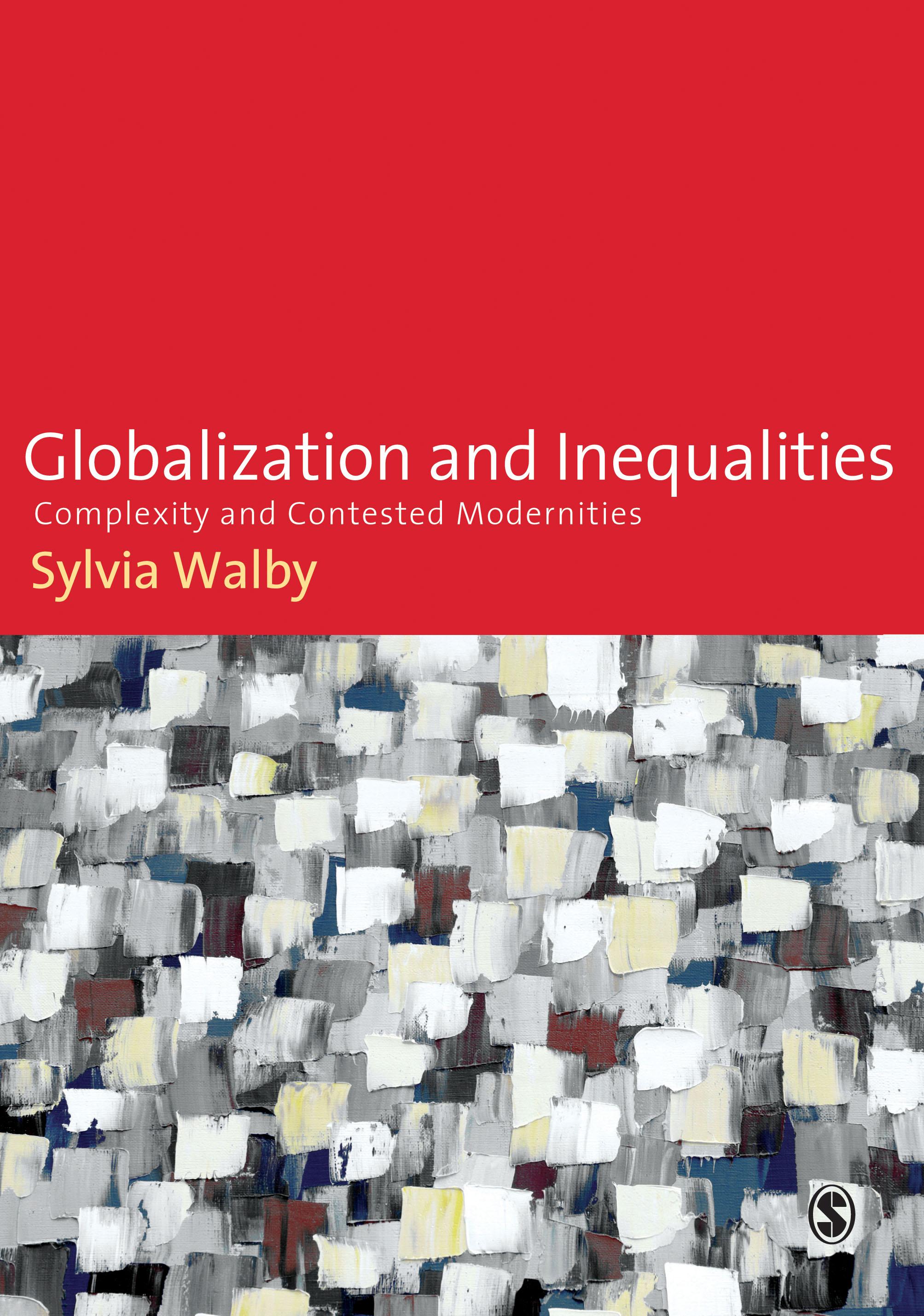
How has globalization changed social inequality? Why do Americans die younger than Europeans, despite larger incomes? Is there an alternative to neoliberalism? Who are the champions of social democracy? Why are some countries more violent than others?
In this groundbreaking book, Sylvia Walby examines the many changing forms of social inequality and their intersectionalities at both country and global levels. She shows how the contest between different modernities and conceptions of progress shape the present and future.
The book re-thinks the nature of economy, polity, civil society and violence. It places globalization and inequalities at the centre of an innovative new understanding of modernity and progress and demonstrates the power of these theoretical reformulations in practice, drawing on global data and in-depth analysis of the US and EU.
Walby analyses the tensions between the different forces that are shaping global futures. She examines the regulation and deregulation of employment and welfare; domestic and public gender regimes; secular and religious polities; path dependent trajectories and global political waves; and global inequalities and human rights.
In this groundbreaking book, Sylvia Walby examines the many changing forms of social inequality and their intersectionalities at both country and global levels. She shows how the contest between different modernities and conceptions of progress shape the present and future.
The book re-thinks the nature of economy, polity, civil society and violence. It places globalization and inequalities at the centre of an innovative new understanding of modernity and progress and demonstrates the power of these theoretical reformulations in practice, drawing on global data and in-depth analysis of the US and EU.
Walby analyses the tensions between the different forces that are shaping global futures. She examines the regulation and deregulation of employment and welfare; domestic and public gender regimes; secular and religious polities; path dependent trajectories and global political waves; and global inequalities and human rights.
Płać wygodnie kartą, Klarną, Apple Pay lub Google Pay. Nie jesteś zadowolony? Zawsze masz 14-dniową gwarancję zwrotu pieniędzy. Więcej przeczytasz w naszych warunkach. Masz pytania? Napisz do nas na hello@memmo.org.
Memmo ułatwia naukę – gdziekolwiek jesteś na świecie. U nas znajdziesz podręczniki i sprytne narzędzia do nauki w jednym miejscu: streszczenia, quizy, podcasty i fiszki. A do tego Ted, Twój kumpel do nauki, który odpowie na wszystko, co Cię nurtuje. Ponad 50 000 studentów już tu się uczy – stworzone, byś uczył się szybciej i mniej stresował.