
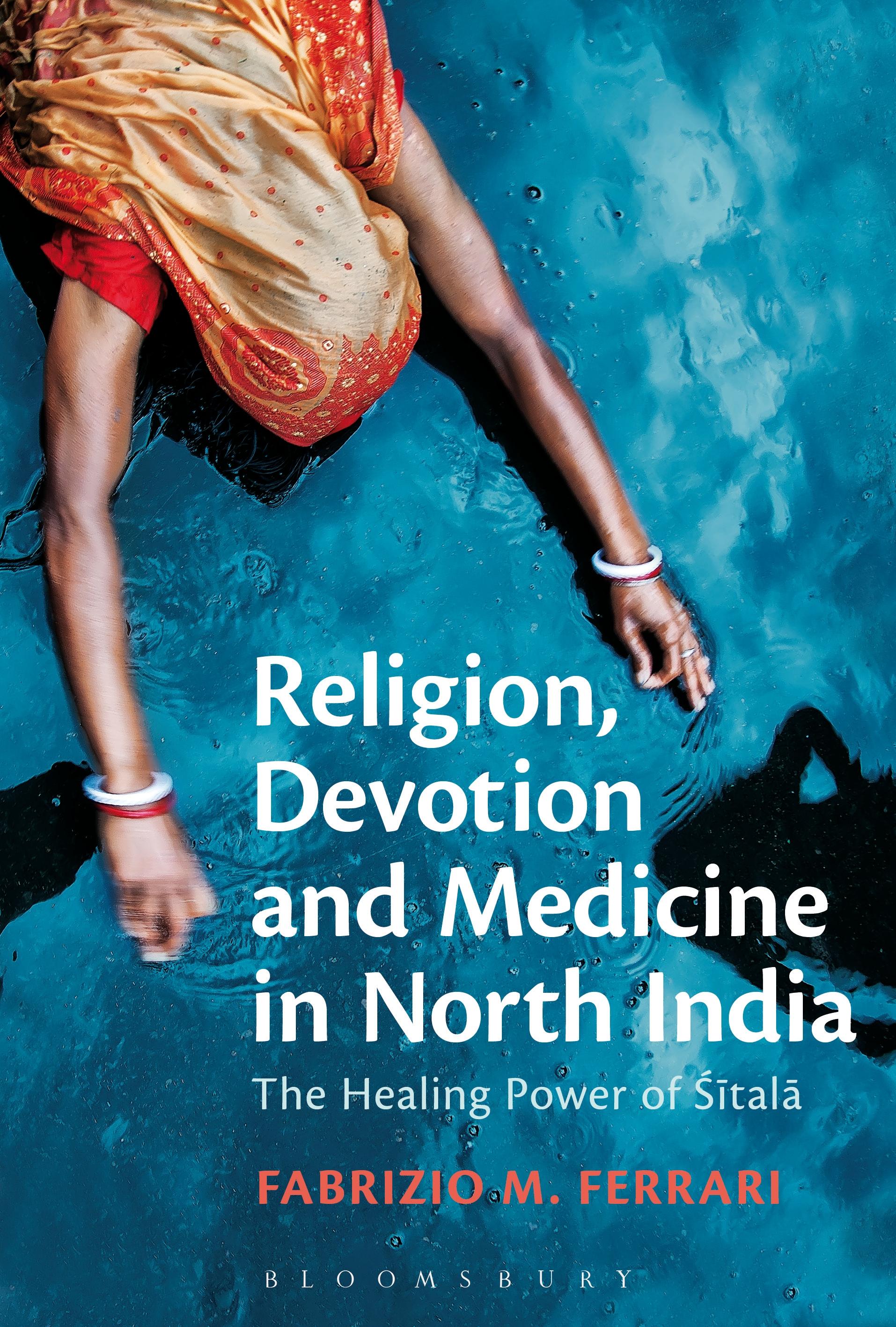
This volume examines notions of health and illness in North Indian devotional culture, with particular attention paid to the worship of the goddess Sitala, the Cold Lady. Consistently portrayed in colonial and postcolonial literature as the ambiguous 'smallpox goddess', Sitala is here discussed as a protector of children and women, a portrayal that emerges from textual sources as well as material culture.
The eradication of smallpox did not pose a threat to Sitala and her worship. She continues to be an extremely popular goddess. Religion, Devotion and Medicine in North India critically examines the rise and affirmation of the 'smallpox myth' in India and beyond, and explains how Indian narratives, ritual texts and devotional songs have celebrated Sitala as a loving mother who protects her children from the effects, and the fear, of poxes, fevers and infantile disorders but also all sorts of new threats (such as global pandemics, addictions and environmental catastrophes). The book explores a wide range of ritual and devotional practices, including scheduled festivals, songs, vows, pageants, austerities, possession, animal sacrifices and various forms of offering.
Built on extensive fieldwork and a close textual analysis of sources in Sanskrit and vernacular languages (Hindi, Bhojpuri and Bengali) as well as on a rich bibliography on the struggle against smallpox in colonial and post-colonial India, the book reflects on the ambiguous nature of Sitala as a phenomenon largely dependent on the enduring fascination with the exotic, and the horrific, that has pervaded public renditions of Indian culture in indigenous fiction, colonial reports, medical literature and now global culture.
To aid study, the volume includes images, web links, appendixes and a filmography.
The eradication of smallpox did not pose a threat to Sitala and her worship. She continues to be an extremely popular goddess. Religion, Devotion and Medicine in North India critically examines the rise and affirmation of the 'smallpox myth' in India and beyond, and explains how Indian narratives, ritual texts and devotional songs have celebrated Sitala as a loving mother who protects her children from the effects, and the fear, of poxes, fevers and infantile disorders but also all sorts of new threats (such as global pandemics, addictions and environmental catastrophes). The book explores a wide range of ritual and devotional practices, including scheduled festivals, songs, vows, pageants, austerities, possession, animal sacrifices and various forms of offering.
Built on extensive fieldwork and a close textual analysis of sources in Sanskrit and vernacular languages (Hindi, Bhojpuri and Bengali) as well as on a rich bibliography on the struggle against smallpox in colonial and post-colonial India, the book reflects on the ambiguous nature of Sitala as a phenomenon largely dependent on the enduring fascination with the exotic, and the horrific, that has pervaded public renditions of Indian culture in indigenous fiction, colonial reports, medical literature and now global culture.
To aid study, the volume includes images, web links, appendixes and a filmography.
Strony: 256
Kategoria: Religion & Teologi
e-ISBN: 9781472598721
Waga przesyłki: 1.2 kg
Wysyłka w ciągu: 1-2 dni
Płać wygodnie kartą, Klarną, Apple Pay lub Google Pay. Nie jesteś zadowolony? Zawsze masz 14-dniową gwarancję zwrotu pieniędzy. Więcej przeczytasz w naszych warunkach. Masz pytania? Napisz do nas na hello@memmo.org.
Memmo ułatwia naukę – gdziekolwiek jesteś na świecie. U nas znajdziesz podręczniki i sprytne narzędzia do nauki w jednym miejscu: streszczenia, quizy, podcasty i fiszki. A do tego Ted, Twój kumpel do nauki, który odpowie na wszystko, co Cię nurtuje. Ponad 50 000 studentów już tu się uczy – stworzone, byś uczył się szybciej i mniej stresował.