
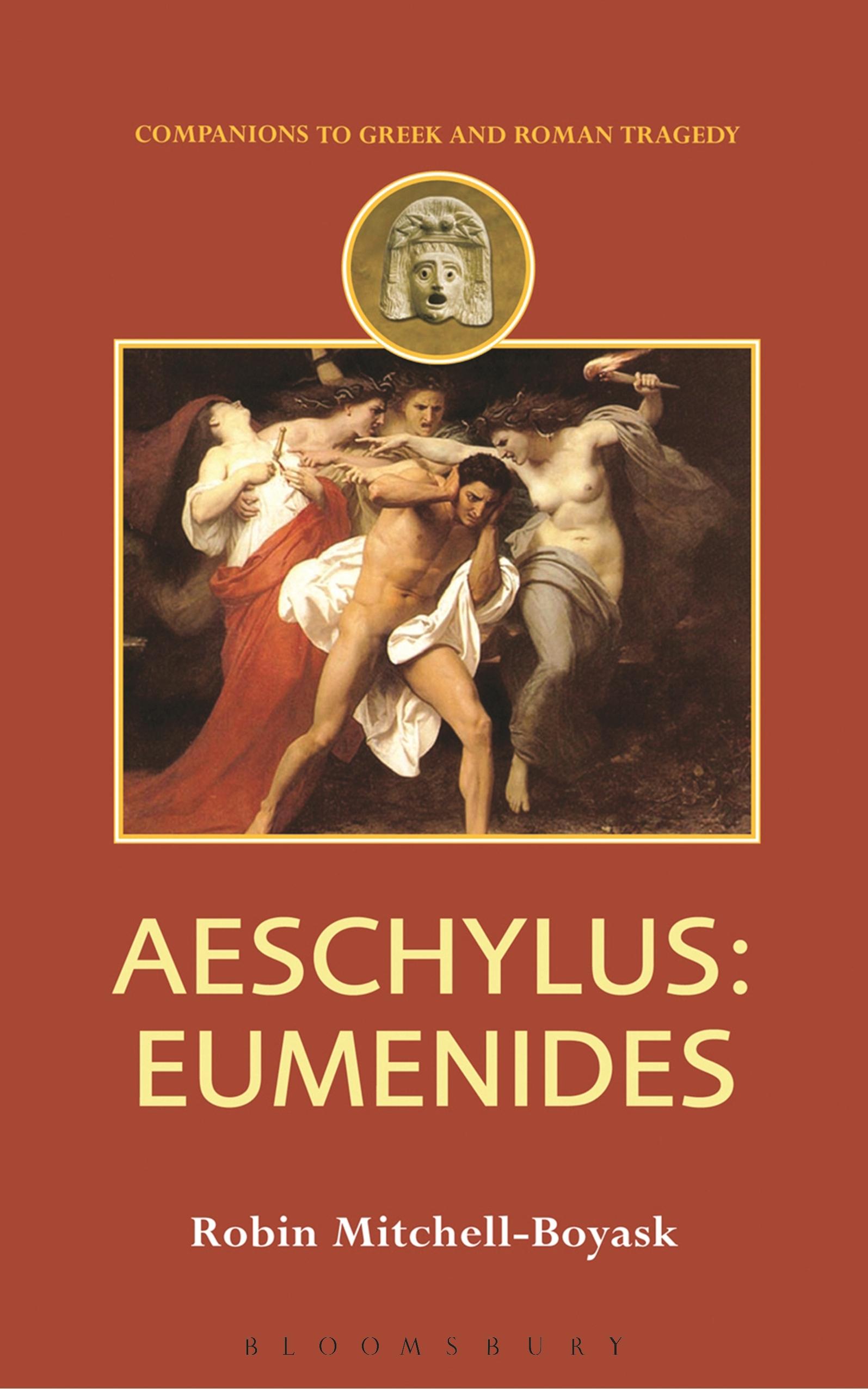
The "Eumenides", the concluding drama in Aeschylus' sole surviving trilogy, the "Oresteia", is not only one of the most admired Greek tragedies, but also one of the most controversial and contested, both to specialist scholars and public intellectuals. It stands at the crux of the controversies over the relationship between the fledgling democracy of Athens and the dramas it produced during the City Dionysia, and over the representation of women in the theatre and their implied status in Athenian society. The "Eumenides" enacts the trial of Agamemnon's son Orestes, who had been ordered under the threat of punishment by the god Apollo to murder his mother Clytemnestra, who had earlier killed Agamemnon.In the "Eumenides", Orestes, hounded by the Eumenides (Furies), travels first to Delphi to obtain ritual purgation of his mother's blood, and then, at Apollo's urging, to Athens to seek the help of Athena, who then decides herself that an impartial jury of Athenians should decide the matter. Aeschylus thus presents a drama that shows a growing awareness of the importance of free will in Athenian thought through the mythologized institution of the first jury trial.
Płać wygodnie kartą, Klarną, Apple Pay lub Google Pay. Nie jesteś zadowolony? Zawsze masz 14-dniową gwarancję zwrotu pieniędzy. Więcej przeczytasz w naszych warunkach. Masz pytania? Napisz do nas na hello@memmo.org.
Memmo ułatwia naukę – gdziekolwiek jesteś na świecie. U nas znajdziesz podręczniki i sprytne narzędzia do nauki w jednym miejscu: streszczenia, quizy, podcasty i fiszki. A do tego Ted, Twój kumpel do nauki, który odpowie na wszystko, co Cię nurtuje. Ponad 50 000 studentów już tu się uczy – stworzone, byś uczył się szybciej i mniej stresował.