
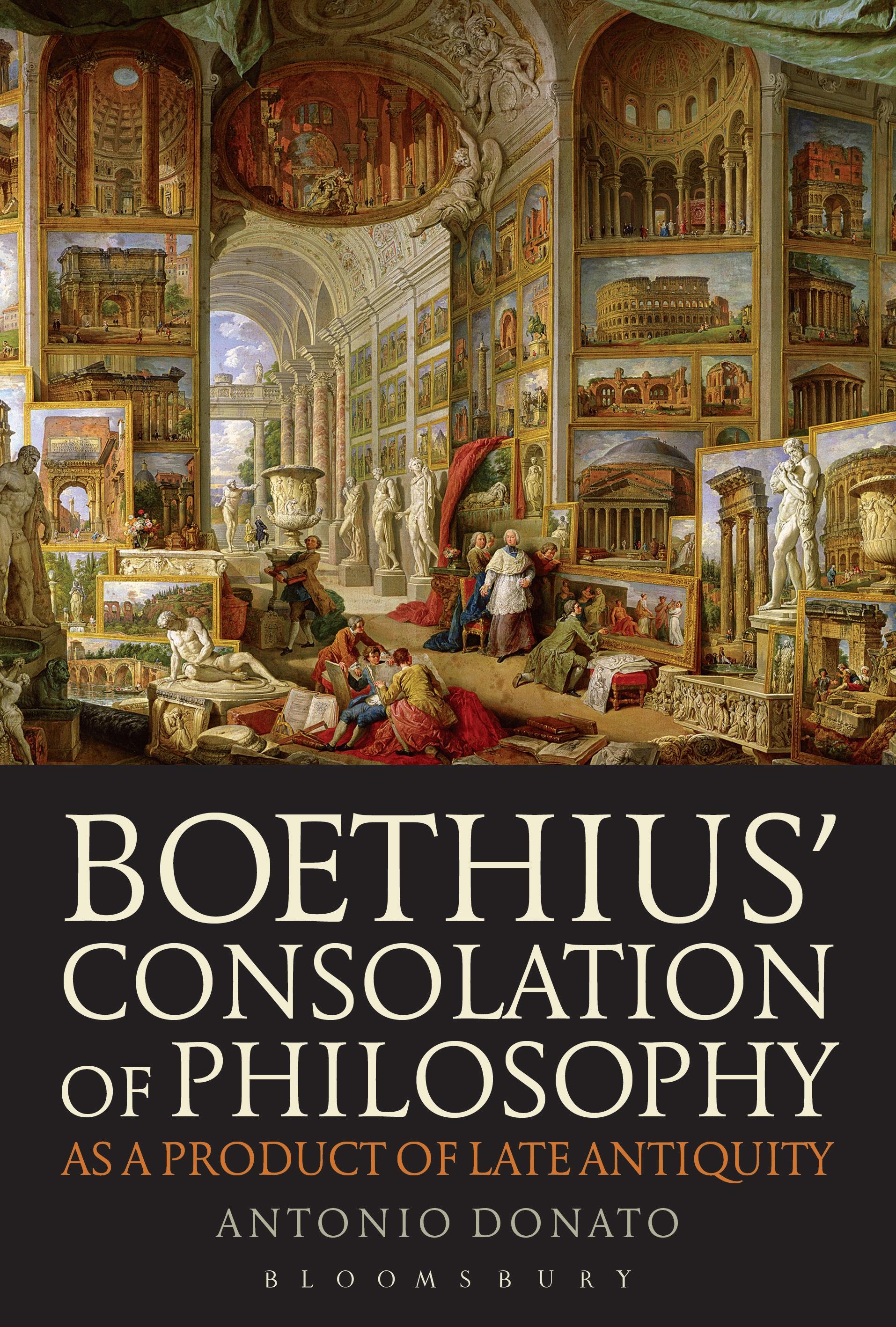
In the last fifty years the field of Late Antiquity has advanced significantly. Today we have a picture of this period that is more precise and accurate than before. However, the study of one of the most significant texts of this age, Boethius' Consolation of Philosophy, has not benefited enough from these advances in scholarship. Antonio Donato aims to fill this gap by investigating how the study of the Consolation can profit from the knowledge of Boethius' cultural, political and social background that is available today.
The book focuses on three topics: Boethius' social/political background, his notion of philosophy and its sources, and his understanding of the relation between Christianity and classical culture. These topics deal with issues that are of crucial importance for the exegesis of the Consolation. The study of Boethius' social/political background allows us to gain a better understanding of the identity of the character Boethius and to recognize his role in the Consolation. Examination of the possible sources of Boethius' notion of philosophy and of their influence on the Consolation offers valuable instruments to evaluate the role of the text's philosophical discussions and their relation to its literary features. Finally, the long-standing problem of the lack of overt Christian elements in the Consolation can be enlightened by considering how Boethius relies on a peculiar understanding of philosophy's goal and its relation to Christianity that was common among some of his predecessors and contemporaries.
The book focuses on three topics: Boethius' social/political background, his notion of philosophy and its sources, and his understanding of the relation between Christianity and classical culture. These topics deal with issues that are of crucial importance for the exegesis of the Consolation. The study of Boethius' social/political background allows us to gain a better understanding of the identity of the character Boethius and to recognize his role in the Consolation. Examination of the possible sources of Boethius' notion of philosophy and of their influence on the Consolation offers valuable instruments to evaluate the role of the text's philosophical discussions and their relation to its literary features. Finally, the long-standing problem of the lack of overt Christian elements in the Consolation can be enlightened by considering how Boethius relies on a peculiar understanding of philosophy's goal and its relation to Christianity that was common among some of his predecessors and contemporaries.
Płać wygodnie kartą, Klarną, Apple Pay lub Google Pay. Nie jesteś zadowolony? Zawsze masz 14-dniową gwarancję zwrotu pieniędzy. Więcej przeczytasz w naszych warunkach. Masz pytania? Napisz do nas na hello@memmo.org.
Memmo ułatwia naukę – gdziekolwiek jesteś na świecie. U nas znajdziesz podręczniki i sprytne narzędzia do nauki w jednym miejscu: streszczenia, quizy, podcasty i fiszki. A do tego Ted, Twój kumpel do nauki, który odpowie na wszystko, co Cię nurtuje. Ponad 50 000 studentów już tu się uczy – stworzone, byś uczył się szybciej i mniej stresował.