
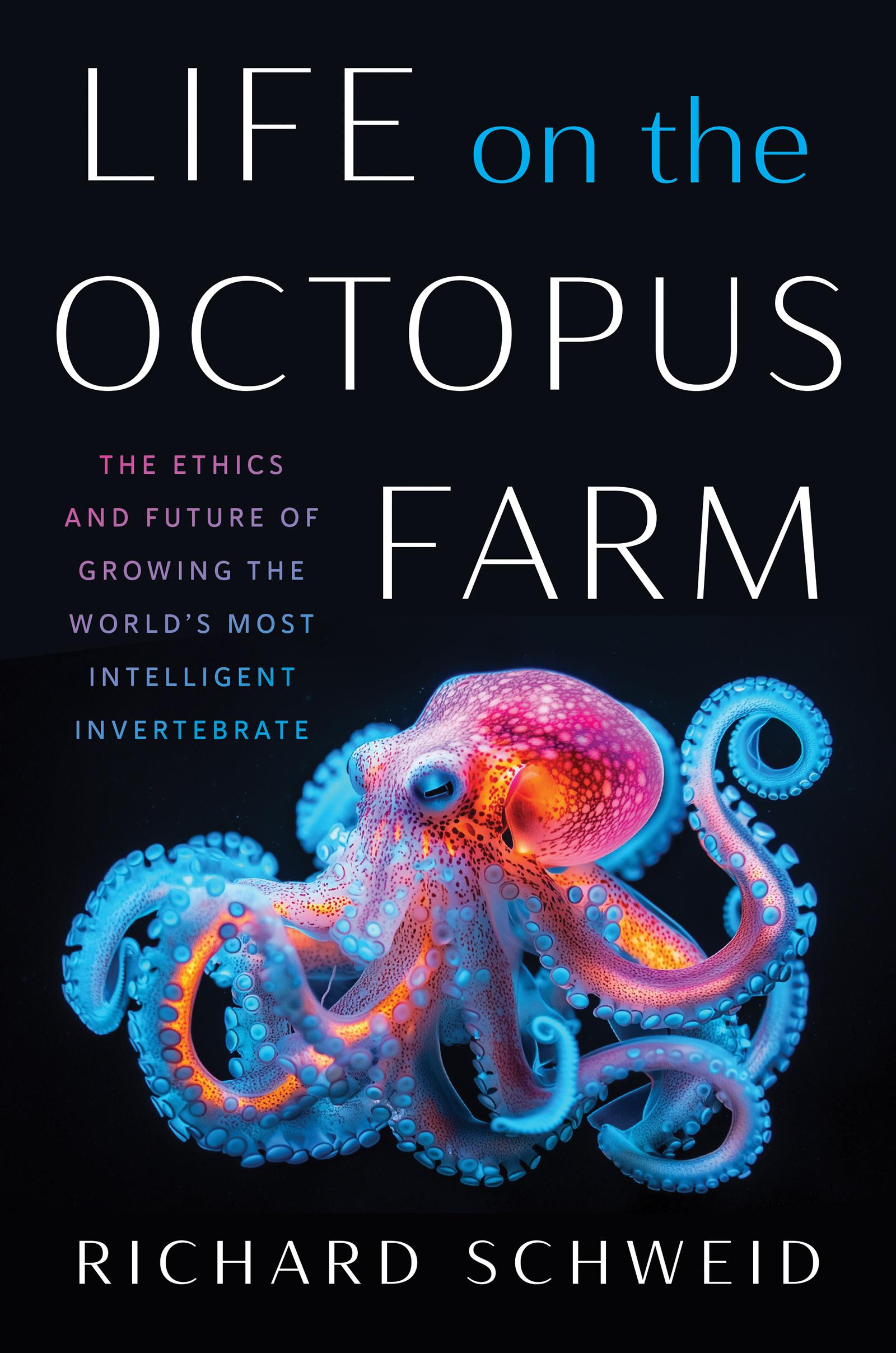
In 2021, the London School of Economics found that octopuses are sentient beings, capable of experiencing pain, distress, and happiness, and that high-welfare farming of them would therefore be impossible. But the enormous international demand for octopus meat continues to grow even as wild octopus populations decline, prompting a race to bring the first farm-raised product to market. At the same time, firestorms of protest in Europe and the United States over the ethics of farming such an intelligent creature are pressuring lawmakers to ban the practice altogether.
After working at one of the world’s first octopus farms, on the Yucatán Peninsula, award-winning journalist Richard Schweid embarked on a global adventure to explore the ethics and future of octopus aquaculture. He traveled to octopus-farming sites in Mexico, Spain, and Japan where he met people on both sides of the ethical debate: marine biologists, businesspeople, restaurateurs, animal rights advocates, octopus farmers, and everyday fishermen whose livelihoods depend on wild octopus. In this vibrant account of his experiences, Schweid also engages pressing related issues: environmental impact; the need for sustainable farming opportunities in underresourced communities; and how global desires for specific foods place pressure on local populations. Ultimately, the appetite for octopus demonstrates the conundrums of our interconnected world—across countries, through oceans, and via the food we consume.
After working at one of the world’s first octopus farms, on the Yucatán Peninsula, award-winning journalist Richard Schweid embarked on a global adventure to explore the ethics and future of octopus aquaculture. He traveled to octopus-farming sites in Mexico, Spain, and Japan where he met people on both sides of the ethical debate: marine biologists, businesspeople, restaurateurs, animal rights advocates, octopus farmers, and everyday fishermen whose livelihoods depend on wild octopus. In this vibrant account of his experiences, Schweid also engages pressing related issues: environmental impact; the need for sustainable farming opportunities in underresourced communities; and how global desires for specific foods place pressure on local populations. Ultimately, the appetite for octopus demonstrates the conundrums of our interconnected world—across countries, through oceans, and via the food we consume.
Płać wygodnie kartą, Klarną, Apple Pay lub Google Pay. Nie jesteś zadowolony? Zawsze masz 14-dniową gwarancję zwrotu pieniędzy. Więcej przeczytasz w naszych warunkach. Masz pytania? Napisz do nas na hello@memmo.org.
Memmo ułatwia naukę – gdziekolwiek jesteś na świecie. U nas znajdziesz podręczniki i sprytne narzędzia do nauki w jednym miejscu: streszczenia, quizy, podcasty i fiszki. A do tego Ted, Twój kumpel do nauki, który odpowie na wszystko, co Cię nurtuje. Ponad 50 000 studentów już tu się uczy – stworzone, byś uczył się szybciej i mniej stresował.
Może Ci się spodobać
Kup książkę0