
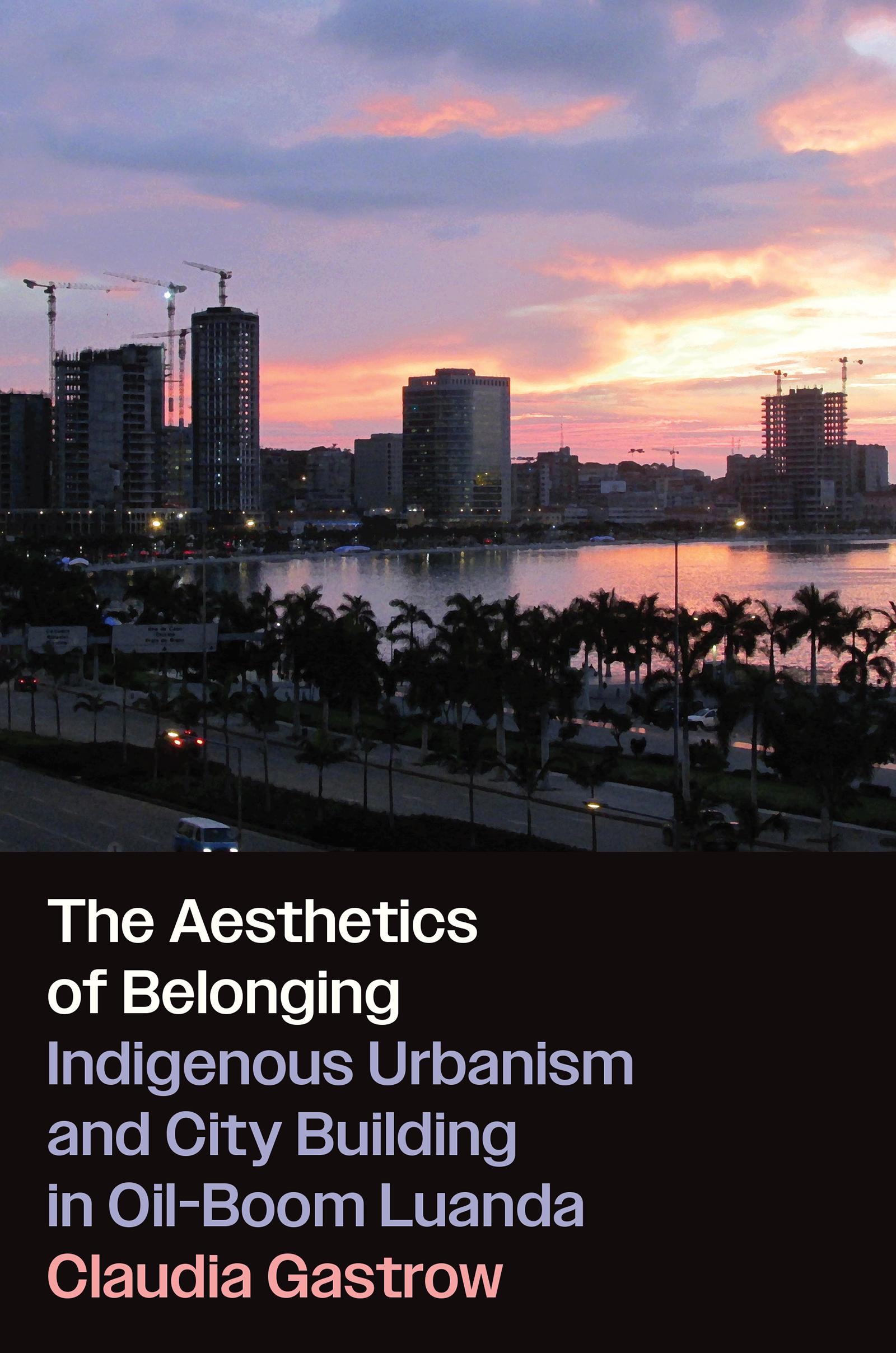
After centuries of colonial rule, the end of Angola’s three-decade civil war in 2002 provided an irresistible opportunity for the government to reimagine the Luanda cityscape. Awash with petrodollars cultivated through strategic foreign relationships, President José Eduardo dos Santos rolled out a national reconstruction program that sought to transform Angola’s capital into what he considered to be a modern, world-class metropolis. Until funds dried up in 2014, the program—in conjunction with sweeping private investments in real estate—involved mass demolitions of vernacular architecture to make way for high-rise buildings, large-scale housing projects, and commercial centers. The program thus underestimated the values enshrined in the materials and designs of Luanda’s existing “informally” constructed neighborhoods, or musseques.
The Aesthetics of Belonging explores the political significance of aesthetics in the remaking of the city. Claudia Gastrow’s archival and ethnographic work, which includes interviews with city planners, architects, nonprofit leaders, and urban dwellers, shows how government infrastructure projects and foreign-inspired designs came to embody displacement and exclusion for many. This, Gastrow argues, catalyzed a countermovement, an aesthetic dissent rooted in critically reframing informal urbanism as Indigenous—a move that enabled the possibility of recognizing the political potential of informal settlements as spaces that produce belonging.
The Aesthetics of Belonging explores the political significance of aesthetics in the remaking of the city. Claudia Gastrow’s archival and ethnographic work, which includes interviews with city planners, architects, nonprofit leaders, and urban dwellers, shows how government infrastructure projects and foreign-inspired designs came to embody displacement and exclusion for many. This, Gastrow argues, catalyzed a countermovement, an aesthetic dissent rooted in critically reframing informal urbanism as Indigenous—a move that enabled the possibility of recognizing the political potential of informal settlements as spaces that produce belonging.
Płać wygodnie kartą, Klarną, Apple Pay lub Google Pay. Nie jesteś zadowolony? Zawsze masz 14-dniową gwarancję zwrotu pieniędzy. Więcej przeczytasz w naszych warunkach. Masz pytania? Napisz do nas na hello@memmo.org.
Memmo ułatwia naukę – gdziekolwiek jesteś na świecie. U nas znajdziesz podręczniki i sprytne narzędzia do nauki w jednym miejscu: streszczenia, quizy, podcasty i fiszki. A do tego Ted, Twój kumpel do nauki, który odpowie na wszystko, co Cię nurtuje. Ponad 50 000 studentów już tu się uczy – stworzone, byś uczył się szybciej i mniej stresował.
Może Ci się spodobać
Kup książkę0