
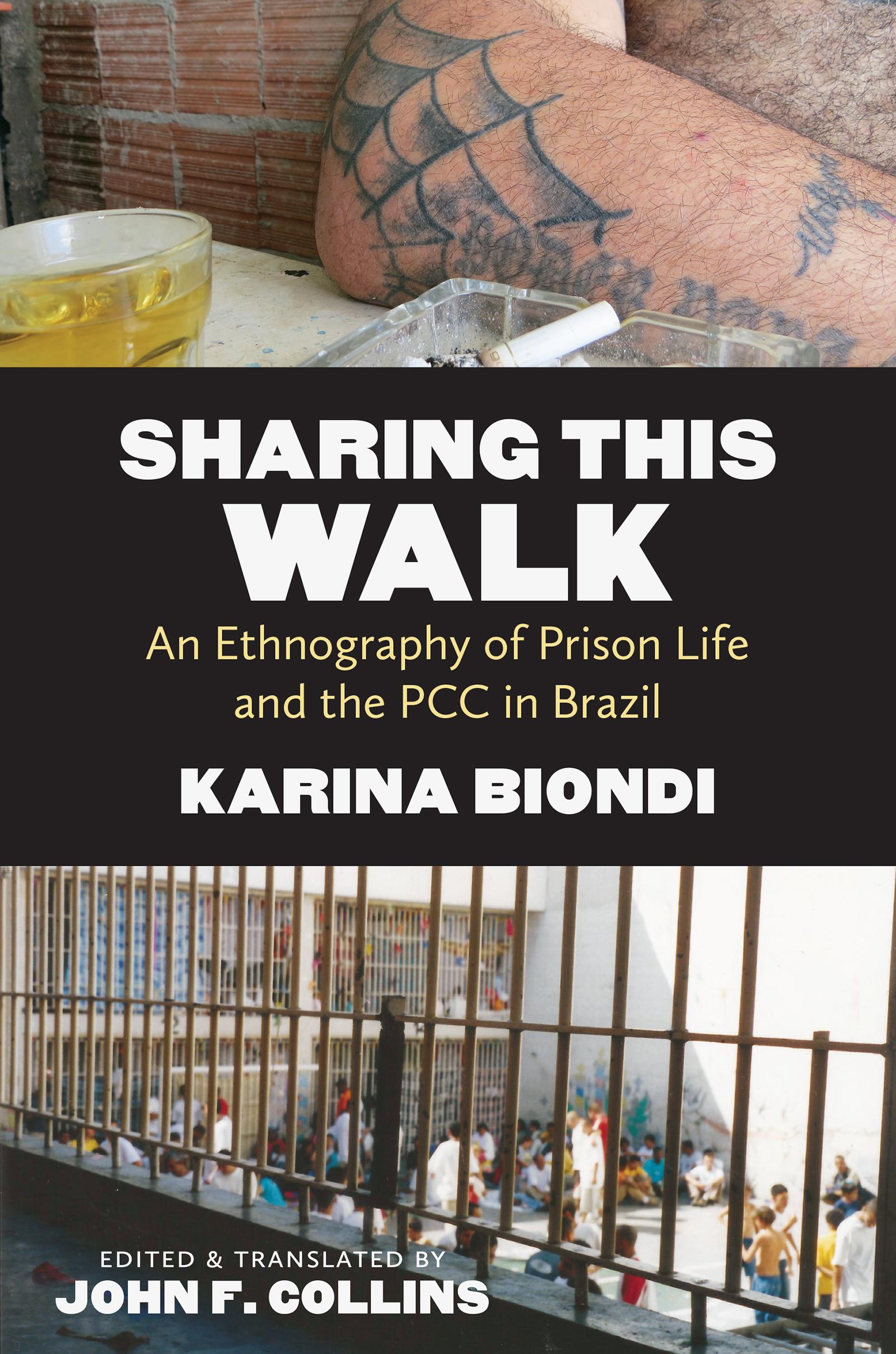
The Primeiro Comando do Capital (PCC) is a São Paulo prison gang that since the 1990s has expanded into the most powerful criminal network in Brazil. Karina Biondi’s rich ethnography of the PCC is uniquely informed by her insider-outsider status. Prior to his acquittal, Biondi’s husband was incarcerated in a PCC-dominated prison for several years. During the period of Biondi’s intense and intimate visits with her husband and her extensive fieldwork in prisons and on the streets of São Paulo, the PCC effectively controlled more than 90 percent of São Paulo’s 147 prison facilities.
Available for the first time in English, Biondi’s riveting portrait of the PCC illuminates how the organization operates inside and outside of prison, creatively elaborating on a decentered, non-hierarchical, and far-reaching command system. This system challenges both the police forces against which the PCC has declared war and the methods and analytic concepts traditionally employed by social scientists concerned with crime, incarceration, and policing. Biondi posits that the PCC embodies a “politics of transcendence,” a group identity that is braided together with, but also autonomous from, its decentralized parts. Biondi also situates the PCC in relation to redemocratization and rampant socioeconomic inequality in Brazil, as well as to counter-state movements, crime, and punishment in the Americas.
Available for the first time in English, Biondi’s riveting portrait of the PCC illuminates how the organization operates inside and outside of prison, creatively elaborating on a decentered, non-hierarchical, and far-reaching command system. This system challenges both the police forces against which the PCC has declared war and the methods and analytic concepts traditionally employed by social scientists concerned with crime, incarceration, and policing. Biondi posits that the PCC embodies a “politics of transcendence,” a group identity that is braided together with, but also autonomous from, its decentralized parts. Biondi also situates the PCC in relation to redemocratization and rampant socioeconomic inequality in Brazil, as well as to counter-state movements, crime, and punishment in the Americas.
Płać wygodnie kartą, Klarną, Apple Pay lub Google Pay. Nie jesteś zadowolony? Zawsze masz 14-dniową gwarancję zwrotu pieniędzy. Więcej przeczytasz w naszych warunkach. Masz pytania? Napisz do nas na hello@memmo.org.
Memmo ułatwia naukę – gdziekolwiek jesteś na świecie. U nas znajdziesz podręczniki i sprytne narzędzia do nauki w jednym miejscu: streszczenia, quizy, podcasty i fiszki. A do tego Ted, Twój kumpel do nauki, który odpowie na wszystko, co Cię nurtuje. Ponad 50 000 studentów już tu się uczy – stworzone, byś uczył się szybciej i mniej stresował.
Może Ci się spodobać
Kup książkę0