
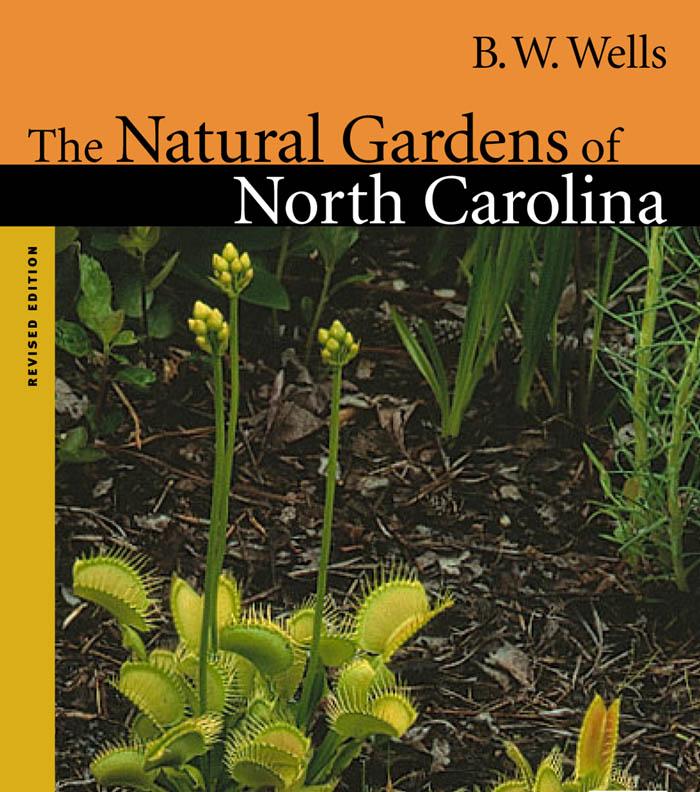
For seventy years, The Natural Gardens of North Carolina has been a must-read volume for anyone interested in wildflowers, native plants, ecology, or conservation in the state. This handsome revised edition features new line drawings and color photographs, an appendix that updates the botanical nomenclature, an introduction that focuses on B. W. Wells and his passion for the state’s landscape, and an afterword that discusses the continuing relevance of Wells’s ideas.
One of the first scientists to write and lecture about ecology, Wells introduced North Carolinians to the extraordinary tapestry of “natural gardens,” or plant communities, within the state’s borders back in 1932. His purpose was to help readers understand a plant within its community — a pioneering concept at the time — and to promote conservation. Moving from the Atlantic coast westward, Wells identifies eleven major natural gardens: the sand dune community, salt marsh, freshwater marsh, swamp forest, aquatic vegetation, evergreen shrub bog (or pocosin), grass-sedge bog (or savanna), sandhill, old-field community, upland forest, and high mountain spruce-fir forest. He devotes the first part of his book to a general account of the vegetation and habitats of each community and then identifies and describes the wildflowers found there.
One of the first scientists to write and lecture about ecology, Wells introduced North Carolinians to the extraordinary tapestry of “natural gardens,” or plant communities, within the state’s borders back in 1932. His purpose was to help readers understand a plant within its community — a pioneering concept at the time — and to promote conservation. Moving from the Atlantic coast westward, Wells identifies eleven major natural gardens: the sand dune community, salt marsh, freshwater marsh, swamp forest, aquatic vegetation, evergreen shrub bog (or pocosin), grass-sedge bog (or savanna), sandhill, old-field community, upland forest, and high mountain spruce-fir forest. He devotes the first part of his book to a general account of the vegetation and habitats of each community and then identifies and describes the wildflowers found there.
Strony: 290
Kategoria: Miljövetenskap & Klimat
e-ISBN: 9781469625928
Waga przesyłki: 1.2 kg
Wysyłka w ciągu: 1-2 dni
Płać wygodnie kartą, Klarną, Apple Pay lub Google Pay. Nie jesteś zadowolony? Zawsze masz 14-dniową gwarancję zwrotu pieniędzy. Więcej przeczytasz w naszych warunkach. Masz pytania? Napisz do nas na hello@memmo.org.
Memmo ułatwia naukę – gdziekolwiek jesteś na świecie. U nas znajdziesz podręczniki i sprytne narzędzia do nauki w jednym miejscu: streszczenia, quizy, podcasty i fiszki. A do tego Ted, Twój kumpel do nauki, który odpowie na wszystko, co Cię nurtuje. Ponad 50 000 studentów już tu się uczy – stworzone, byś uczył się szybciej i mniej stresował.
Może Ci się spodobać
Kup książkę0