
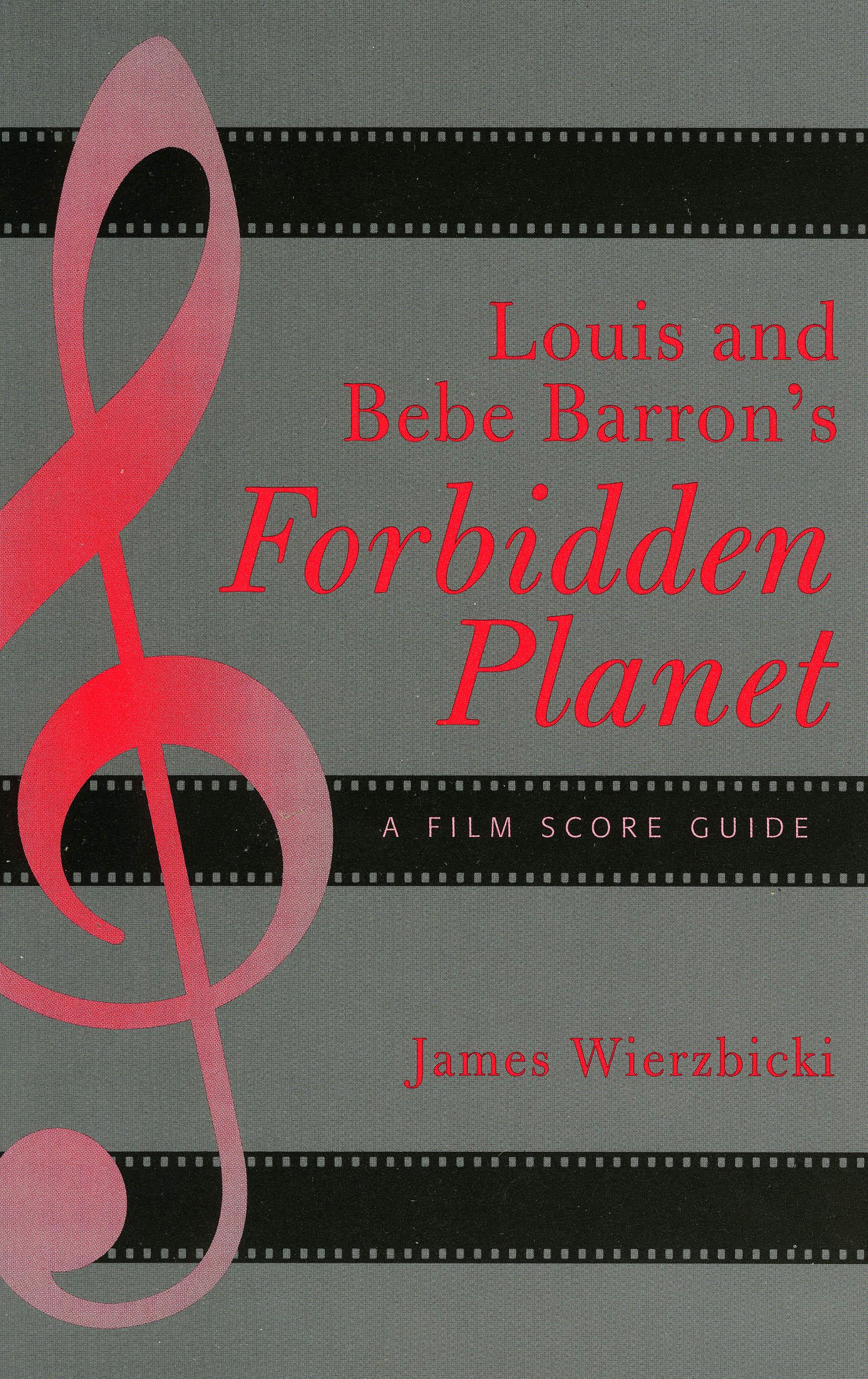
Forbidden Planet is a product of the MGM studio, which at the time of the production of this film was hardly in the business of making science-fiction films. Originally planned as a "B" picture, the 1956 Forbidden Planet was praised for its spectacular special effects and brilliant color cinematography. The plot practically tingles with sexual innuendo and the dialogue is rich in references to Freudian psychology. However, in spite of all this, the film was marketed to a juvenile audience.
Notwithstanding its uncommon look and "feel," perhaps the most unusual aspect of the film is the way it sounds. Never before had a major Hollywood effort utilized a score generated entirely by electronic means, yet seldom does one find commentary on how Louis and Bebe Barron's score again and again challenges Hollywood norms.
In addition to placing the composers and film in historical context, James Wierzbicki's study offers a deep and thorough analysis of not only the music as used in the film, but also of the decontextualized music as presented by the Barrons on the 1977 "original soundtrack album." The text is generously illustrated with transcriptions and graphs, and can serve as a model for the examination of other extended works of electronic music for which no written score has ever existed.
Notwithstanding its uncommon look and "feel," perhaps the most unusual aspect of the film is the way it sounds. Never before had a major Hollywood effort utilized a score generated entirely by electronic means, yet seldom does one find commentary on how Louis and Bebe Barron's score again and again challenges Hollywood norms.
In addition to placing the composers and film in historical context, James Wierzbicki's study offers a deep and thorough analysis of not only the music as used in the film, but also of the decontextualized music as presented by the Barrons on the 1977 "original soundtrack album." The text is generously illustrated with transcriptions and graphs, and can serve as a model for the examination of other extended works of electronic music for which no written score has ever existed.
Strony: 200
Kategoria: Musikvetenskap
e-ISBN: 9781461669432
Waga przesyłki: 1.2 kg
Wysyłka w ciągu: 1-2 dni
Płać wygodnie kartą, Klarną, Apple Pay lub Google Pay. Nie jesteś zadowolony? Zawsze masz 14-dniową gwarancję zwrotu pieniędzy. Więcej przeczytasz w naszych warunkach. Masz pytania? Napisz do nas na hello@memmo.org.
Memmo ułatwia naukę – gdziekolwiek jesteś na świecie. U nas znajdziesz podręczniki i sprytne narzędzia do nauki w jednym miejscu: streszczenia, quizy, podcasty i fiszki. A do tego Ted, Twój kumpel do nauki, który odpowie na wszystko, co Cię nurtuje. Ponad 50 000 studentów już tu się uczy – stworzone, byś uczył się szybciej i mniej stresował.