
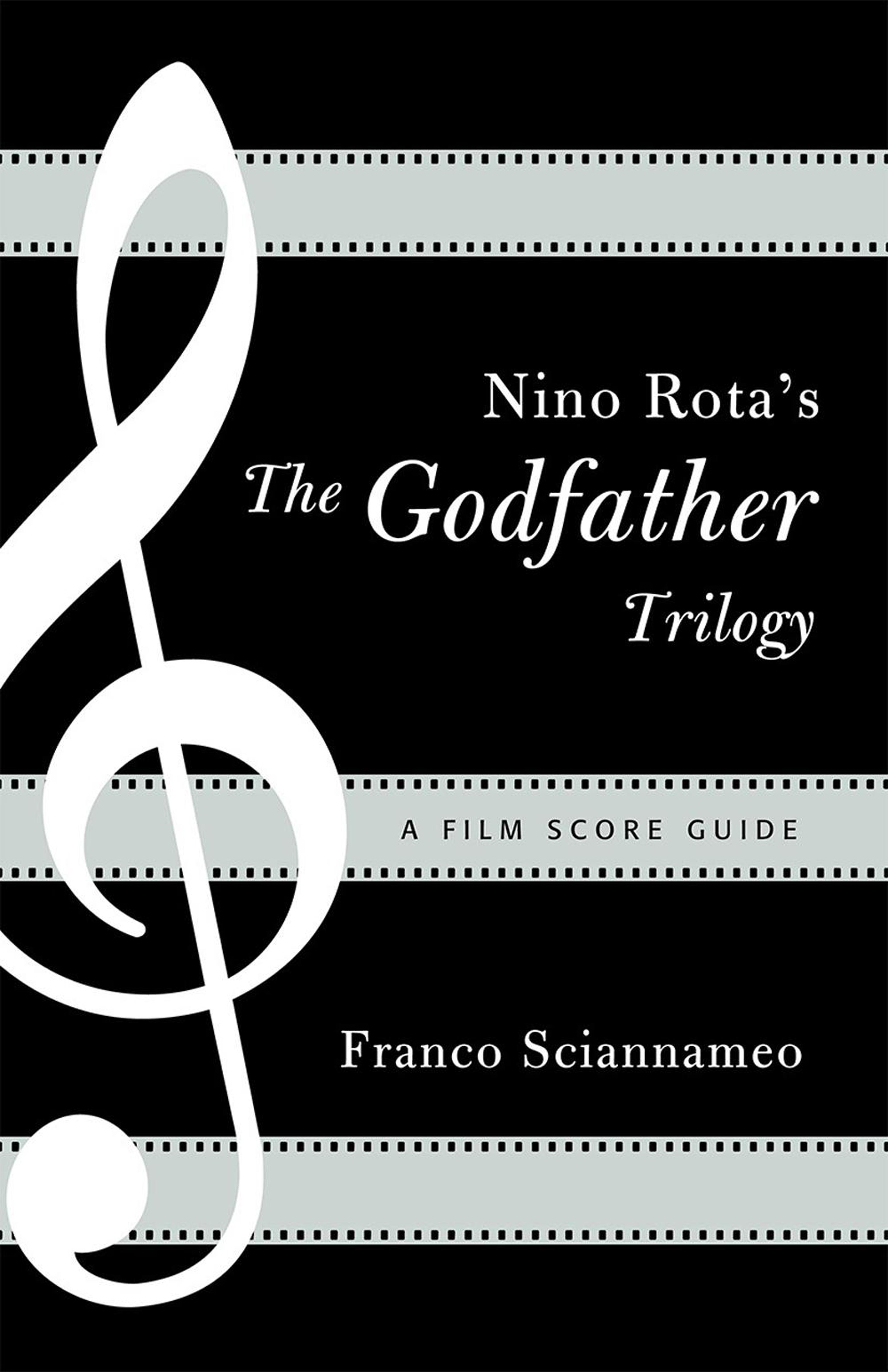
Released in 1972, 1974, and 1990 respectively, Francis Ford Coppola's three-part saga is one of the greatest artistic accomplishments (and financial successes) in the history of Hollywood cinema. The latest in Scarecrow's Film Score Guides series, Nino Rota's The Godfather Trilogy: A Film Score Guide discusses the events that led to the realization of the three films and studies and analyzes their music. Sciannameo reexamines The Godfather Trilogy from a variety of perspectives, with special focus on the music Rota composed to bind together approximately nine hours of cinematic narrative. Probing Rota's formation as a musician amidst the cultural climate established by Italian Fascism, Sciannameo examines Rota's initial stylistic adherence to the Mussolini-dictated or inspired concept of Italianness and then his return to a more congenial 19th-century formulaic vocabulary.
Sciannameo considers Rota's involvement with cinema and his collaboration with many celebrated directors, such as Luchino Visconti, Federico Fellini, Franco Zeffirelli, and Coppola, and deals with the sensitive issues of cultural analysis vis-à-vis the Mafia as a concept embedded within the Italian-American community. The book also discusses the sound of the Godfather films, describing and analyzing the musical subtexts underscoring a group of pivotal scenes. Relying substantially on Rota's notes, which are discussed here for the first time, the book reveals the composer's interpretation of Coppola's cinematic narrative and the scoring methodologies he employed.
Sciannameo considers Rota's involvement with cinema and his collaboration with many celebrated directors, such as Luchino Visconti, Federico Fellini, Franco Zeffirelli, and Coppola, and deals with the sensitive issues of cultural analysis vis-à-vis the Mafia as a concept embedded within the Italian-American community. The book also discusses the sound of the Godfather films, describing and analyzing the musical subtexts underscoring a group of pivotal scenes. Relying substantially on Rota's notes, which are discussed here for the first time, the book reveals the composer's interpretation of Coppola's cinematic narrative and the scoring methodologies he employed.
Strony: 212
Kategoria: Musikvetenskap
e-ISBN: 9781461664246
Waga przesyłki: 1.2 kg
Wysyłka w ciągu: 1-2 dni
Płać wygodnie kartą, Klarną, Apple Pay lub Google Pay. Nie jesteś zadowolony? Zawsze masz 14-dniową gwarancję zwrotu pieniędzy. Więcej przeczytasz w naszych warunkach. Masz pytania? Napisz do nas na hello@memmo.org.
Memmo ułatwia naukę – gdziekolwiek jesteś na świecie. U nas znajdziesz podręczniki i sprytne narzędzia do nauki w jednym miejscu: streszczenia, quizy, podcasty i fiszki. A do tego Ted, Twój kumpel do nauki, który odpowie na wszystko, co Cię nurtuje. Ponad 50 000 studentów już tu się uczy – stworzone, byś uczył się szybciej i mniej stresował.