
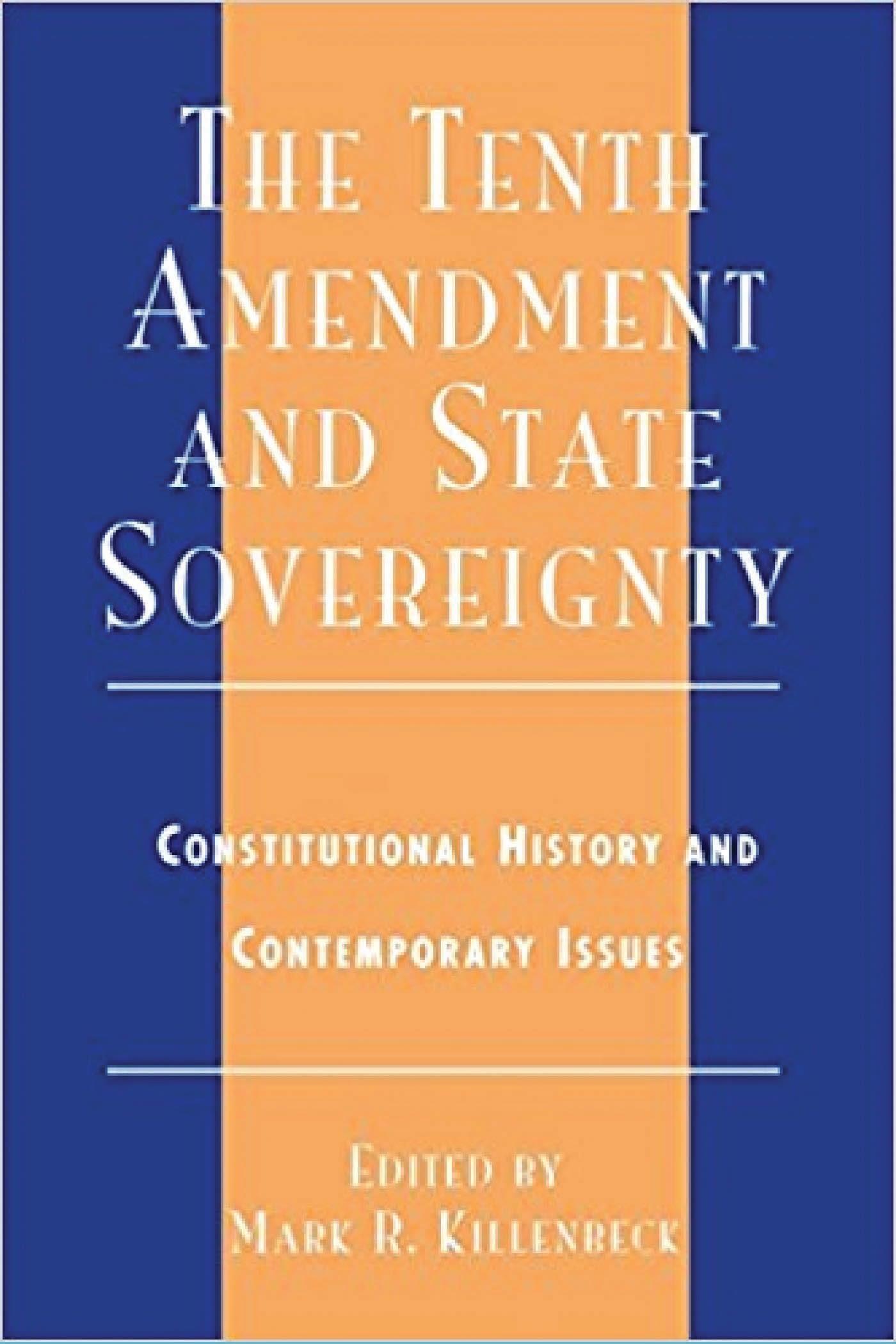
In the wake of the 2000 Election, the relationship between the Supreme Court and the American states has become more important. Once derided by the Court as a 'truism,' the Tenth Amendment has in recent years been transformed from a neglected provision into a vital 'first principle.' As such, it has provided the foundation for a series of decisions in which the Supreme Court has elevated the status of the states, often at the expense of federal power and in the face of previously settled assumptions. In this important volume, four prominent scholars-two historians and two law professors-examine carefully one of the central tenets in the Court's recent Tenth Amendment jurisprudence: the assumption that the results fashioned by a narrow majority are compelled by history and consistent with the intentions of the framers. They shed important new light on a series of decisions that mark a major change in our thinking about the nature of a constitutional system within which both the federal government and the states properly regard themselves as soverign entities.
Płać wygodnie kartą, Klarną, Apple Pay lub Google Pay. Nie jesteś zadowolony? Zawsze masz 14-dniową gwarancję zwrotu pieniędzy. Więcej przeczytasz w naszych warunkach. Masz pytania? Napisz do nas na hello@memmo.org.
Memmo ułatwia naukę – gdziekolwiek jesteś na świecie. U nas znajdziesz podręczniki i sprytne narzędzia do nauki w jednym miejscu: streszczenia, quizy, podcasty i fiszki. A do tego Ted, Twój kumpel do nauki, który odpowie na wszystko, co Cię nurtuje. Ponad 50 000 studentów już tu się uczy – stworzone, byś uczył się szybciej i mniej stresował.