
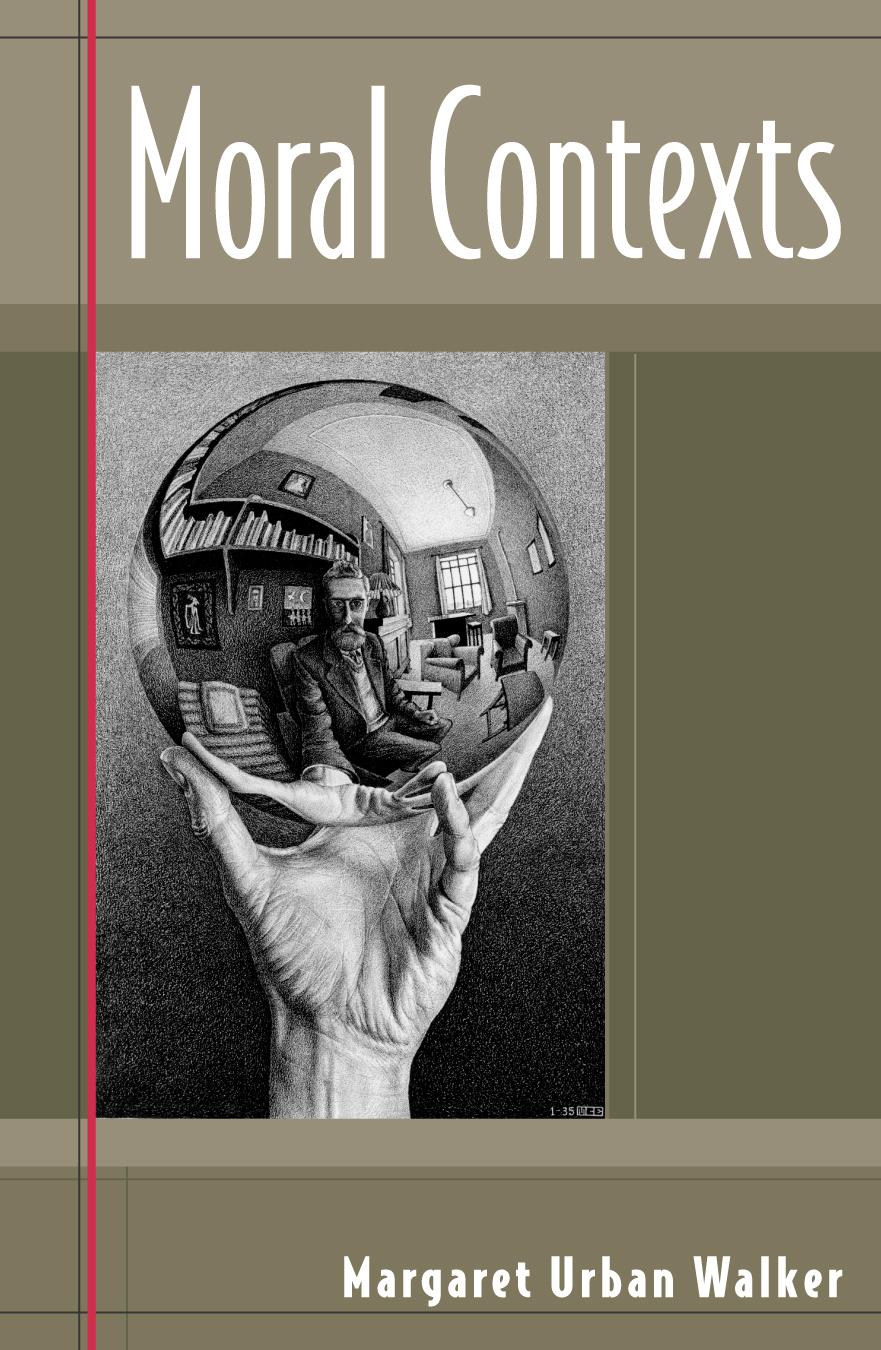
Many contexts shape and limit moral thinking in philosophy and life. Human conditions of vulnerability and interdependency, of limited awareness and control, of imperfect insight into ourselves and others are inevitable contexts that neither moral thought nor theory should forget. To be truly reflective, moral thinking and moral philosophy must become aware of the contexts that bind our thinking about how to live. This collection of essays by Margaret Urban Walker seek to show how to do this, and why it makes a difference.
Contingent and changeable contexts that shape moral thinking include our individual histories, our social positions, and institutional roles, relationships, cultural settings, and social arrangements, and the specific moral idioms we pick up along the way. The paradigms and specialized language of ethical theory are contexts, too; they shape how moral theory looks and what or whom it looks at. Ethical theory and practice are meaningless without these Moral Contexts.
Contingent and changeable contexts that shape moral thinking include our individual histories, our social positions, and institutional roles, relationships, cultural settings, and social arrangements, and the specific moral idioms we pick up along the way. The paradigms and specialized language of ethical theory are contexts, too; they shape how moral theory looks and what or whom it looks at. Ethical theory and practice are meaningless without these Moral Contexts.
Płać wygodnie kartą, Klarną, Apple Pay lub Google Pay. Nie jesteś zadowolony? Zawsze masz 14-dniową gwarancję zwrotu pieniędzy. Więcej przeczytasz w naszych warunkach. Masz pytania? Napisz do nas na hello@memmo.org.
Memmo ułatwia naukę – gdziekolwiek jesteś na świecie. U nas znajdziesz podręczniki i sprytne narzędzia do nauki w jednym miejscu: streszczenia, quizy, podcasty i fiszki. A do tego Ted, Twój kumpel do nauki, który odpowie na wszystko, co Cię nurtuje. Ponad 50 000 studentów już tu się uczy – stworzone, byś uczył się szybciej i mniej stresował.