
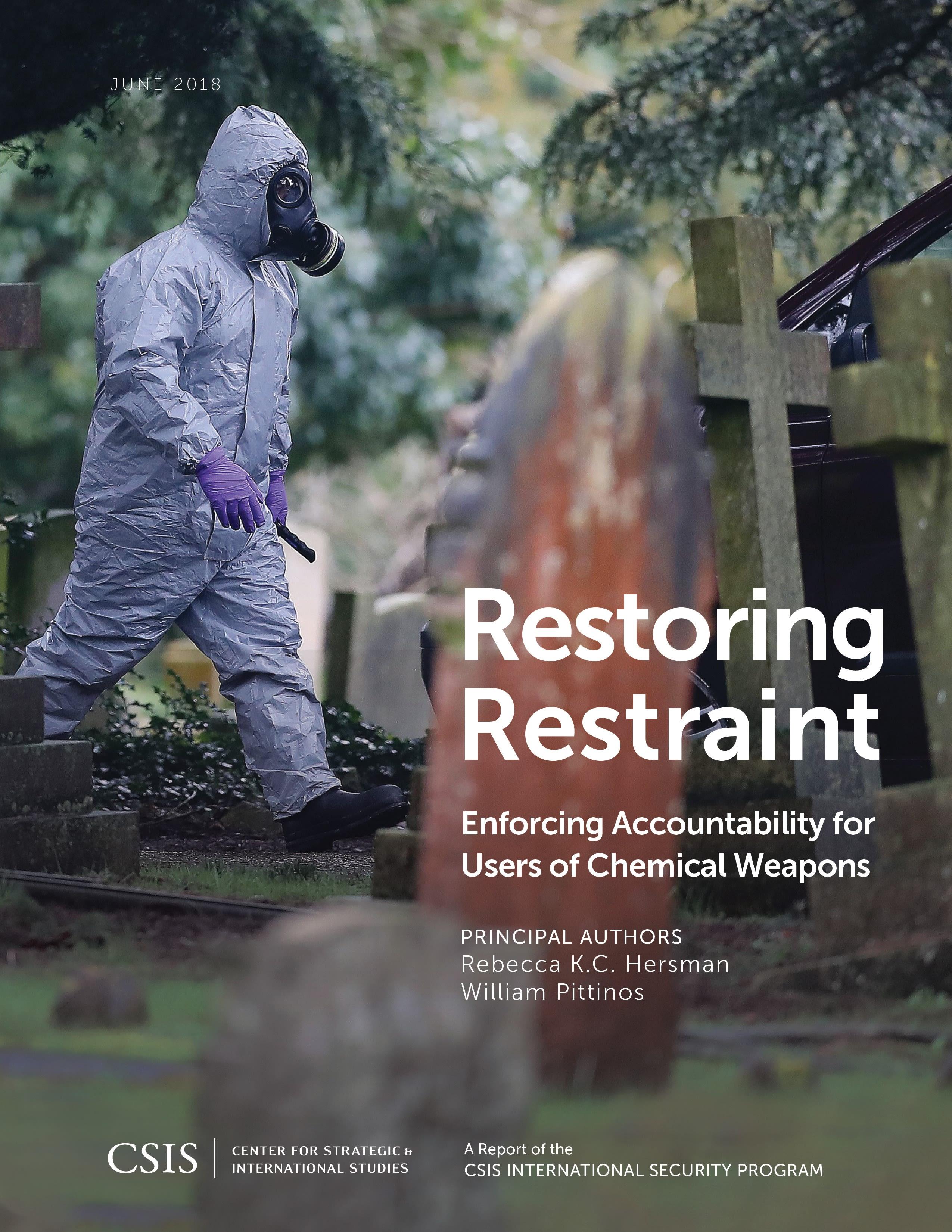
In 2012, a 20-year moratorium on state employment of chemical weapons use was broken. Since then, there have been more than 200 uses, against civilians, military targets, and political enemies. These attacks have broken norms against the use of weapons of mass destruction and create a gap in the nonproliferation fabric—despite the robust international architecture of laws, treaties, agreements, and norms designed to restrain the proliferation and use of these weapons. Accountability for these recent attacks has been limited or nonexistent, which threatens the credibility of the nonproliferation regime and only encourages further use. Leaders must find the political and moral strength to use a full spectrum of tools to reestablish this system of restraint. By understanding the system—built on taboos, norms, deterrence, and a lack of benefits—and corresponding accountability approaches—military, legal, political, diplomatic, economic, and educational—leaders can utilize a menu of potential actions for building more diverse, flexible, scalable, and implementable options to hold accountable users of chemical weapons.
Płać wygodnie kartą, Klarną, Apple Pay lub Google Pay. Nie jesteś zadowolony? Zawsze masz 14-dniową gwarancję zwrotu pieniędzy. Więcej przeczytasz w naszych warunkach. Masz pytania? Napisz do nas na hello@memmo.org.
Memmo ułatwia naukę – gdziekolwiek jesteś na świecie. U nas znajdziesz podręczniki i sprytne narzędzia do nauki w jednym miejscu: streszczenia, quizy, podcasty i fiszki. A do tego Ted, Twój kumpel do nauki, który odpowie na wszystko, co Cię nurtuje. Ponad 50 000 studentów już tu się uczy – stworzone, byś uczył się szybciej i mniej stresował.