
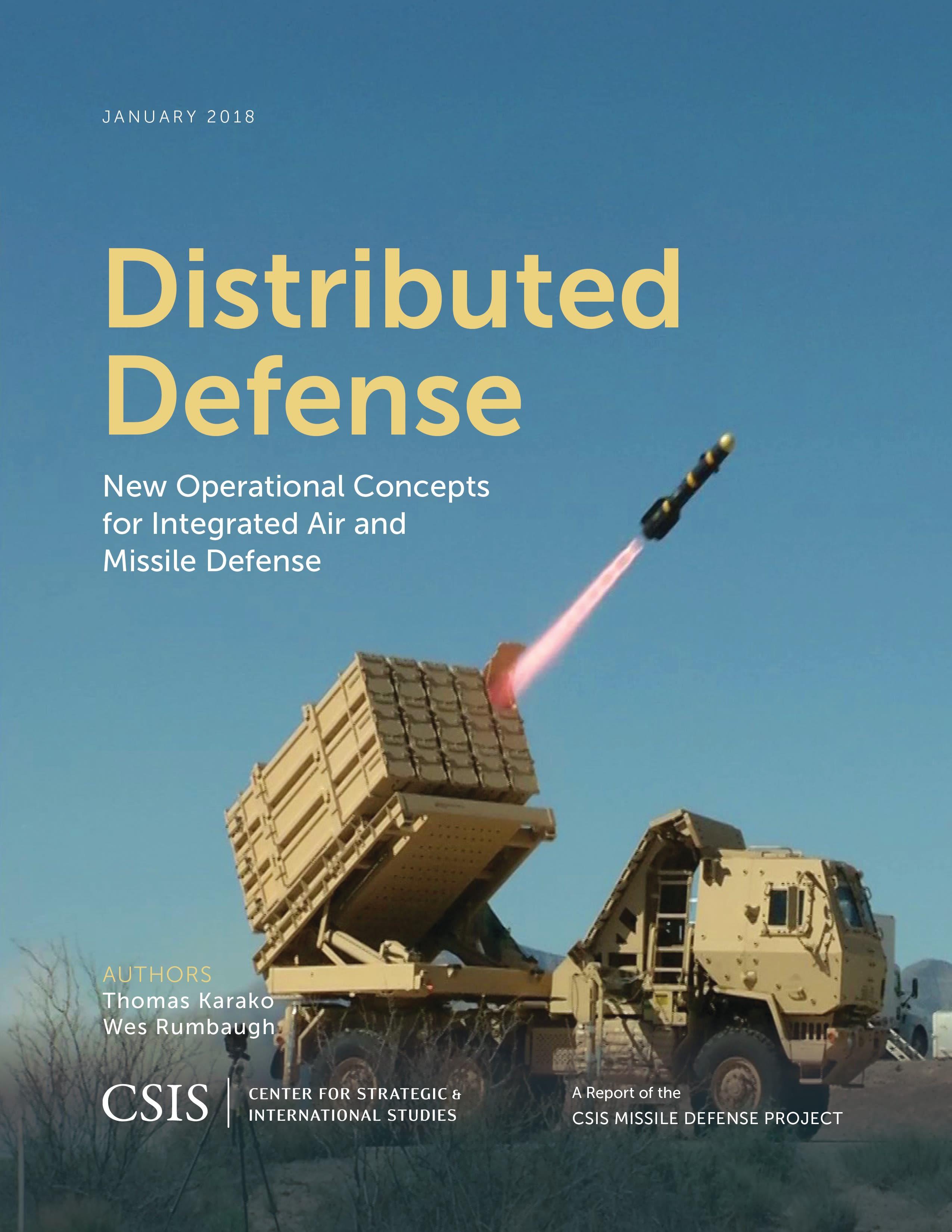
Despite the rising salience of missile threats, current air and missile defense forces are far too susceptible to suppression. Today’s U.S. air and missile defense (AMD) force lacks the depth, capacity, and operational flexibility to simultaneously perform both missions. Discussions about improving AMD usually revolve around improvements to the capability and capacity of interceptors or sensors. Rather than simply doing more of the same, the joint integrated air and missile defense (IAMD) efforts might be well served by new or reinvigorated operational concepts, here discussed collectively as “Distributed Defense.” By leveraging networked integration, Distributed Defense envisions a more flexible and more dispersible air and missile defense force capable of imposing costs and dilemmas on an adversary, complicating the suppression of U.S. air and missile defenses. Although capability and capacity improvements remain essential to the high-end threats, the Distributed Defense concept focuses on creating a new architecture for today’s fielded or soon-to-be fielded IAMD force to boost flexibility and resilience.
Płać wygodnie kartą, Klarną, Apple Pay lub Google Pay. Nie jesteś zadowolony? Zawsze masz 14-dniową gwarancję zwrotu pieniędzy. Więcej przeczytasz w naszych warunkach. Masz pytania? Napisz do nas na hello@memmo.org.
Memmo ułatwia naukę – gdziekolwiek jesteś na świecie. U nas znajdziesz podręczniki i sprytne narzędzia do nauki w jednym miejscu: streszczenia, quizy, podcasty i fiszki. A do tego Ted, Twój kumpel do nauki, który odpowie na wszystko, co Cię nurtuje. Ponad 50 000 studentów już tu się uczy – stworzone, byś uczył się szybciej i mniej stresował.