
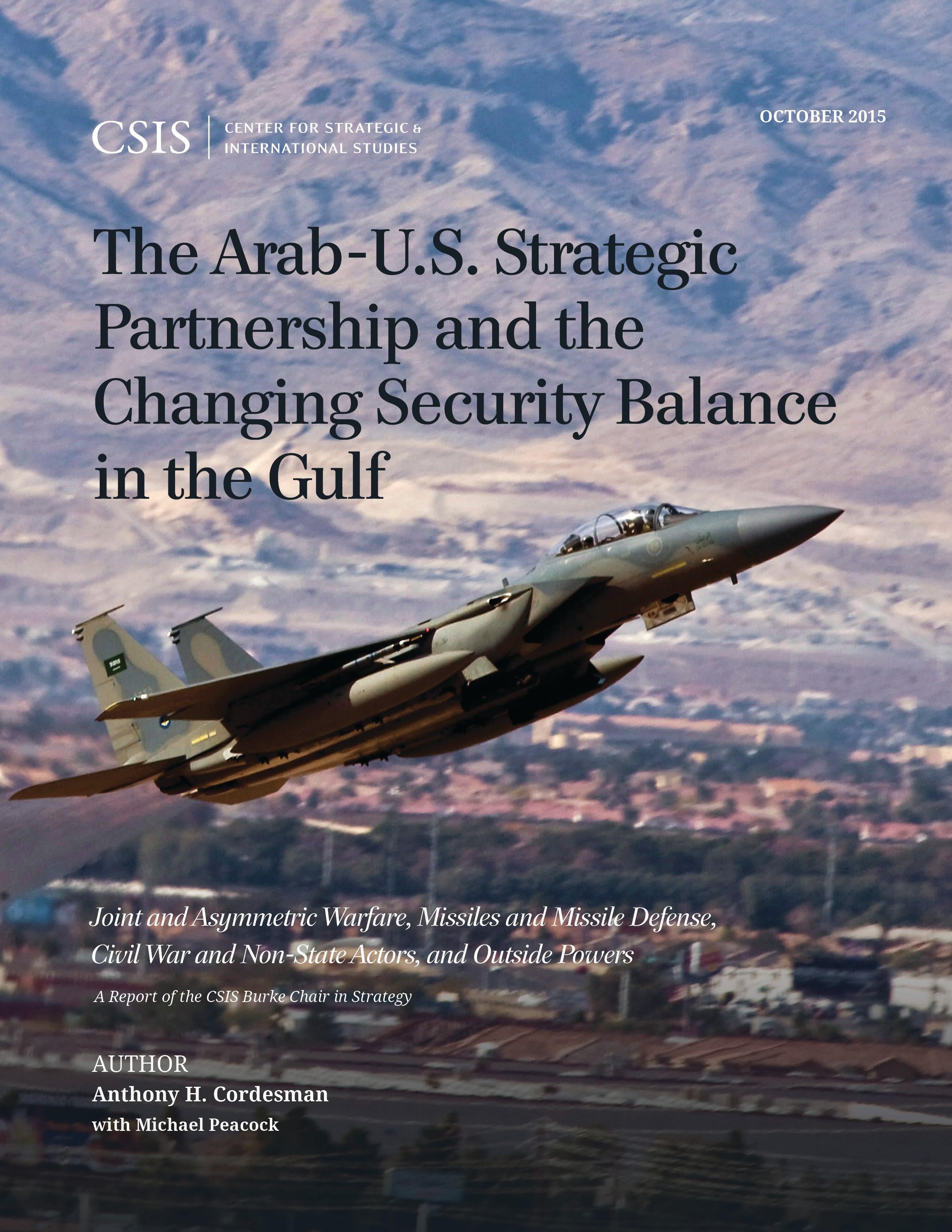
The ongoing confrontation with Iran, the war against ISIL, the instability in Iraq, the Civil war in Syria, and the conflict in Yemen have all caused major changes in the security situation in the Persian Gulf and in the regional military balance. The strategic partnership between Arab Gulf states, and with the United States and other outside states, must now evolve to deal with conventional military threats and a range of new threats, including ideological extremists, non-state actors and their state sponsors, and a growing range of forces designed to fight asymmetric wars. This new report from the CSIS Burke Chair in Strategy provides a 2015 assessment of the Gulf military balance, the military capabilities of each Gulf state, the role of the United States as a security partner, and the priorities for change in the structure of both the Gulf Cooperation Council and the Arab Gulf military partnership with the United States. The assessment goes far beyond the conventional military balance and examines how force developments in the region affect joint and asymmetric warfare, missiles and missile defense, nuclear forces, as well as terrorism, the role of non-state actors, and outside powers.
Płać wygodnie kartą, Klarną, Apple Pay lub Google Pay. Nie jesteś zadowolony? Zawsze masz 14-dniową gwarancję zwrotu pieniędzy. Więcej przeczytasz w naszych warunkach. Masz pytania? Napisz do nas na hello@memmo.org.
Memmo ułatwia naukę – gdziekolwiek jesteś na świecie. U nas znajdziesz podręczniki i sprytne narzędzia do nauki w jednym miejscu: streszczenia, quizy, podcasty i fiszki. A do tego Ted, Twój kumpel do nauki, który odpowie na wszystko, co Cię nurtuje. Ponad 50 000 studentów już tu się uczy – stworzone, byś uczył się szybciej i mniej stresował.