
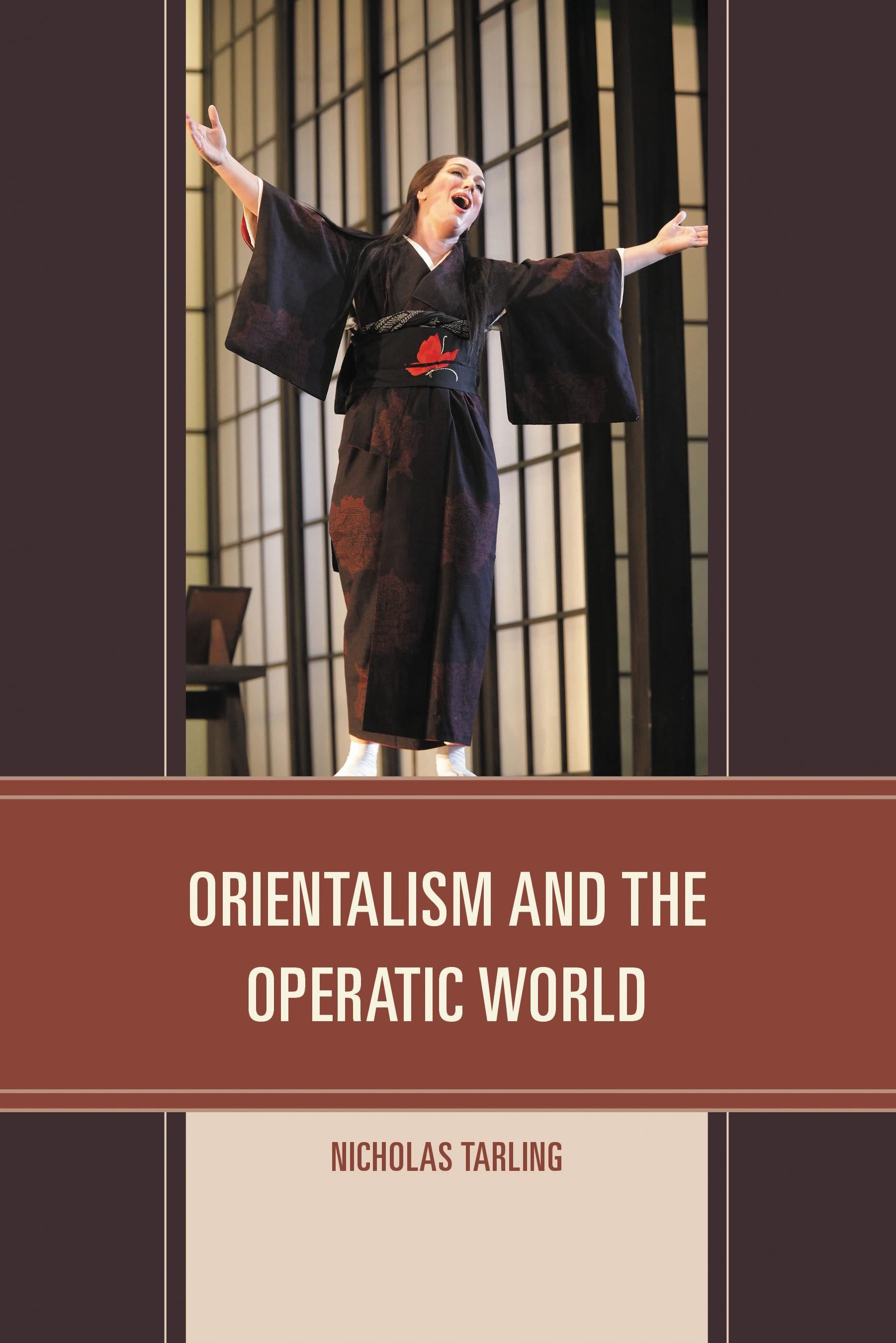
Western opera is a globalized and globalizing phenomenon and affords us a unique opportunity for exploring the concept of “orientalism,” the subject of literary scholar Edward Said’s modern classic on the topic. Nicholas Tarling’s Orientalism and the Operatic World places opera in the context of its steady globalization over the past two centuries. In this important survey, Tarling first considers how the Orient appears on the operatic stage in Britain, France, Germany, Russia, and the United States before exploring individual operas according to the region of the “Orient” in which the work is set.
Throughout, Tarling offers key insights into such notable operas as George Frideric Handel’s Berenice, Giuseppe Verdi’s Aida, Giacomo Puccini’s MadamaButterfly, Pietro Mascagni’s Iris, and others. Orientalism and the Operatic World argues that any close study of the history of Western opera, in the end, fails to support the notion propounded by Said that Westerners inevitably stereotyped, dehumanized, and ultimately sought only to dominate the East through art. Instead, Tarling argues that opera is a humanizing art, one that emphasizes what humanity has in common by epic depictions of passion through the vehicle of song.
Orientalism and the Operatic World is not merely for opera buffs or even first-time listeners. It should also interest historians of both the East and West, scholars of international relations, and cultural theorists.
Throughout, Tarling offers key insights into such notable operas as George Frideric Handel’s Berenice, Giuseppe Verdi’s Aida, Giacomo Puccini’s MadamaButterfly, Pietro Mascagni’s Iris, and others. Orientalism and the Operatic World argues that any close study of the history of Western opera, in the end, fails to support the notion propounded by Said that Westerners inevitably stereotyped, dehumanized, and ultimately sought only to dominate the East through art. Instead, Tarling argues that opera is a humanizing art, one that emphasizes what humanity has in common by epic depictions of passion through the vehicle of song.
Orientalism and the Operatic World is not merely for opera buffs or even first-time listeners. It should also interest historians of both the East and West, scholars of international relations, and cultural theorists.
Płać wygodnie kartą, Klarną, Apple Pay lub Google Pay. Nie jesteś zadowolony? Zawsze masz 14-dniową gwarancję zwrotu pieniędzy. Więcej przeczytasz w naszych warunkach. Masz pytania? Napisz do nas na hello@memmo.org.
Memmo ułatwia naukę – gdziekolwiek jesteś na świecie. U nas znajdziesz podręczniki i sprytne narzędzia do nauki w jednym miejscu: streszczenia, quizy, podcasty i fiszki. A do tego Ted, Twój kumpel do nauki, który odpowie na wszystko, co Cię nurtuje. Ponad 50 000 studentów już tu się uczy – stworzone, byś uczył się szybciej i mniej stresował.