
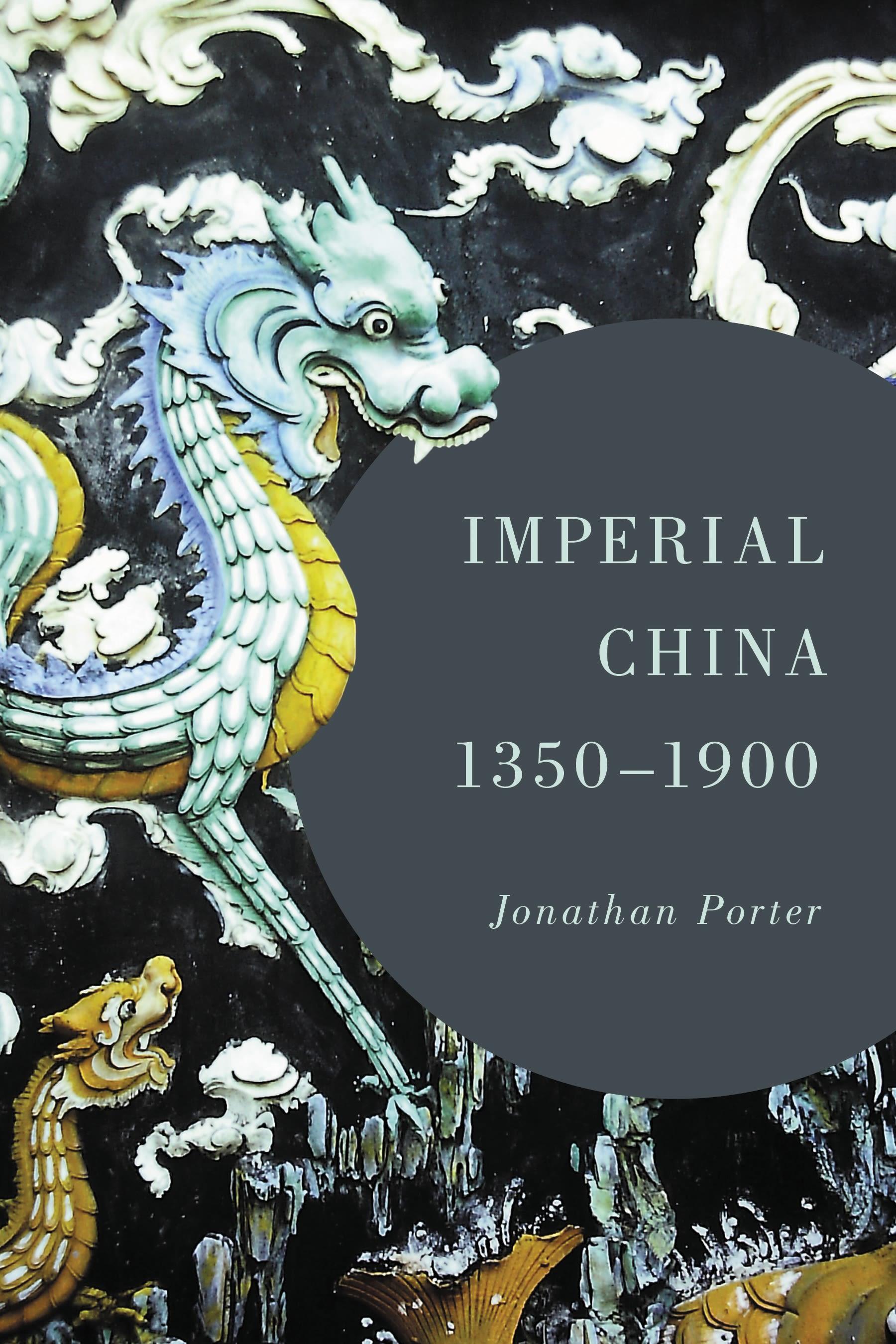
This clear and engaging book provides a concise overview of the Ming-Qing epoch (1368–1912), China’s last imperial age. Beginning with the end of the Mongol domination of China in 1368, this five-century period was remarkable for its continuity and stability until its downfall in the Revolution of 1911. Viewing the Ming and Qing dynasties as a coherent era characterized by the fruition of diverse developments from earliest times, Jonathan Porter traces the growth of imperial autocracy, the role of the educated Confucian elite as custodians of cultural authority, the significance of ritual as the grounding of political and social order, the tension between monarchy and bureaucracy in political discourse, the evolution of Chinese cultural identity, and the perception of the “barbarian” and other views of the world beyond China. As the climax of traditional Chinese history and the harbinger of modern China in the twentieth century, Porter argues that imperial China must be explored for its own sake as well as for the essential foundation it provides in understanding contemporary China, and indeed world history writ large.
Płać wygodnie kartą, Klarną, Apple Pay lub Google Pay. Nie jesteś zadowolony? Zawsze masz 14-dniową gwarancję zwrotu pieniędzy. Więcej przeczytasz w naszych warunkach. Masz pytania? Napisz do nas na hello@memmo.org.
Memmo ułatwia naukę – gdziekolwiek jesteś na świecie. U nas znajdziesz podręczniki i sprytne narzędzia do nauki w jednym miejscu: streszczenia, quizy, podcasty i fiszki. A do tego Ted, Twój kumpel do nauki, który odpowie na wszystko, co Cię nurtuje. Ponad 50 000 studentów już tu się uczy – stworzone, byś uczył się szybciej i mniej stresował.