
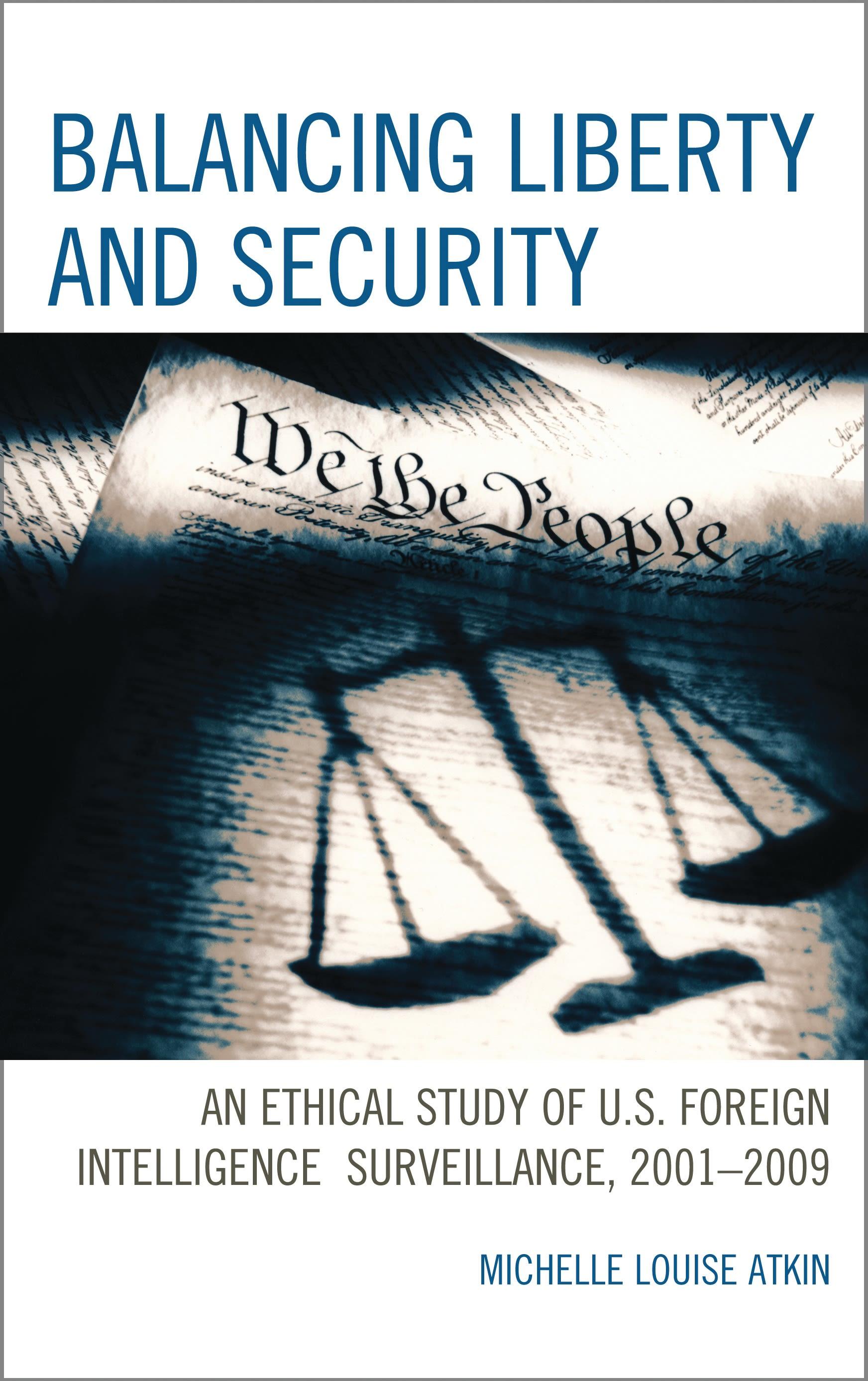
This work examines the philosophical foundations of information ethics and their potential for application to contemporary problems in U.S. foreign intelligence surveillance. Questions concerning the limits of government intrusion on protected Fourth Amendment rights are examined against the backdrop of the post-9/11 period. Changes to U.S. foreign intelligence surveillance law and policy are analyzed by applying the traditional ethical theories commonly used to support or discount these changes, namely utilitarian and contractarian ethical theories. The resulting research combines both theoretical elements, through its use of analytic philosophy, and qualitative research methods, through its use of legislation, court cases, news media, and scholarship surrounding U.S. foreign intelligence surveillance. Using the U.S.A. PATRIOT Act, the Foreign Intelligence Surveillance Act (FISA) and the Terrorist Surveillance Program as case examples, the author develops and applies a normative ethical framework based on a legal proportionality test that can be applied to future cases involving U.S. foreign intelligence surveillance.
The proportionality test developed in this research, which is based on a modified version of the Canadian Oakes Test, seeks to balance legitimate concerns about collective security against the rights of the individual. As a new synthesis of utilitarian and contractarian ethical principles, the proportionality test laid out in this book has potential for application beyond U.S. foreign intelligence surveillance. It could act as a guide to future research in other applied areas in information policy research where there is a clear tension between individual civil liberties and the collective good of society. Problems such as passenger screening, racial and ethnic profiling, data mining, and access to information could be examined using the framework developed in this study.
The proportionality test developed in this research, which is based on a modified version of the Canadian Oakes Test, seeks to balance legitimate concerns about collective security against the rights of the individual. As a new synthesis of utilitarian and contractarian ethical principles, the proportionality test laid out in this book has potential for application beyond U.S. foreign intelligence surveillance. It could act as a guide to future research in other applied areas in information policy research where there is a clear tension between individual civil liberties and the collective good of society. Problems such as passenger screening, racial and ethnic profiling, data mining, and access to information could be examined using the framework developed in this study.
Płać wygodnie kartą, Klarną, Apple Pay lub Google Pay. Nie jesteś zadowolony? Zawsze masz 14-dniową gwarancję zwrotu pieniędzy. Więcej przeczytasz w naszych warunkach. Masz pytania? Napisz do nas na hello@memmo.org.
Memmo ułatwia naukę – gdziekolwiek jesteś na świecie. U nas znajdziesz podręczniki i sprytne narzędzia do nauki w jednym miejscu: streszczenia, quizy, podcasty i fiszki. A do tego Ted, Twój kumpel do nauki, który odpowie na wszystko, co Cię nurtuje. Ponad 50 000 studentów już tu się uczy – stworzone, byś uczył się szybciej i mniej stresował.