
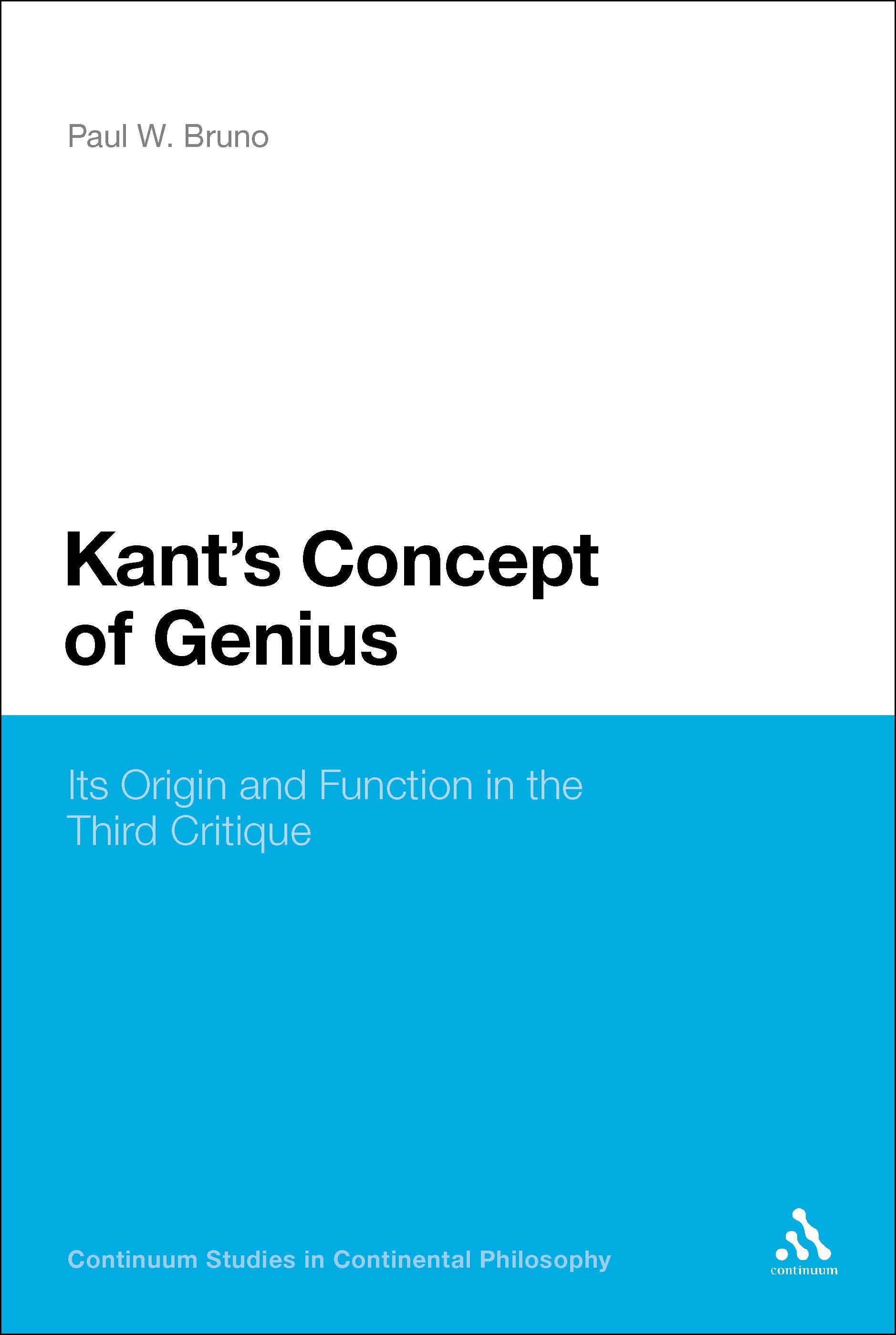
While many studies have chronicled the Romantic legacy of artistic genius, this book uncovers the roots of the concept of genius in Kant's third Critique, alongside the development of his understanding of nature. Paul Bruno addresses a genuine gap in the existing scholarship by exploring the origins of Kant's thought on aesthetic judgment and particularly the artist.
The development of the word 'genius' and its intimate association with the artist played itself out in a rich cultural context, a context that is inescapably significant in Western thought. Bruno shows how in many ways we are still interrogating the ways in which a nature governed by physical laws can be reconciled with a spirit of human creativity and freedom. This book leads us to a better understanding of the centrality of understanding the modern artistic enterprise, characterized as it is by creativity, for modern conceptions of the self.
The development of the word 'genius' and its intimate association with the artist played itself out in a rich cultural context, a context that is inescapably significant in Western thought. Bruno shows how in many ways we are still interrogating the ways in which a nature governed by physical laws can be reconciled with a spirit of human creativity and freedom. This book leads us to a better understanding of the centrality of understanding the modern artistic enterprise, characterized as it is by creativity, for modern conceptions of the self.
Płać wygodnie kartą, Klarną, Apple Pay lub Google Pay. Nie jesteś zadowolony? Zawsze masz 14-dniową gwarancję zwrotu pieniędzy. Więcej przeczytasz w naszych warunkach. Masz pytania? Napisz do nas na hello@memmo.org.
Memmo ułatwia naukę – gdziekolwiek jesteś na świecie. U nas znajdziesz podręczniki i sprytne narzędzia do nauki w jednym miejscu: streszczenia, quizy, podcasty i fiszki. A do tego Ted, Twój kumpel do nauki, który odpowie na wszystko, co Cię nurtuje. Ponad 50 000 studentów już tu się uczy – stworzone, byś uczył się szybciej i mniej stresował.