
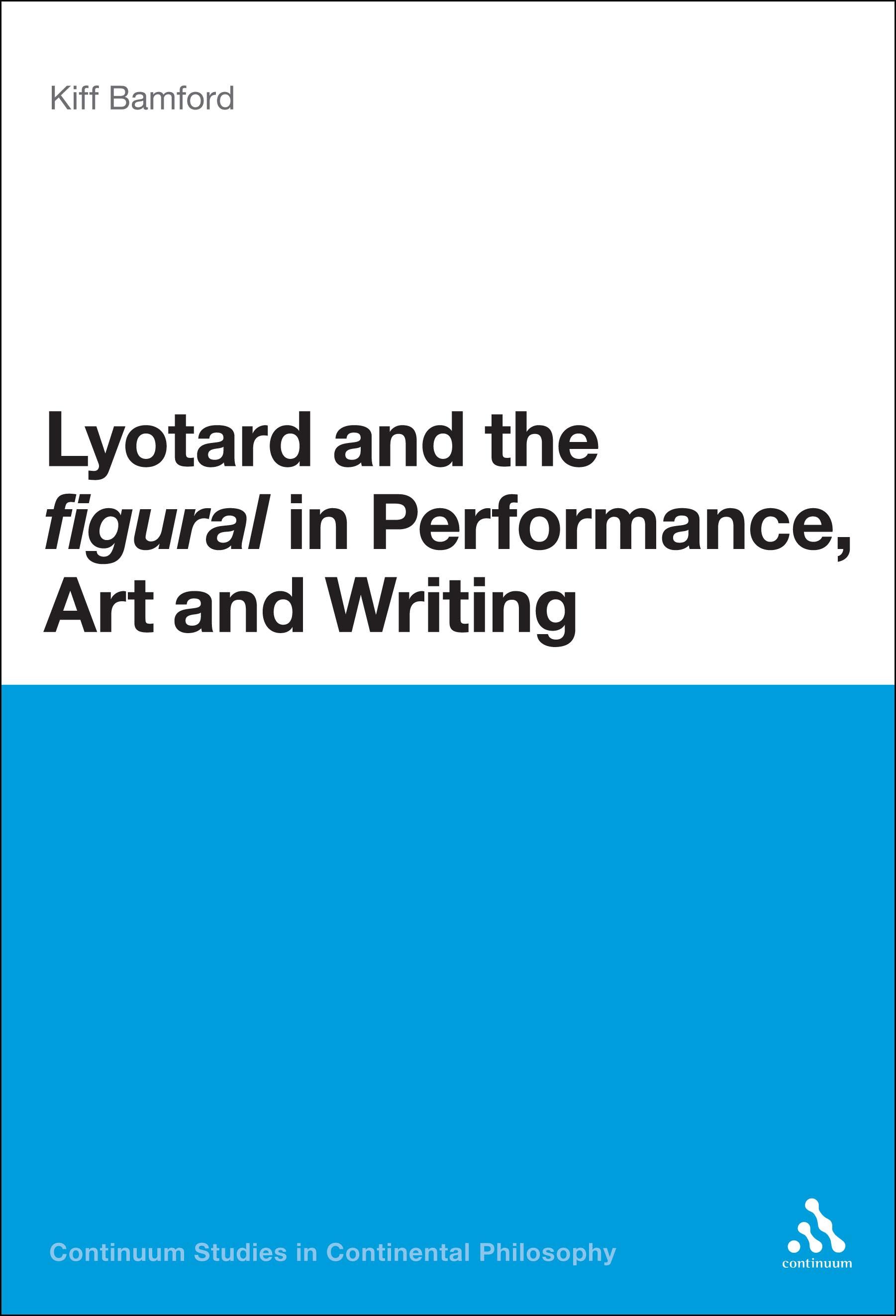
This original study offers a timely reconsideration
of the work of French philosopher Jean-François Lyotard in relation to art,
performance and writing.
How can we write about art, whilst
acknowledging the transformation that inevitably accompanies
translations of both media and temporality?
That is the question that persistently dogs Lyotard's own writings on art, and
to which this book responds through reference to artists from the
recently-formed canon of performance art history, including the myths of
seminal figures Marina Abramovic
and Vito Acconci, and the controlled documentation of Gina Pane's actions.
Through the unstable, untranslatable element that Lyotard calls the figural, his thought is brought to bear
on attempts to write a history of performance art and to question the paradoxically
prescriptive demand for rules to govern 're-performance'.
Kiff Bamford contextualises Lyotard's writings and
approach with reference to both his contemporaries, including Deleuze and
Kristeva, and the contemporary art about which they wrote, whilst arguing for
the pertinence of Lyotard's provocations today.
of the work of French philosopher Jean-François Lyotard in relation to art,
performance and writing.
How can we write about art, whilst
acknowledging the transformation that inevitably accompanies
translations of both media and temporality?
That is the question that persistently dogs Lyotard's own writings on art, and
to which this book responds through reference to artists from the
recently-formed canon of performance art history, including the myths of
seminal figures Marina Abramovic
and Vito Acconci, and the controlled documentation of Gina Pane's actions.
Through the unstable, untranslatable element that Lyotard calls the figural, his thought is brought to bear
on attempts to write a history of performance art and to question the paradoxically
prescriptive demand for rules to govern 're-performance'.
Kiff Bamford contextualises Lyotard's writings and
approach with reference to both his contemporaries, including Deleuze and
Kristeva, and the contemporary art about which they wrote, whilst arguing for
the pertinence of Lyotard's provocations today.
Płać wygodnie kartą, Klarną, Apple Pay lub Google Pay. Nie jesteś zadowolony? Zawsze masz 14-dniową gwarancję zwrotu pieniędzy. Więcej przeczytasz w naszych warunkach. Masz pytania? Napisz do nas na hello@memmo.org.
Memmo ułatwia naukę – gdziekolwiek jesteś na świecie. U nas znajdziesz podręczniki i sprytne narzędzia do nauki w jednym miejscu: streszczenia, quizy, podcasty i fiszki. A do tego Ted, Twój kumpel do nauki, który odpowie na wszystko, co Cię nurtuje. Ponad 50 000 studentów już tu się uczy – stworzone, byś uczył się szybciej i mniej stresował.