
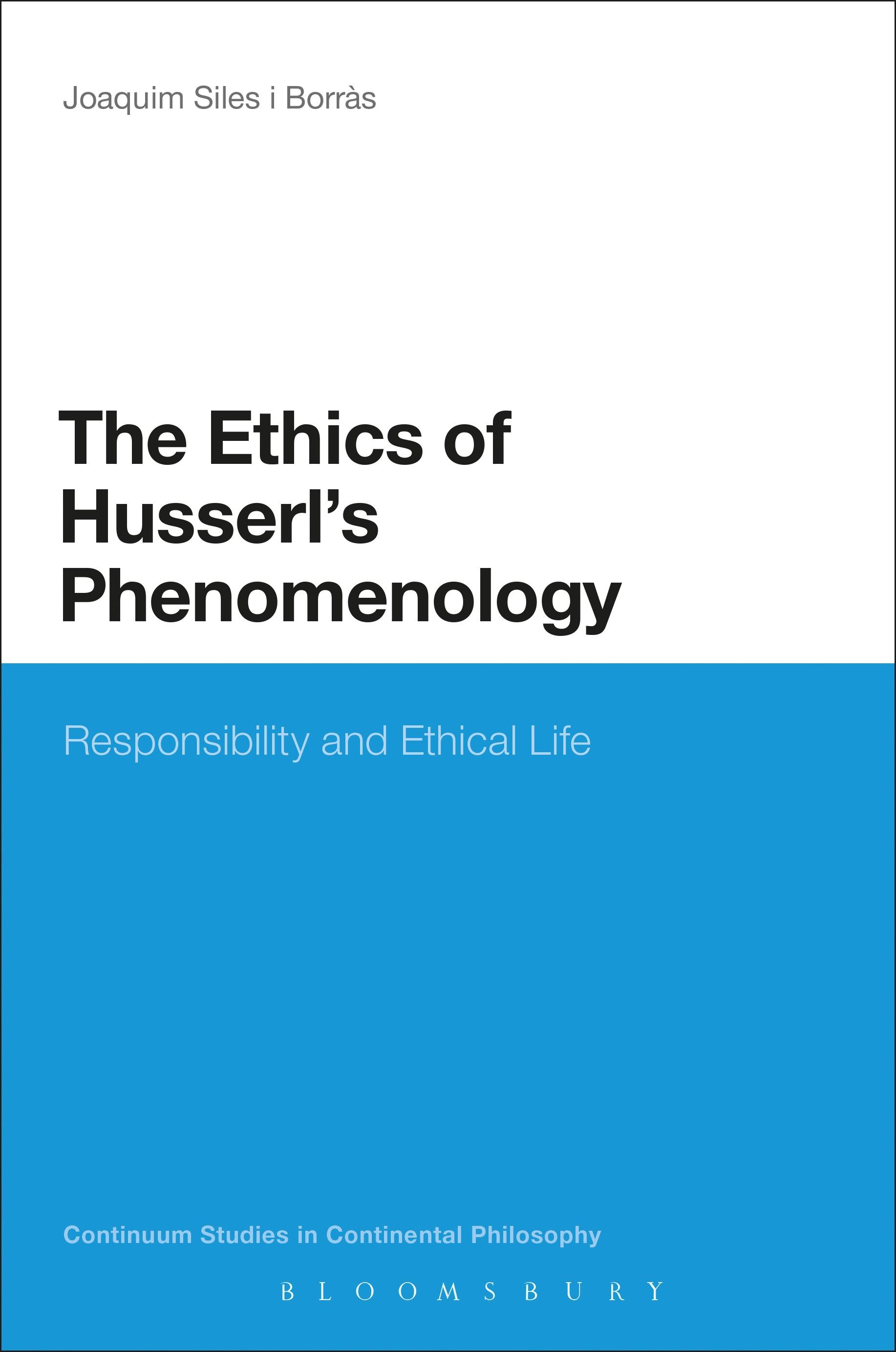
The Ethics of Husserl's Phenomenology aims to relocate the question of ethics at the very heart of Husserl's phenomenology. This is based on the idea that Husserl's phenomenology is an epistemological inquiry ultimately motivated by an ethical demand that pervades his writing from the publication of Logical Investigations (1900-1901) up to The Crisis of European Sciences and Transcendental Phenomenology (1935).
Joaquim Siles-Borràs traces the ethical concepts apparent throughout Husserl's main body of work and argues that Husserl's phenomenology of consciousness, experience and meaning is ultimately motivated by an ethical demand, by means of which Husserl aims to re-define philosophy and re-found science, with the aim of making philosophy and science capable of dealing with the most pressing questions concerning the meaningfulness of human existence.
Joaquim Siles-Borràs traces the ethical concepts apparent throughout Husserl's main body of work and argues that Husserl's phenomenology of consciousness, experience and meaning is ultimately motivated by an ethical demand, by means of which Husserl aims to re-define philosophy and re-found science, with the aim of making philosophy and science capable of dealing with the most pressing questions concerning the meaningfulness of human existence.
Płać wygodnie kartą, Klarną, Apple Pay lub Google Pay. Nie jesteś zadowolony? Zawsze masz 14-dniową gwarancję zwrotu pieniędzy. Więcej przeczytasz w naszych warunkach. Masz pytania? Napisz do nas na hello@memmo.org.
Memmo ułatwia naukę – gdziekolwiek jesteś na świecie. U nas znajdziesz podręczniki i sprytne narzędzia do nauki w jednym miejscu: streszczenia, quizy, podcasty i fiszki. A do tego Ted, Twój kumpel do nauki, który odpowie na wszystko, co Cię nurtuje. Ponad 50 000 studentów już tu się uczy – stworzone, byś uczył się szybciej i mniej stresował.