
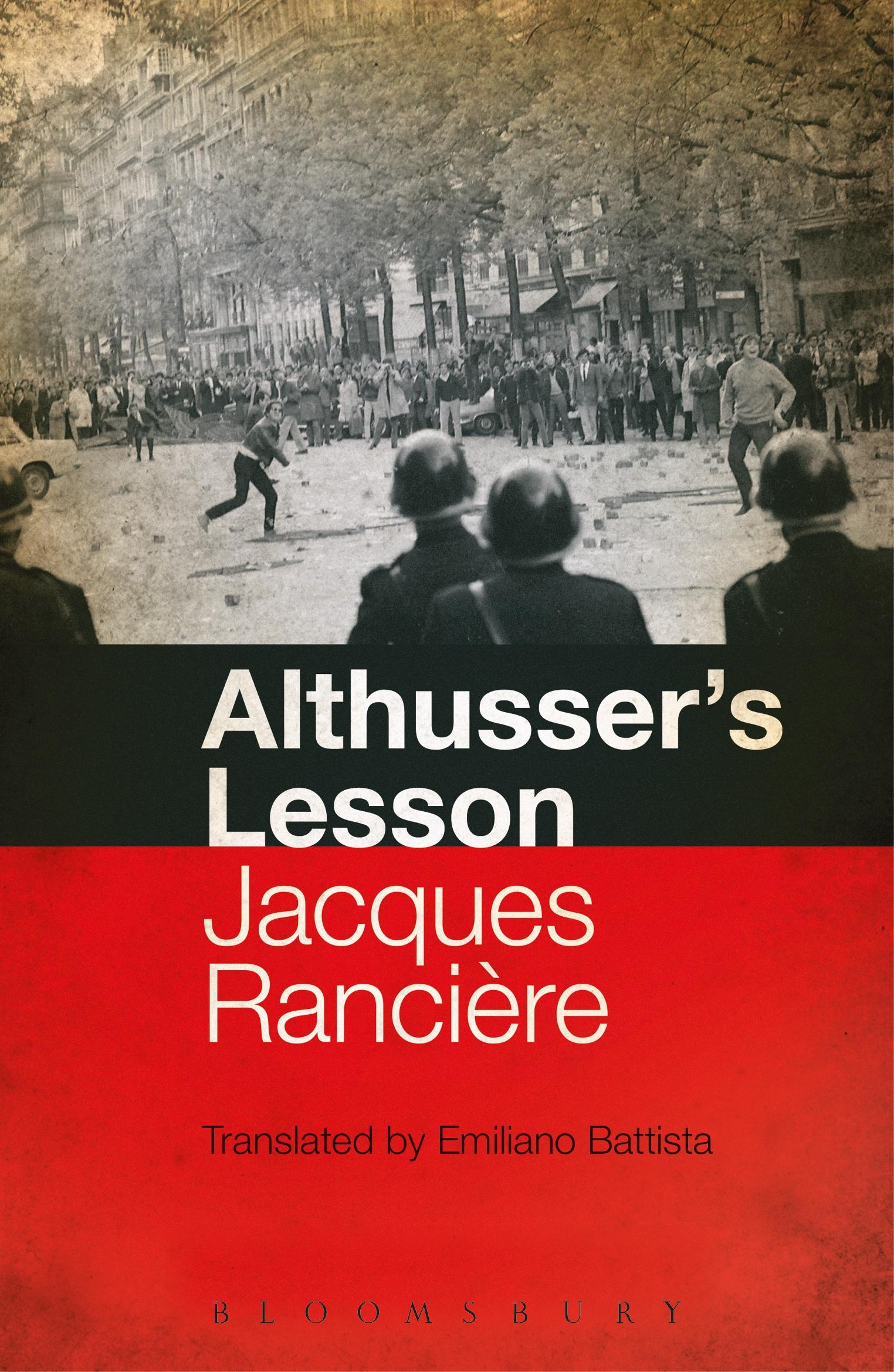
Jacques Rancière's first major work, Althusser's Lesson appeared in 1974, just as the energies of May 68 were losing ground to the calls for a return to order. Rancière's analysis of Althusserian Marxism unfolds against this background: what is the relationship between the return to order and the enthusiasm which greeted the publication of Althusser's Reply to John Lewis in 1973? How to explain the rehabilitation of a philosophy that had been declared 'dead and buried on the barricades of May 68'? What had changed? The answer to this question takes the form of a genealogy of Althusserianism that is, simultaneously, an account of the emergence of militant student movements in the '60s, of the arrival of Maoism in France, and of how May 68 rearranged all the pieces anew. Encompassing the book's distinctive combination of theoretical analysis and historical description is a question that has guided Rancière's thought ever since: how do theories of subversion become the rationale for order?
Płać wygodnie kartą, Klarną, Apple Pay lub Google Pay. Nie jesteś zadowolony? Zawsze masz 14-dniową gwarancję zwrotu pieniędzy. Więcej przeczytasz w naszych warunkach. Masz pytania? Napisz do nas na hello@memmo.org.
Memmo ułatwia naukę – gdziekolwiek jesteś na świecie. U nas znajdziesz podręczniki i sprytne narzędzia do nauki w jednym miejscu: streszczenia, quizy, podcasty i fiszki. A do tego Ted, Twój kumpel do nauki, który odpowie na wszystko, co Cię nurtuje. Ponad 50 000 studentów już tu się uczy – stworzone, byś uczył się szybciej i mniej stresował.