
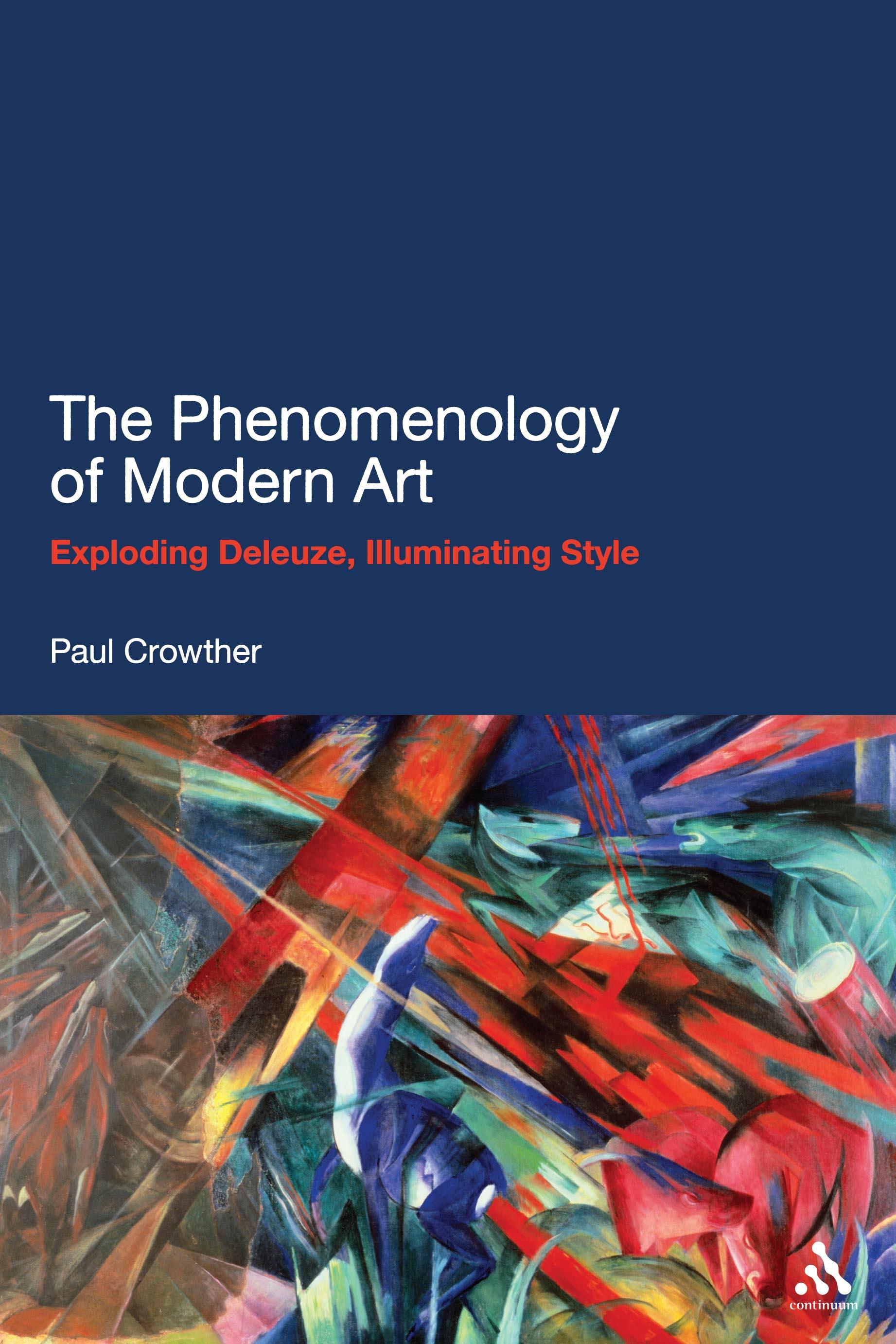
As a philosophical approach, phenomenology is concerned with structure in how phenomena are experienced. The Phenomenology of Modern Art uses phenomenological insights to explain the significance of style in modern art, most notably in Impressionism, Expressionism, Cezanne and Cubism, Duchampian conceptualism and abstract art.
Paul Crowther explores this thematic approach in a new way, addressing specific visual artworks and tendencies in detail and introduces a new methodology - post-analytic phenomenology. It is this more critical, post-analytic orientation that allows the book to utilise some unexpected phenomenological resources. Gilles Deleuze, rarely associated with phenomenology, in fact employs an overriding phenomenological orientation in his focus on modern art. Crowther uses Deleuze's important phenomenological insights as a starting point and goes on to develop arguments found in two other thinkers, Nietzsche and Merleau-Ponty, as well as addressing those figures and tendencies in relation to whom twentieth-century critical appropriations of Kant have been most influential. Accompanied by illustrations, the book offers the first sustained phenomenological approach to modern art.
Paul Crowther explores this thematic approach in a new way, addressing specific visual artworks and tendencies in detail and introduces a new methodology - post-analytic phenomenology. It is this more critical, post-analytic orientation that allows the book to utilise some unexpected phenomenological resources. Gilles Deleuze, rarely associated with phenomenology, in fact employs an overriding phenomenological orientation in his focus on modern art. Crowther uses Deleuze's important phenomenological insights as a starting point and goes on to develop arguments found in two other thinkers, Nietzsche and Merleau-Ponty, as well as addressing those figures and tendencies in relation to whom twentieth-century critical appropriations of Kant have been most influential. Accompanied by illustrations, the book offers the first sustained phenomenological approach to modern art.
Płać wygodnie kartą, Klarną, Apple Pay lub Google Pay. Nie jesteś zadowolony? Zawsze masz 14-dniową gwarancję zwrotu pieniędzy. Więcej przeczytasz w naszych warunkach. Masz pytania? Napisz do nas na hello@memmo.org.
Memmo ułatwia naukę – gdziekolwiek jesteś na świecie. U nas znajdziesz podręczniki i sprytne narzędzia do nauki w jednym miejscu: streszczenia, quizy, podcasty i fiszki. A do tego Ted, Twój kumpel do nauki, który odpowie na wszystko, co Cię nurtuje. Ponad 50 000 studentów już tu się uczy – stworzone, byś uczył się szybciej i mniej stresował.