
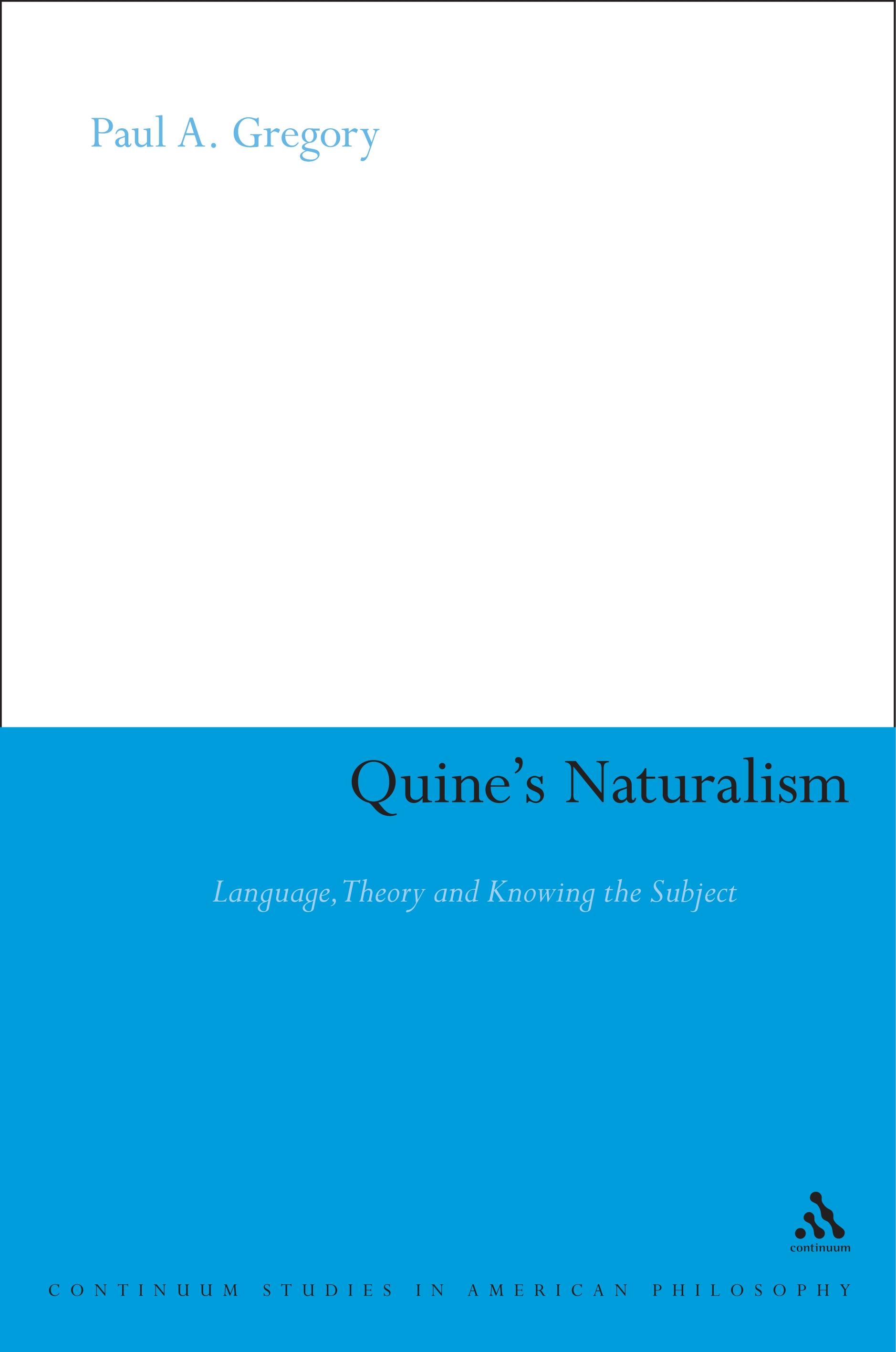
W. V. Quine was the most important naturalistic philosopher of the twentieth century and a major impetus for the recent resurgence of the view that empirical science is our best avenue to knowledge. His views, however, have not been well understood. Critics charge that Quine's naturalized epistemology is circular and that it cannot be normative. Yet, such criticisms stem from a cluster of fundamental traditional assumptions regarding language, theory, and the knowing subject - the very presuppositions that Quine is at pains to reject. Through investigation of Quine's views regarding language, knowledge, and reality, the author offers a new interpretation of Quine's naturalism. The naturalism/anti-naturalism debate can be advanced only by acknowledging and critiquing the substantial theoretical commitments implicit in the traditional view.
Gregory argues that the responses to the circularity and non-normativity objections do just that. His analysis further reveals that Quine's departure from the tradition penetrates the conception of the knowing subject, and he thus offers a new and engaging defence of Quine's naturalism.
Gregory argues that the responses to the circularity and non-normativity objections do just that. His analysis further reveals that Quine's departure from the tradition penetrates the conception of the knowing subject, and he thus offers a new and engaging defence of Quine's naturalism.
Płać wygodnie kartą, Klarną, Apple Pay lub Google Pay. Nie jesteś zadowolony? Zawsze masz 14-dniową gwarancję zwrotu pieniędzy. Więcej przeczytasz w naszych warunkach. Masz pytania? Napisz do nas na hello@memmo.org.
Memmo ułatwia naukę – gdziekolwiek jesteś na świecie. U nas znajdziesz podręczniki i sprytne narzędzia do nauki w jednym miejscu: streszczenia, quizy, podcasty i fiszki. A do tego Ted, Twój kumpel do nauki, który odpowie na wszystko, co Cię nurtuje. Ponad 50 000 studentów już tu się uczy – stworzone, byś uczył się szybciej i mniej stresował.