
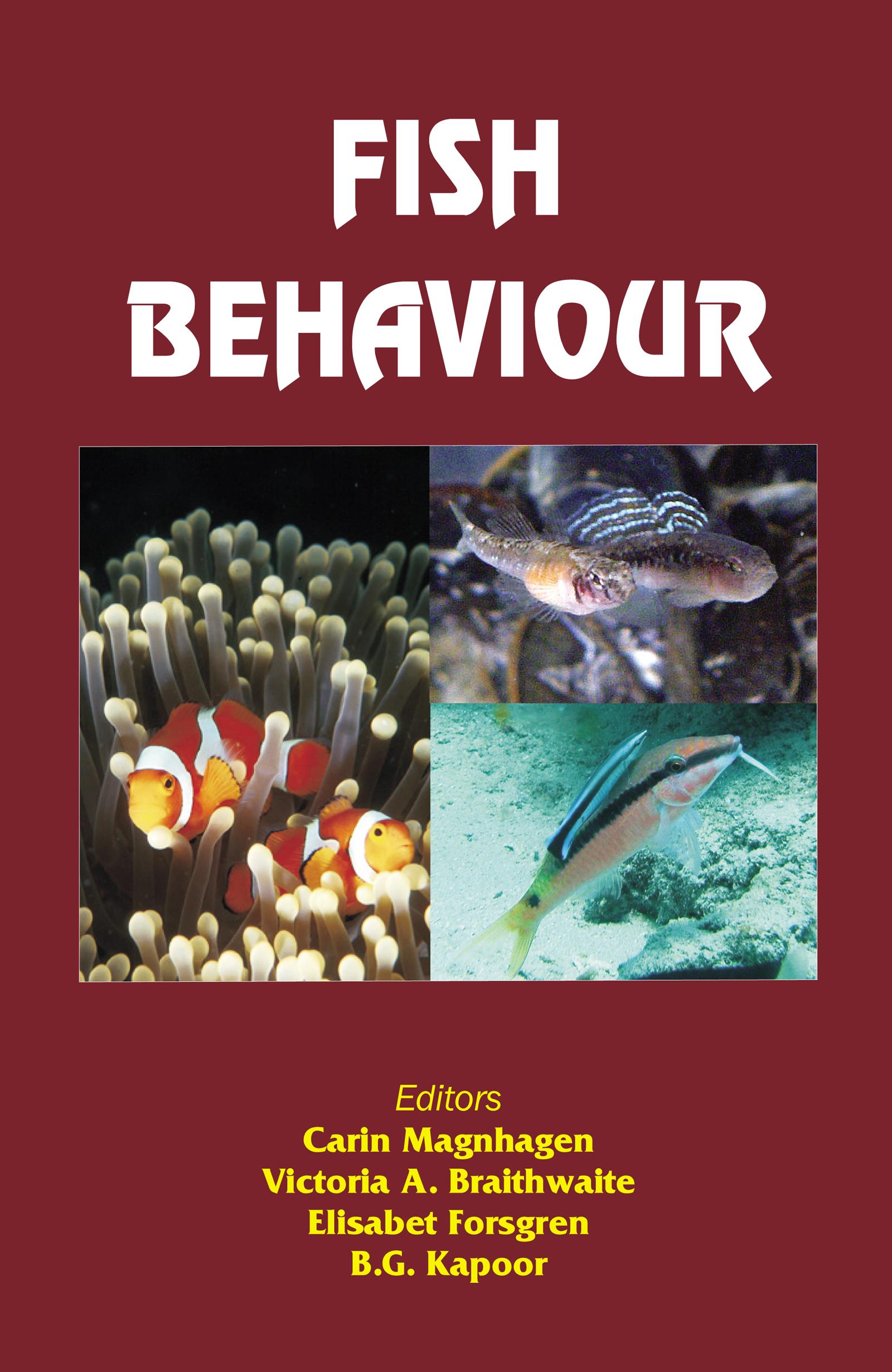
Fishes are by far the most species-rich vertebrate taxon, and it is also the vertebrate group with the most strikingly diverse repertoire of behaviours and behavioural adaptations. As such, they provide us with many opportunities to explore the fascinating complexities of animal behaviour. Central questions addressed in this book include: How do sensory input, hormones, genetics and experience interact to shape individual behaviour? What should a fish do to be in the right place at the right time and how should it behave to be an efficient predator yet not become the subject of predation itself? How to find a mate or to find the best mate? Should all fish do the same, or is the optimal behaviour dependent on individual characteristics? How does reproductive behaviour affect what fish look like, in terms of colour, body form or body size? And how do fish cope with their complex social and biological environment, including parasites, competitors and collaborators? This new book provides an exciting overview of the many new insights offered by recent research on fish behaviour. The chapters are written by prominent international scientists and are aimed not only at fish biology students and researchers but anyone interested in the interplay between behaviour, ecology and evolution.
Płać wygodnie kartą, Klarną, Apple Pay lub Google Pay. Nie jesteś zadowolony? Zawsze masz 14-dniową gwarancję zwrotu pieniędzy. Więcej przeczytasz w naszych warunkach. Masz pytania? Napisz do nas na hello@memmo.org.
Memmo ułatwia naukę – gdziekolwiek jesteś na świecie. U nas znajdziesz podręczniki i sprytne narzędzia do nauki w jednym miejscu: streszczenia, quizy, podcasty i fiszki. A do tego Ted, Twój kumpel do nauki, który odpowie na wszystko, co Cię nurtuje. Ponad 50 000 studentów już tu się uczy – stworzone, byś uczył się szybciej i mniej stresował.
Może Ci się spodobać
Kup książkę0