
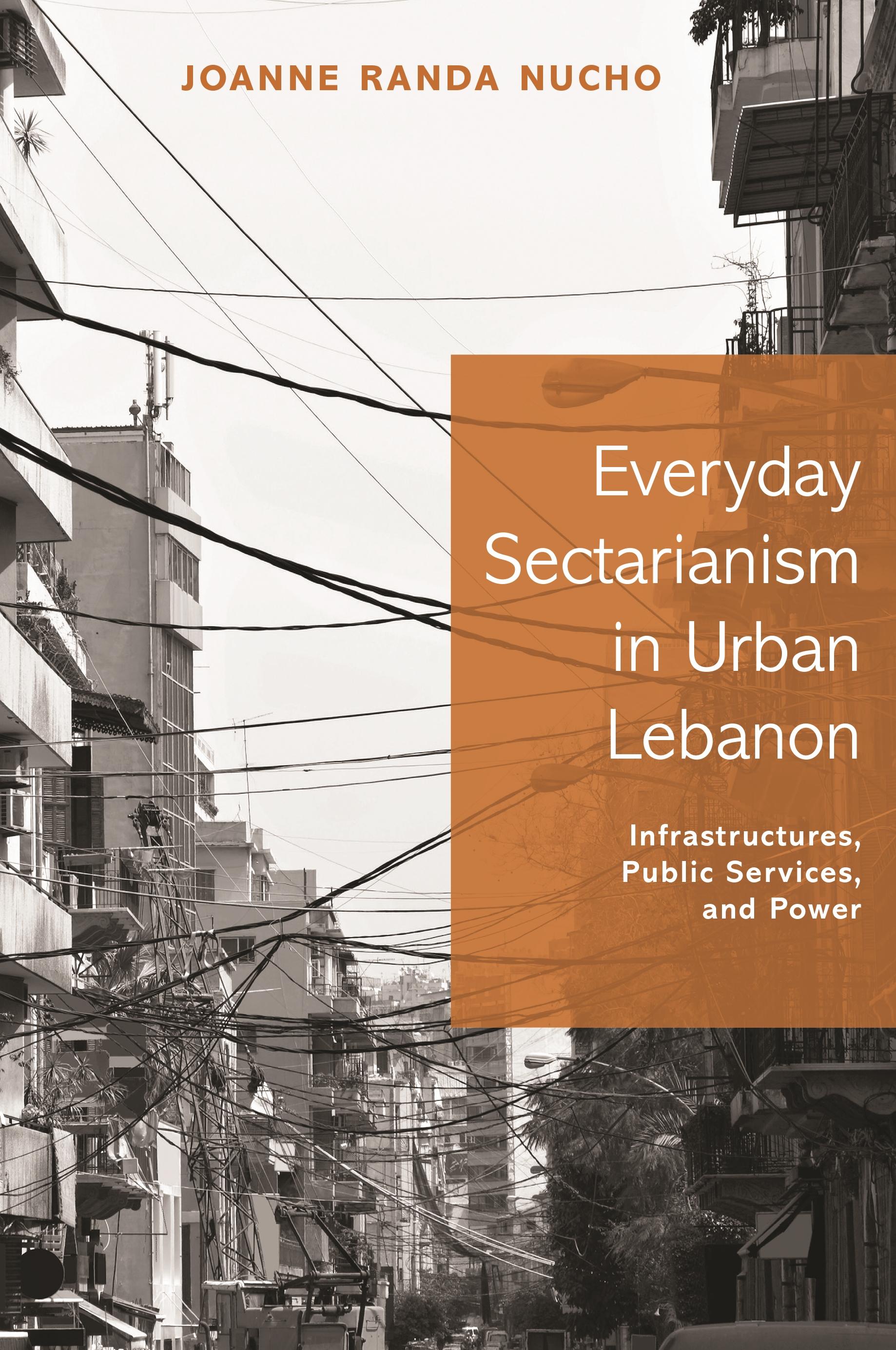
What causes violent conflicts around the Middle East? All too often, the answer is sectarianism—popularly viewed as a timeless and intractable force that leads religious groups to conflict. In Everyday Sectarianism in Urban Lebanon, Joanne Nucho shows how wrong this perspective can be. Through in-depth research with local governments, NGOs, and political parties in Beirut, she demonstrates how sectarianism is actually recalibrated on a daily basis through the provision of essential services and infrastructures, such as electricity, medical care, credit, and the planning of bridges and roads.
Taking readers to a working-class, predominantly Armenian suburb in northeast Beirut called Bourj Hammoud, Nucho conducts extensive interviews and observations in medical clinics, social service centers, shops, banking coops, and municipal offices. She explores how group and individual access to services depends on making claims to membership in the dominant sectarian community, and she examines how sectarianism is not just tied to ethnoreligious identity, but also class, gender, and geography. Life in Bourj Hammoud makes visible a broader pattern in which the relationships that develop while procuring basic needs become a way for people to see themselves as part of the greater public.
Illustrating how sectarianism in Lebanon is not simply about religious identity, as is commonly thought, Everyday Sectarianism in Urban Lebanon offers a new look at how everyday social exchanges define and redefine communities and conflicts.
Płać wygodnie kartą, Klarną, Apple Pay lub Google Pay. Nie jesteś zadowolony? Zawsze masz 14-dniową gwarancję zwrotu pieniędzy. Więcej przeczytasz w naszych warunkach. Masz pytania? Napisz do nas na hello@memmo.org.
Memmo ułatwia naukę – gdziekolwiek jesteś na świecie. U nas znajdziesz podręczniki i sprytne narzędzia do nauki w jednym miejscu: streszczenia, quizy, podcasty i fiszki. A do tego Ted, Twój kumpel do nauki, który odpowie na wszystko, co Cię nurtuje. Ponad 50 000 studentów już tu się uczy – stworzone, byś uczył się szybciej i mniej stresował.