
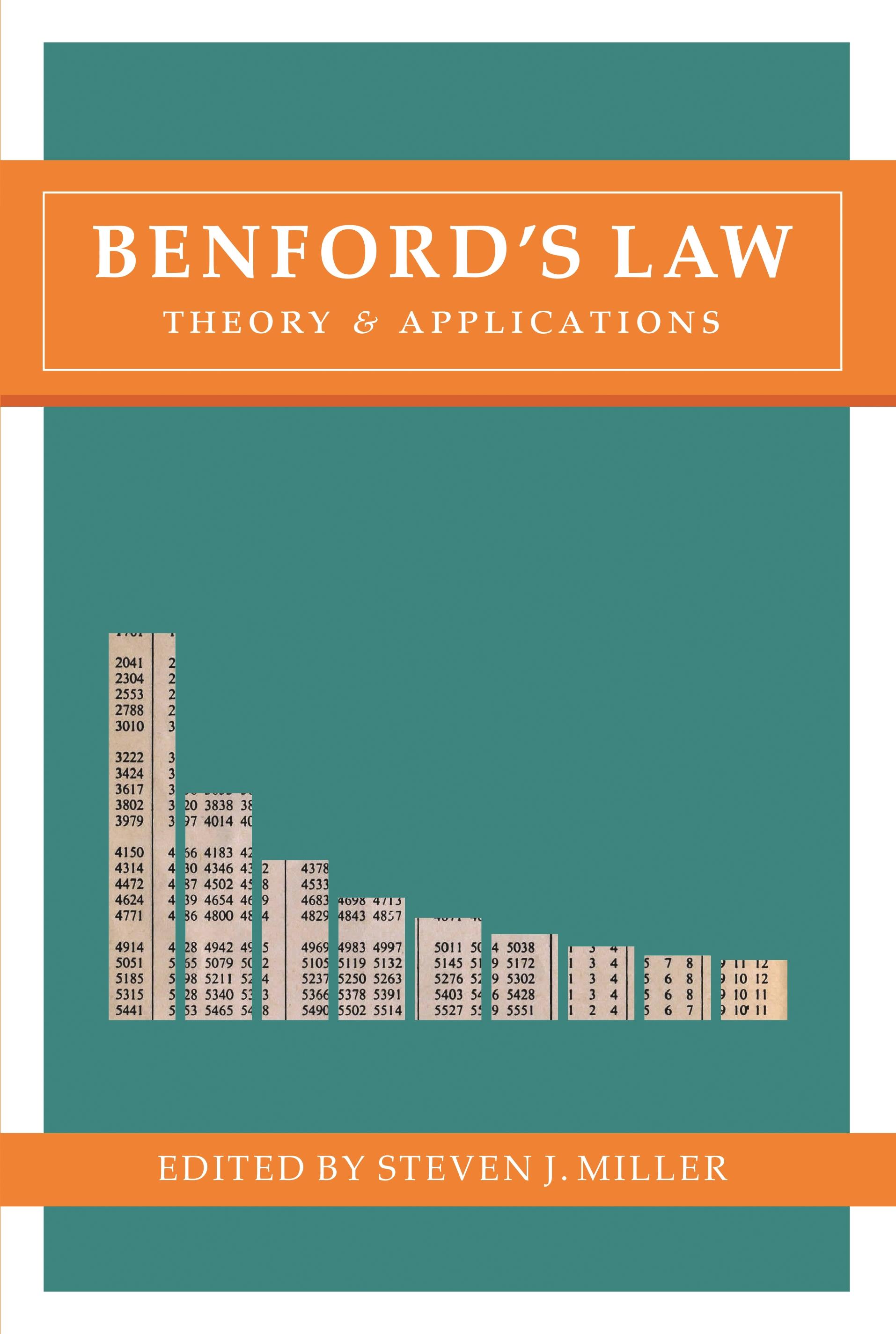
Benford's law states that the leading digits of many data sets are not uniformly distributed from one through nine, but rather exhibit a profound bias. This bias is evident in everything from electricity bills and street addresses to stock prices, population numbers, mortality rates, and the lengths of rivers. Here, Steven Miller brings together many of the world’s leading experts on Benford’s law to demonstrate the many useful techniques that arise from the law, show how truly multidisciplinary it is, and encourage collaboration.
Beginning with the general theory, the contributors explain the prevalence of the bias, highlighting explanations for when systems should and should not follow Benford’s law and how quickly such behavior sets in. They go on to discuss important applications in disciplines ranging from accounting and economics to psychology and the natural sciences. The contributors describe how Benford’s law has been successfully used to expose fraud in elections, medical tests, tax filings, and financial reports. Additionally, numerous problems, background materials, and technical details are available online to help instructors create courses around the book.
Emphasizing common challenges and techniques across the disciplines, this accessible book shows how Benford’s law can serve as a productive meeting ground for researchers and practitioners in diverse fields.
Płać wygodnie kartą, Klarną, Apple Pay lub Google Pay. Nie jesteś zadowolony? Zawsze masz 14-dniową gwarancję zwrotu pieniędzy. Więcej przeczytasz w naszych warunkach. Masz pytania? Napisz do nas na hello@memmo.org.
Memmo ułatwia naukę – gdziekolwiek jesteś na świecie. U nas znajdziesz podręczniki i sprytne narzędzia do nauki w jednym miejscu: streszczenia, quizy, podcasty i fiszki. A do tego Ted, Twój kumpel do nauki, który odpowie na wszystko, co Cię nurtuje. Ponad 50 000 studentów już tu się uczy – stworzone, byś uczył się szybciej i mniej stresował.