
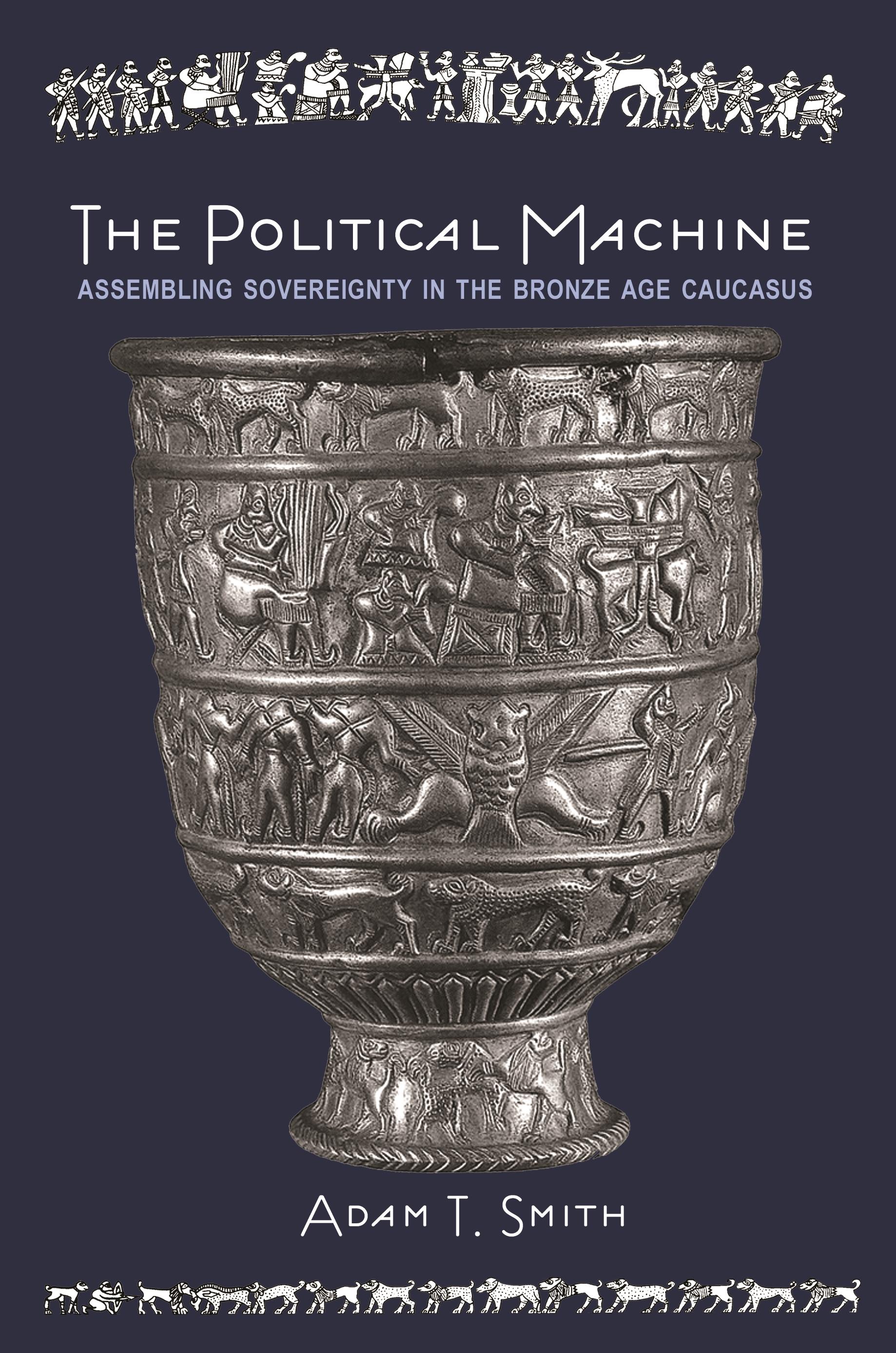
The Political Machine investigates the essential role that material culture plays in the practices and maintenance of political sovereignty. Through an archaeological exploration of the Bronze Age Caucasus, Adam Smith demonstrates that beyond assemblies of people, polities are just as importantly assemblages of things—from ballots and bullets to crowns, regalia, and licenses. Smith looks at the ways that these assemblages help to forge cohesive publics, separate sovereigns from a wider social mass, and formalize governance—and he considers how these developments continue to shape politics today.
Smith shows that the formation of polities is as much about the process of manufacturing assemblages as it is about disciplining subjects, and that these material objects or "machines" sustain communities, orders, and institutions. The sensibilities, senses, and sentiments connecting people to things enabled political authority during the Bronze Age and fortify political power even in the contemporary world. Smith provides a detailed account of the transformation of communities in the Caucasus, from small-scale early Bronze Age villages committed to egalitarianism, to Late Bronze Age polities predicated on radical inequality, organized violence, and a centralized apparatus of rule.
From Bronze Age traditions of mortuary ritual and divination to current controversies over flag pins and Predator drones, The Political Machine sheds new light on how material goods authorize and defend political order.
Płać wygodnie kartą, Klarną, Apple Pay lub Google Pay. Nie jesteś zadowolony? Zawsze masz 14-dniową gwarancję zwrotu pieniędzy. Więcej przeczytasz w naszych warunkach. Masz pytania? Napisz do nas na hello@memmo.org.
Memmo ułatwia naukę – gdziekolwiek jesteś na świecie. U nas znajdziesz podręczniki i sprytne narzędzia do nauki w jednym miejscu: streszczenia, quizy, podcasty i fiszki. A do tego Ted, Twój kumpel do nauki, który odpowie na wszystko, co Cię nurtuje. Ponad 50 000 studentów już tu się uczy – stworzone, byś uczył się szybciej i mniej stresował.