
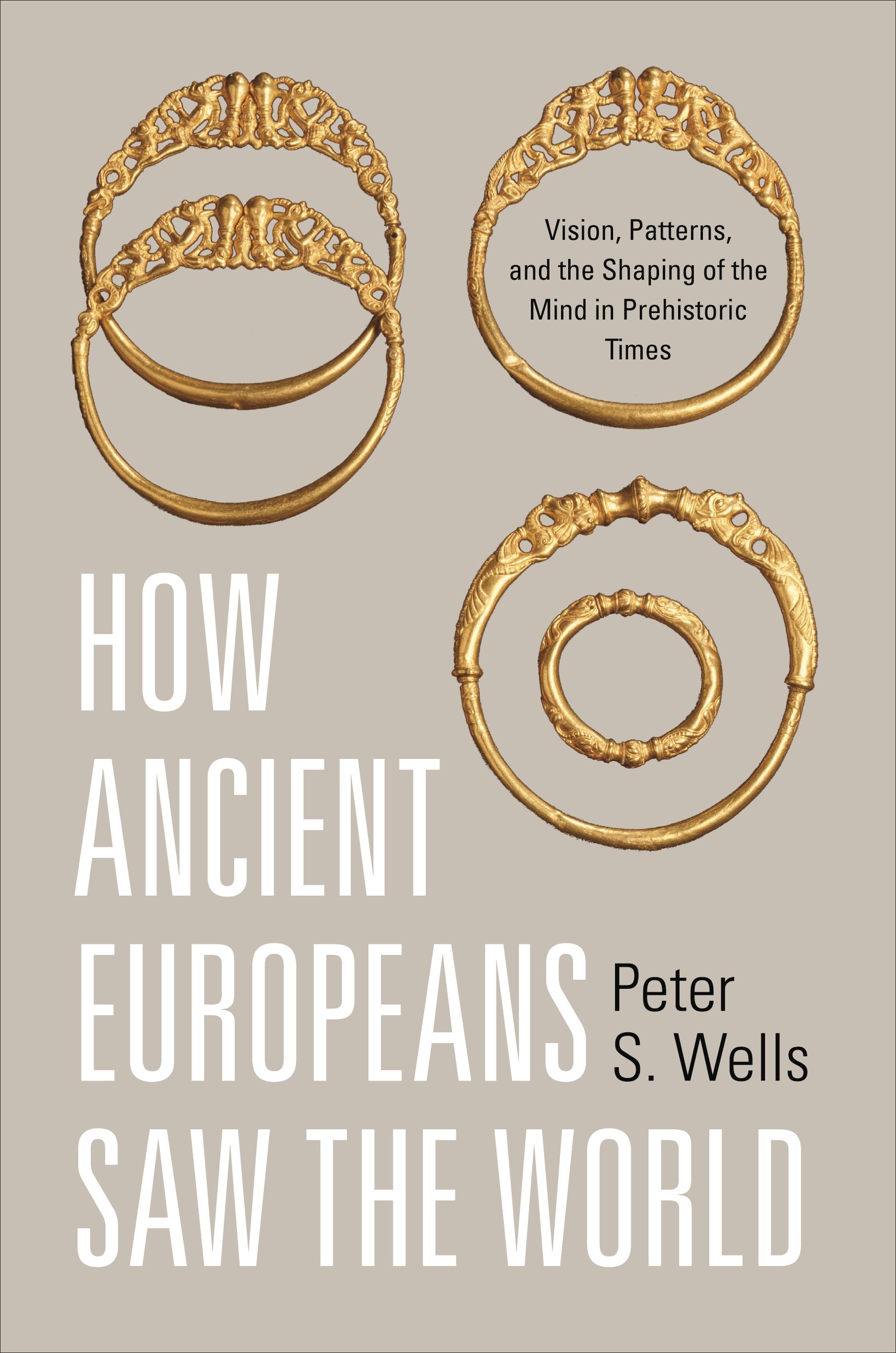
A revolutionary approach to how we view Europe's prehistoric culture
The peoples who inhabited Europe during the two millennia before the Roman conquests had established urban centers, large-scale production of goods such as pottery and iron tools, a money economy, and elaborate rituals and ceremonies. Yet as Peter Wells argues here, the visual world of these late prehistoric communities was profoundly different from those of ancient Rome's literate civilization and today's industrialized societies. Drawing on startling new research in neuroscience and cognitive psychology, Wells reconstructs how the peoples of pre-Roman Europe saw the world and their place in it. He sheds new light on how they communicated their thoughts, feelings, and visual perceptions through the everyday tools they shaped, the pottery and metal ornaments they decorated, and the arrangements of objects they made in their ritual places—and how these forms and patterns in turn shaped their experience.
How Ancient Europeans Saw the World offers a completely new approach to the study of Bronze Age and Iron Age Europe, and represents a major challenge to existing views about prehistoric cultures. The book demonstrates why we cannot interpret the structures that Europe's pre-Roman inhabitants built in the landscape, the ways they arranged their settlements and burial sites, or the complex patterning of their art on the basis of what these things look like to us. Rather, we must view these objects and visual patterns as they were meant to be seen by the ancient peoples who fashioned them.
Płać wygodnie kartą, Klarną, Apple Pay lub Google Pay. Nie jesteś zadowolony? Zawsze masz 14-dniową gwarancję zwrotu pieniędzy. Więcej przeczytasz w naszych warunkach. Masz pytania? Napisz do nas na hello@memmo.org.
Memmo ułatwia naukę – gdziekolwiek jesteś na świecie. U nas znajdziesz podręczniki i sprytne narzędzia do nauki w jednym miejscu: streszczenia, quizy, podcasty i fiszki. A do tego Ted, Twój kumpel do nauki, który odpowie na wszystko, co Cię nurtuje. Ponad 50 000 studentów już tu się uczy – stworzone, byś uczył się szybciej i mniej stresował.