
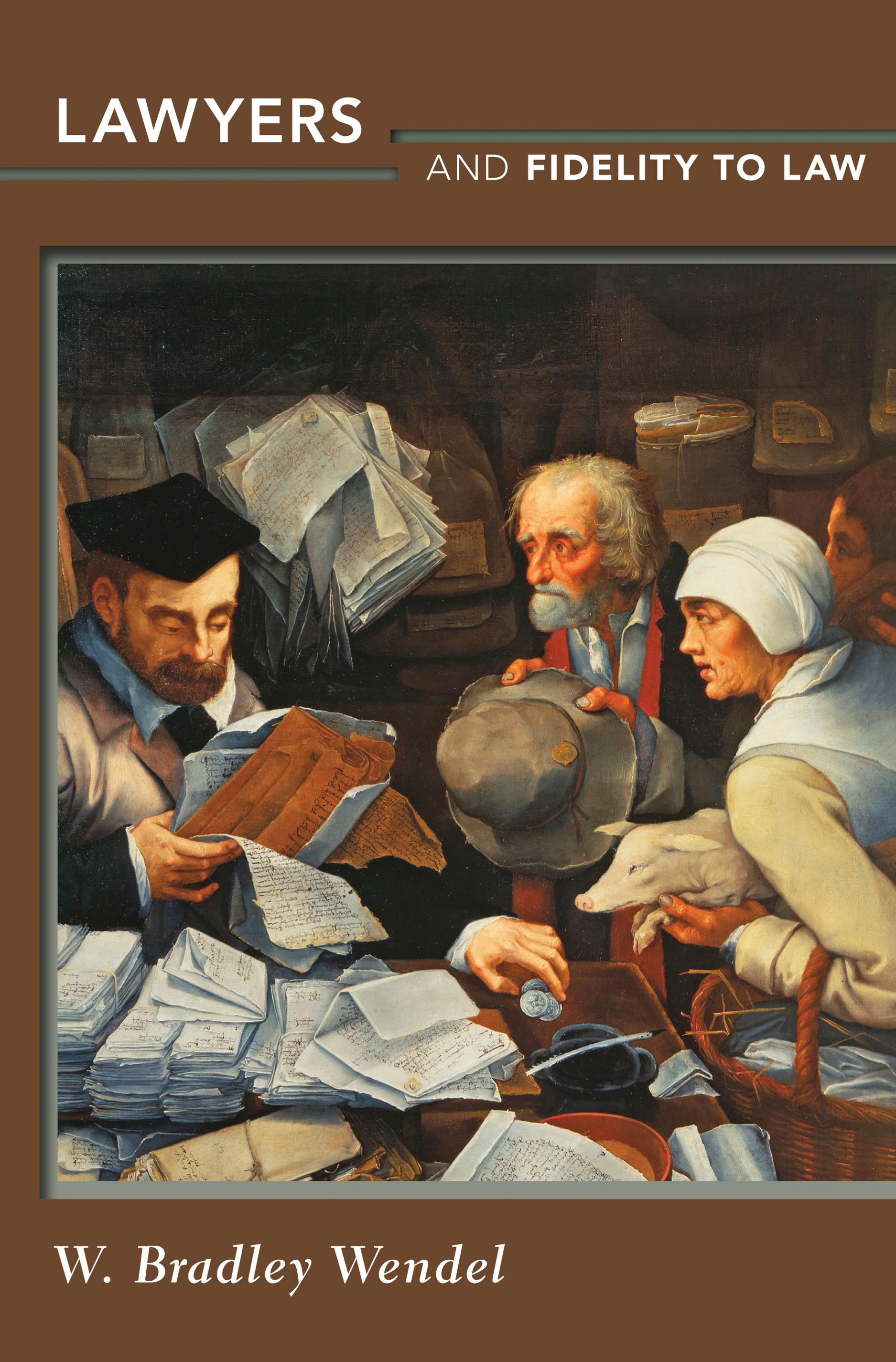
Even lawyers who obey the law often seem to act unethically--interfering with the discovery of truth, subverting justice, and inflicting harm on innocent people. Standard arguments within legal ethics attempt to show why it is permissible to do something as a lawyer that it would be wrong to do as an ordinary person. But in the view of most critics these arguments fail to turn wrongs into rights. Even many lawyers think legal ethics is flawed because it does not accurately describe the considerable moral value of their work. In Lawyers and Fidelity to Law, Bradley Wendel introduces a new conception of legal ethics that addresses the concerns of lawyers and their critics alike.
Wendel proposes an ethics grounded on the political value of law as a collective achievement that settles intractable conflicts, allowing people who disagree profoundly to live together in a peaceful, stable society. Lawyers must be loyal and competent client representatives, Wendel argues, but these obligations must always be exercised within the law that constitutes their own roles and confers rights and duties upon their clients. Lawyers act unethically when they treat the law as an inconvenient obstacle to be worked around and when they twist and distort it to help their clients do what they are not legally entitled to do. Lawyers and Fidelity to Law challenges lawyers and their critics to reconsider the nature and value of ethical representation.
Płać wygodnie kartą, Klarną, Apple Pay lub Google Pay. Nie jesteś zadowolony? Zawsze masz 14-dniową gwarancję zwrotu pieniędzy. Więcej przeczytasz w naszych warunkach. Masz pytania? Napisz do nas na hello@memmo.org.
Memmo ułatwia naukę – gdziekolwiek jesteś na świecie. U nas znajdziesz podręczniki i sprytne narzędzia do nauki w jednym miejscu: streszczenia, quizy, podcasty i fiszki. A do tego Ted, Twój kumpel do nauki, który odpowie na wszystko, co Cię nurtuje. Ponad 50 000 studentów już tu się uczy – stworzone, byś uczył się szybciej i mniej stresował.