
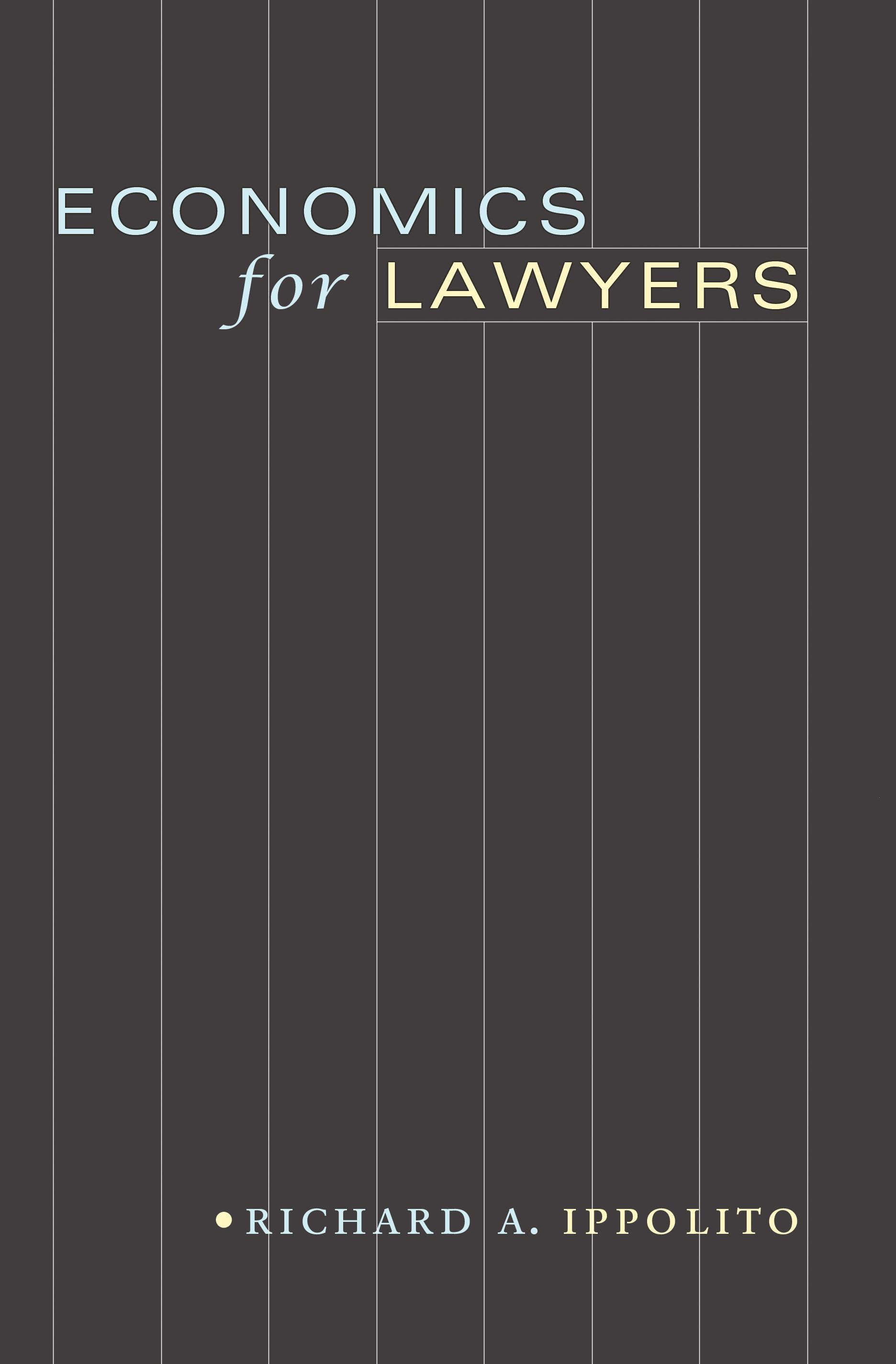
Whether dealing with contracts, tort actions, or government regulations, lawyers are more likely to be successful if they are conversant in economics. Economics for Lawyers provides the essential tools to understand the economic basis of law. Through rigorous analysis illustrated with simple graphs and a wide range of legal examples, Richard Ippolito focuses on a few key concepts and shows how they play out in numerous applications. There are everyday problems: What is the social cost of legislation enforcing below-market prices, minimum wages, milk regulation, and noncompetitive pricing? Why are matinee movies cheaper than nighttime showings? And then there are broader questions: What is the patent system's role in the market for intellectual property rights? How does one think about externalities like airport noise? Is the free market, a regulated solution, or tort law the best way to deliver the "efficient amount of harm" in the workplace? What is the best approach to the question of economic compensation due to a person falsely imprisoned?
Along the way, readers learn what economists mean when they talk about sorting, signaling, reputational assets, lemons markets, moral hazard, and adverse selection. They will learn a new vocabulary and a whole new way of thinking about the world they live in, and will be more productive in their professions.
Płać wygodnie kartą, Klarną, Apple Pay lub Google Pay. Nie jesteś zadowolony? Zawsze masz 14-dniową gwarancję zwrotu pieniędzy. Więcej przeczytasz w naszych warunkach. Masz pytania? Napisz do nas na hello@memmo.org.
Memmo ułatwia naukę – gdziekolwiek jesteś na świecie. U nas znajdziesz podręczniki i sprytne narzędzia do nauki w jednym miejscu: streszczenia, quizy, podcasty i fiszki. A do tego Ted, Twój kumpel do nauki, który odpowie na wszystko, co Cię nurtuje. Ponad 50 000 studentów już tu się uczy – stworzone, byś uczył się szybciej i mniej stresował.