
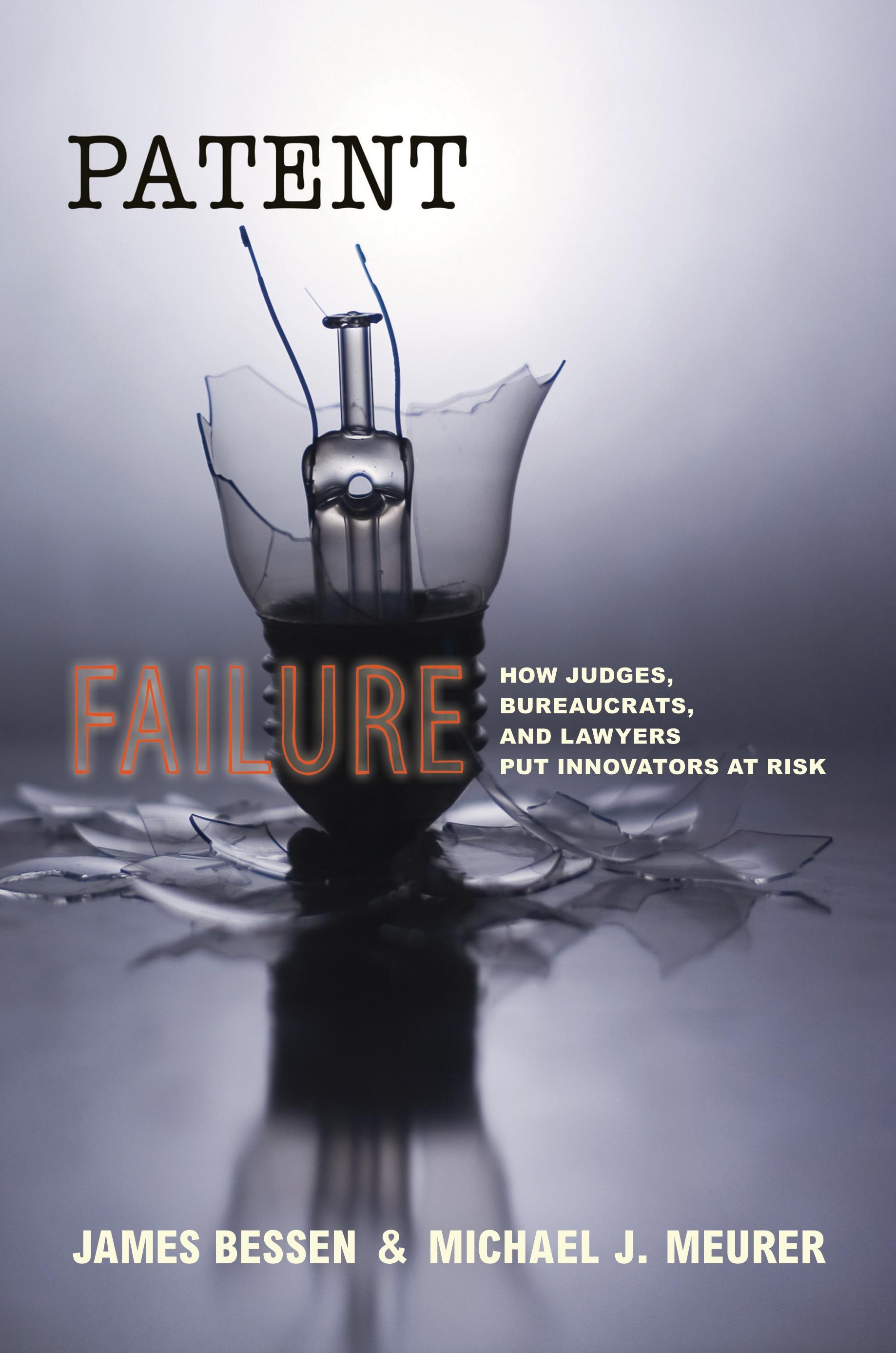
In recent years, business leaders, policymakers, and inventors have complained to the media and to Congress that today's patent system stifles innovation instead of fostering it. But like the infamous patent on the peanut butter and jelly sandwich, much of the cited evidence about the patent system is pure anecdote--making realistic policy formation difficult. Is the patent system fundamentally broken, or can it be fixed with a few modest reforms? Moving beyond rhetoric, Patent Failure provides the first authoritative and comprehensive look at the economic performance of patents in forty years. James Bessen and Michael Meurer ask whether patents work well as property rights, and, if not, what institutional and legal reforms are necessary to make the patent system more effective.
Patent Failure presents a wide range of empirical evidence from history, law, and economics. The book's findings are stark and conclusive. While patents do provide incentives to invest in research, development, and commercialization, for most businesses today, patents fail to provide predictable property rights. Instead, they produce costly disputes and excessive litigation that outweigh positive incentives. Only in some sectors, such as the pharmaceutical industry, do patents act as advertised, with their benefits outweighing the related costs.
By showing how the patent system has fallen short in providing predictable legal boundaries, Patent Failure serves as a call for change in institutions and laws. There are no simple solutions, but Bessen and Meurer's reform proposals need to be heard. The health and competitiveness of the nation's economy depend on it.
Płać wygodnie kartą, Klarną, Apple Pay lub Google Pay. Nie jesteś zadowolony? Zawsze masz 14-dniową gwarancję zwrotu pieniędzy. Więcej przeczytasz w naszych warunkach. Masz pytania? Napisz do nas na hello@memmo.org.
Memmo ułatwia naukę – gdziekolwiek jesteś na świecie. U nas znajdziesz podręczniki i sprytne narzędzia do nauki w jednym miejscu: streszczenia, quizy, podcasty i fiszki. A do tego Ted, Twój kumpel do nauki, który odpowie na wszystko, co Cię nurtuje. Ponad 50 000 studentów już tu się uczy – stworzone, byś uczył się szybciej i mniej stresował.