
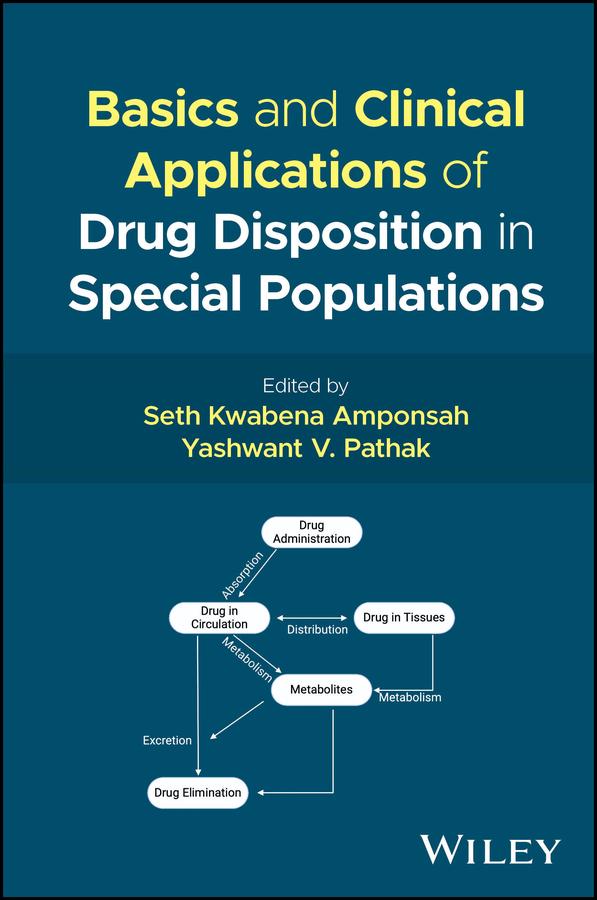
An up-to-date exploration of techniques for effectively treating patients from special populations
In Basics and Clinical Applications of Drug Disposition in Special Populations, a team of distinguished researchers delivers a timely and authoritative discussion of how to predict drug disposition in special populations, including people with obesity, pediatric patients, geriatric patients, and patients with renal and hepatic impairment. The authors use pharmacokinetic models to account for variabilities between populations and to better predict drug disposition.
The book offers a collection of 15 chapters written by recognized experts in their respective fields. They cover topics ranging from the optimization of drug dosing regimens in specialized populations to model-based approaches in drug treatment among pediatrics.
Readers will also find:
- A thorough introduction to considerations and regulatory affairs for clinical research in special populations
- Comprehensive explorations of drug disposition in geriatrics, patients with hepatic insufficiency, and patients with renal insufficiency
- Practical discussions of model-based pharmacokinetic approaches
- Complete treatments of artificial intelligence in drug development
Perfect for practicing pharmacologists, pharmacists, and clinical chemists, Basics and Clinical Applications of Drug Disposition in Special Populations will also benefit medical professionals who provide medical and pharmaceutical care to special populations.
Płać wygodnie kartą, Klarną, Apple Pay lub Google Pay. Nie jesteś zadowolony? Zawsze masz 14-dniową gwarancję zwrotu pieniędzy. Więcej przeczytasz w naszych warunkach. Masz pytania? Napisz do nas na hello@memmo.org.
Memmo ułatwia naukę – gdziekolwiek jesteś na świecie. U nas znajdziesz podręczniki i sprytne narzędzia do nauki w jednym miejscu: streszczenia, quizy, podcasty i fiszki. A do tego Ted, Twój kumpel do nauki, który odpowie na wszystko, co Cię nurtuje. Ponad 50 000 studentów już tu się uczy – stworzone, byś uczył się szybciej i mniej stresował.