
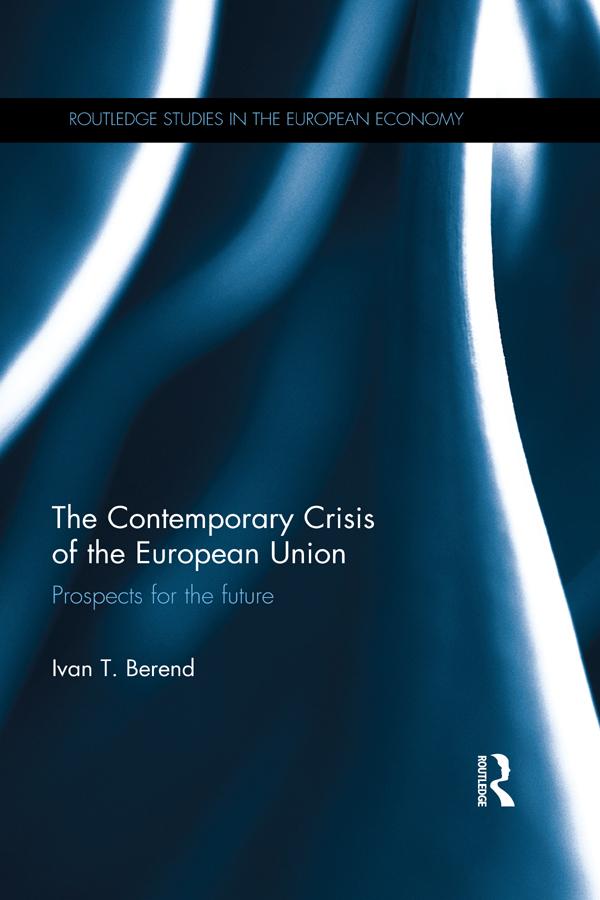
The European Union widened and deepened integration when it introduced the Single Market and the common currency, increasing the number of member countries from 12 to 28. After a quarter of a century, the 2008 financial and economic crisis opened a new chapter in the history of European integration. Prosperity was replaced by economic crisis and then long stagnation, with ramifications far beyond the economic arena.
For the first time, after more than half a century, some countries were almost forced to step out of the Union. History’s most frightening migration crisis shocked Europe and led to the strengthening of several anti-integration parties in various countries. This pioneering book discusses the nine crisis elements that could lead to disintegration of the EU. Beginning with the Greek Debt disaster this book delves into the cause of the recent European crisis and then onto the recent immigration influx and its consequences, as well as Britain’s exit from the Union. A concluding chapter, based on the facts of positive development during the crises years, gives a cautiously optimistic forecast for the future and asks the question: further integration or disintegration?
This volume is of great importance to academics, students and policy makers who have an interest in European politics, political economy and migration.
Płać wygodnie kartą, Klarną, Apple Pay lub Google Pay. Nie jesteś zadowolony? Zawsze masz 14-dniową gwarancję zwrotu pieniędzy. Więcej przeczytasz w naszych warunkach. Masz pytania? Napisz do nas na hello@memmo.org.
Memmo ułatwia naukę – gdziekolwiek jesteś na świecie. U nas znajdziesz podręczniki i sprytne narzędzia do nauki w jednym miejscu: streszczenia, quizy, podcasty i fiszki. A do tego Ted, Twój kumpel do nauki, który odpowie na wszystko, co Cię nurtuje. Ponad 50 000 studentów już tu się uczy – stworzone, byś uczył się szybciej i mniej stresował.