
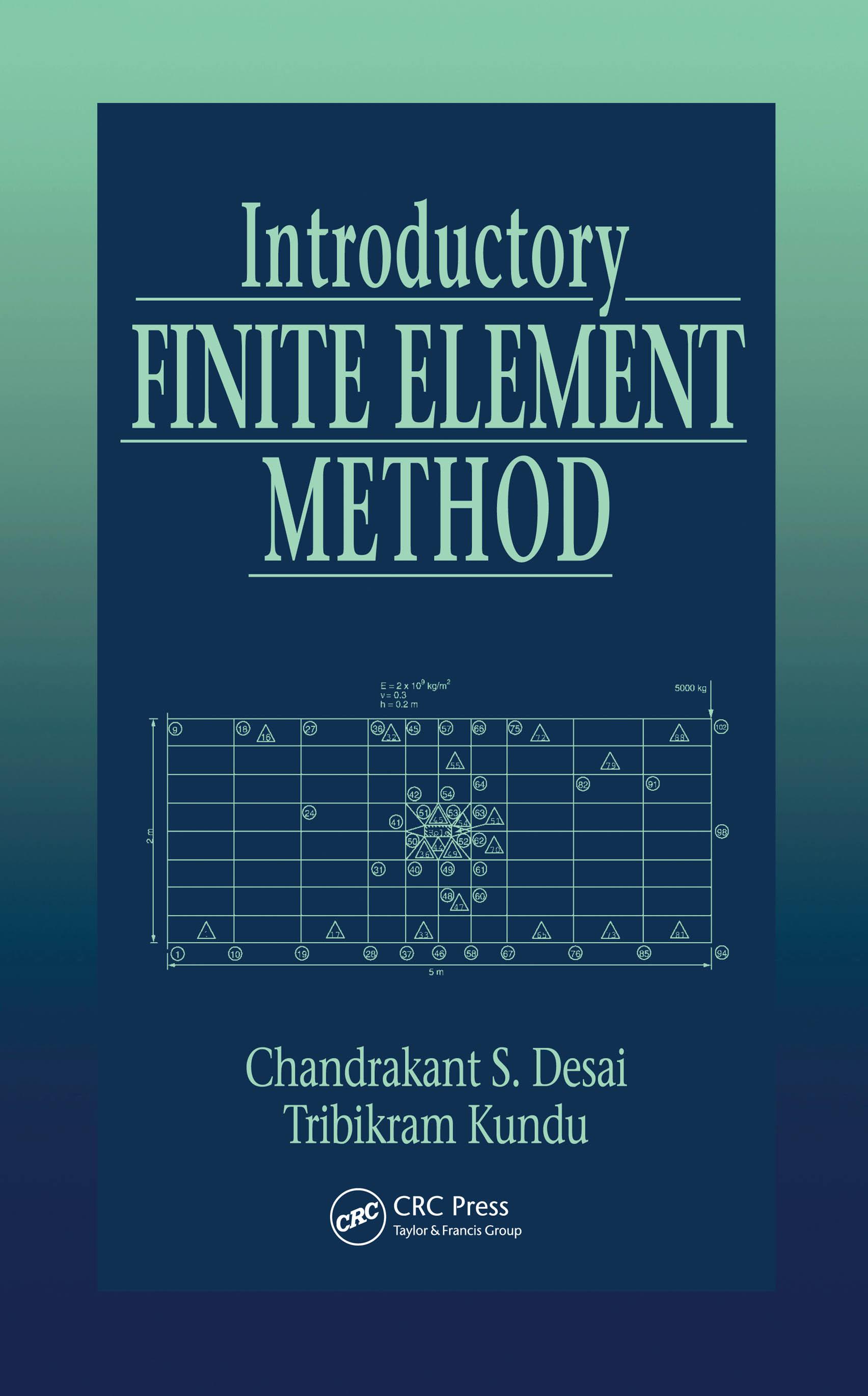
Although there are many books on the finite element method (FEM) on the market, very few present its basic formulation in a simple, unified manner. Furthermore, many of the available texts address either only structure-related problems or only fluid or heat-flow problems, and those that explore both do so at an advanced level.
Introductory Finite Element Method examines both structural analysis and flow (heat and fluid) applications in a presentation specifically designed for upper-level undergraduate and beginning graduate students, both within and outside of the engineering disciplines. It includes a chapter on variational calculus, clearly presented to show how the functionals for structural analysis and flow problems are formulated. The authors provide both one- and two-dimensional finite element codes and a wide range of examples and exercises. The exercises include some simpler ones to solve by hand calculation-this allows readers to understand the theory and assimilate the details of the steps in formulating computer implementations of the method.
Anyone interested in learning to solve boundary value problems numerically deserves a straightforward and practical introduction to the powerful FEM. Its clear, simplified presentation and attention to both flow and structural problems make Introductory Finite Element Method the ideal gateway to using the FEM in a variety of applications.
Strony: 520
Kategoria: Ingenjörsvetenskap
e-ISBN: 9781351990684
Waga przesyłki: 1.2 kg
Wysyłka w ciągu: 1-2 dni
Płać wygodnie kartą, Klarną, Apple Pay lub Google Pay. Nie jesteś zadowolony? Zawsze masz 14-dniową gwarancję zwrotu pieniędzy. Więcej przeczytasz w naszych warunkach. Masz pytania? Napisz do nas na hello@memmo.org.
Memmo ułatwia naukę – gdziekolwiek jesteś na świecie. U nas znajdziesz podręczniki i sprytne narzędzia do nauki w jednym miejscu: streszczenia, quizy, podcasty i fiszki. A do tego Ted, Twój kumpel do nauki, który odpowie na wszystko, co Cię nurtuje. Ponad 50 000 studentów już tu się uczy – stworzone, byś uczył się szybciej i mniej stresował.
Może Ci się spodobać
Kup książkę0