
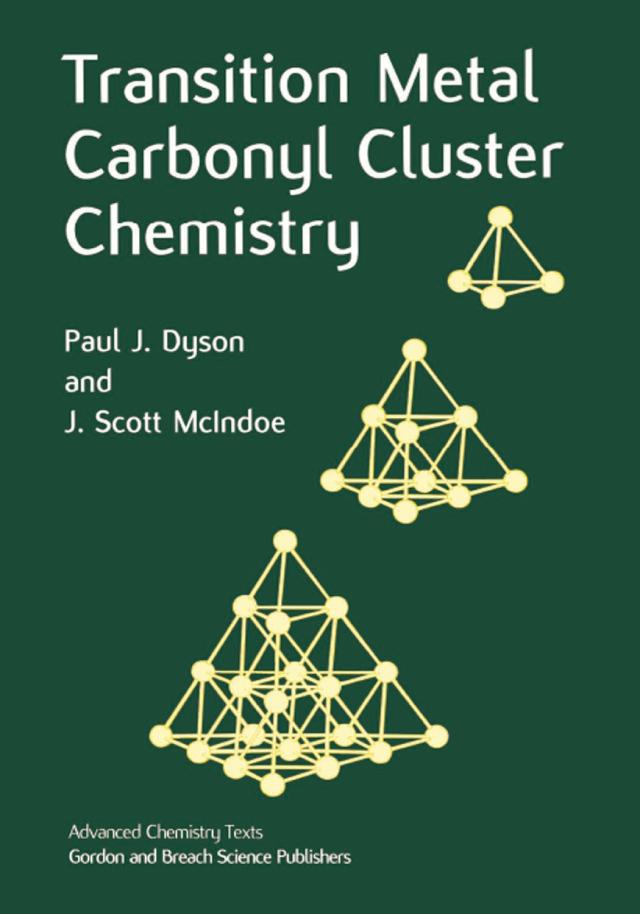
Transition metal carbonyl clusters (TMCCs) continue to inspire great interest in chemical research, as much for their fascinating structures as for potential industrial applications conferred by their unique properties. This highly accessible book introduces the bonding, structure, spectroscopic properties, and characterization of clusters, and then explores their synthesis, reactivity, reaction mechanisms and use in organic synthesis and catalysis.
Transition Metal Carbonyl Cluster Chemistry describes models and rules that correlate cluster structure with electron count, which are then applied in worked examples. Subsequent chapters explain how bonding relates to molecular structure, demonstrate the use of spectroscopic techniques such as NMR, IR and MS in
cluster chemistry, and outline the factors contributing to the stability, dynamics and reactivity of clusters. The second part of this book discusses the synthesis and applications of TMCCs. It emphasizes the differences between the reactivities of clusters vs. mononuclear metal complexes, contingent to the availability of multiple-bonding sites and heterosite reactivity. The final chapters discuss reactions in which clusters act as homogeneous catalysts; including discussion on the use of solid and biphasic liquid-liquid supported clusters in heterogeneous catalysts.
A useful reference for those commencing further research or post-graduate study on metal carbonyl clusters and advanced organometallic chemistry, this book is also a cornerstone addition to academic and libraries as well as private collections.
Płać wygodnie kartą, Klarną, Apple Pay lub Google Pay. Nie jesteś zadowolony? Zawsze masz 14-dniową gwarancję zwrotu pieniędzy. Więcej przeczytasz w naszych warunkach. Masz pytania? Napisz do nas na hello@memmo.org.
Memmo ułatwia naukę – gdziekolwiek jesteś na świecie. U nas znajdziesz podręczniki i sprytne narzędzia do nauki w jednym miejscu: streszczenia, quizy, podcasty i fiszki. A do tego Ted, Twój kumpel do nauki, który odpowie na wszystko, co Cię nurtuje. Ponad 50 000 studentów już tu się uczy – stworzone, byś uczył się szybciej i mniej stresował.