
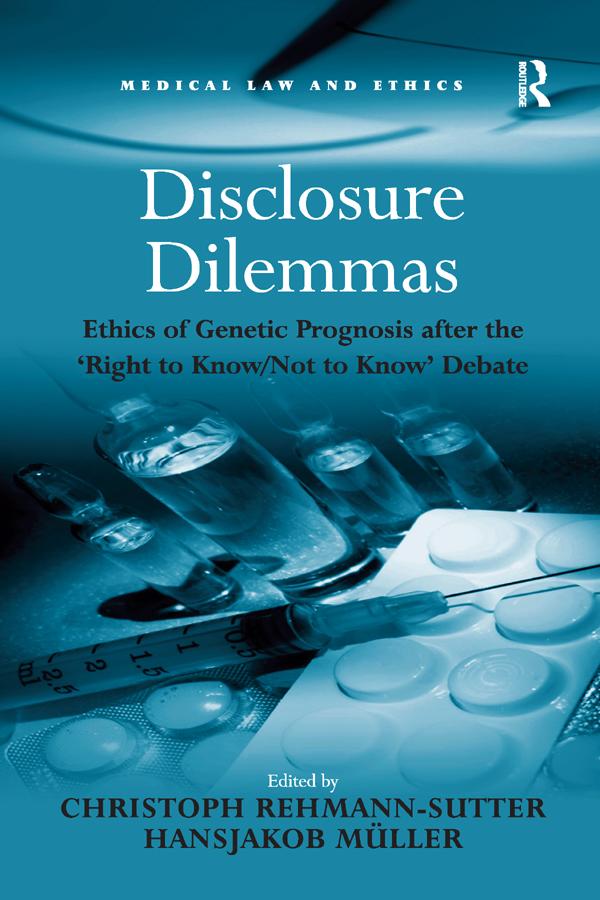
There exists today a fast growing availability of personal genetic information. Its prognostic impact and value for an individual or family member's health is sometimes unclear, whilst at other times it is clear-cut. The issue of whether to disclose genetic information does however have wide ranging implications. Avoiding the rhetoric of 'genetic exceptionalism', and drawing on an expanded field of bioethical, sociological and anthropological research, this book sets a new agenda for discussing the ethics surrounding the disclosure of prognostic genetic information. A hermeneutical approach reconsiders the ethics of disclosure in a variety of contexts in which genetic information is generated, requested, interpreted or communicated - from the provider perspective, but also from the moral perspectives of clients and their families. It is in situations of disclosure, in these different contexts, that genetic information meets morality. Providers and recipients can become vulnerable to the revelation or concealment of information, and the forms in which it may be provided. Disclosure Dilemmas invites readers to explore these contexts from an ethical viewpoint and will be a valuable resource for anyone with an interest in biomedical ethics.
Płać wygodnie kartą, Klarną, Apple Pay lub Google Pay. Nie jesteś zadowolony? Zawsze masz 14-dniową gwarancję zwrotu pieniędzy. Więcej przeczytasz w naszych warunkach. Masz pytania? Napisz do nas na hello@memmo.org.
Memmo ułatwia naukę – gdziekolwiek jesteś na świecie. U nas znajdziesz podręczniki i sprytne narzędzia do nauki w jednym miejscu: streszczenia, quizy, podcasty i fiszki. A do tego Ted, Twój kumpel do nauki, który odpowie na wszystko, co Cię nurtuje. Ponad 50 000 studentów już tu się uczy – stworzone, byś uczył się szybciej i mniej stresował.
Może Ci się spodobać
Kup książkę0