
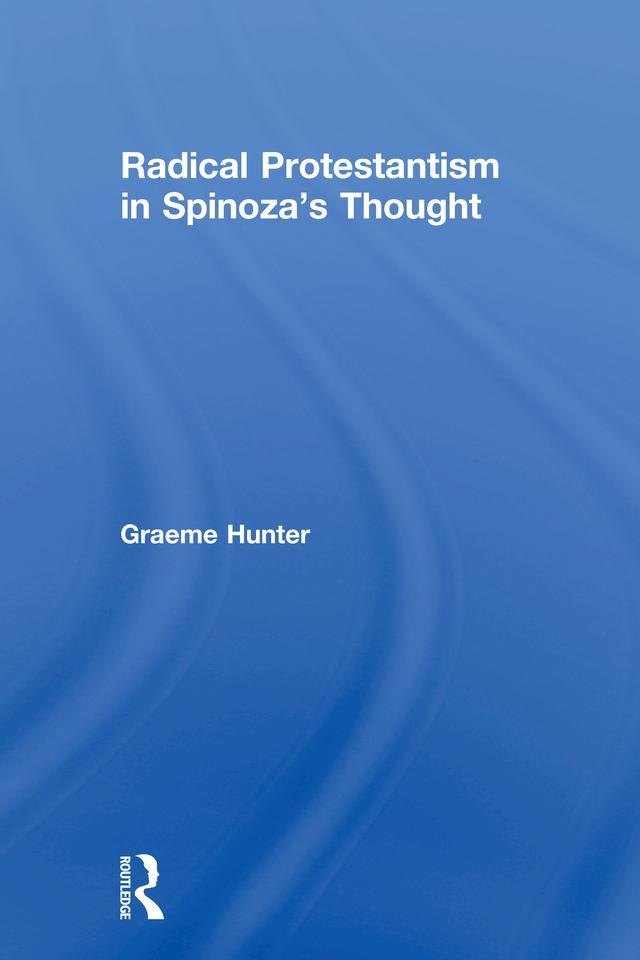
Spinoza is praised as a father of atheism, a precursor of the Enlightenment, an 'anti-theologian' and a father of political liberalism. When the religious dimension of Spinoza's thought cannot be ignored, it is usually dismissed as some form of mysticism or pantheism. This book explores the positive references to Christianity presented throughout Spinoza's works, focusing particularly on the Tractatus Theologico-politicus. Arguing that advocates of the anti-Christian or un-Christian Spinoza fail to look beyond Spinoza's ethics, which has the least to say about Christianity, Graeme Hunter offers a fresh interpretation of Spinoza's most important works and his philosophical and religious thought.  While there is no evidence that Spinoza became a Christian in any formal sense, Hunter argues that his aim was neither to be heretical nor atheistic, but rather to effect a radical reform of Christianity and a return to simple Biblical practices. This book presents a unique contribution to current debate for students and specialist scholars in philosophy of religion, the history of philosophy and early modern history.
Płać wygodnie kartą, Klarną, Apple Pay lub Google Pay. Nie jesteś zadowolony? Zawsze masz 14-dniową gwarancję zwrotu pieniędzy. Więcej przeczytasz w naszych warunkach. Masz pytania? Napisz do nas na hello@memmo.org.
Memmo ułatwia naukę – gdziekolwiek jesteś na świecie. U nas znajdziesz podręczniki i sprytne narzędzia do nauki w jednym miejscu: streszczenia, quizy, podcasty i fiszki. A do tego Ted, Twój kumpel do nauki, który odpowie na wszystko, co Cię nurtuje. Ponad 50 000 studentów już tu się uczy – stworzone, byś uczył się szybciej i mniej stresował.
Może Ci się spodobać
Kup książkę0