
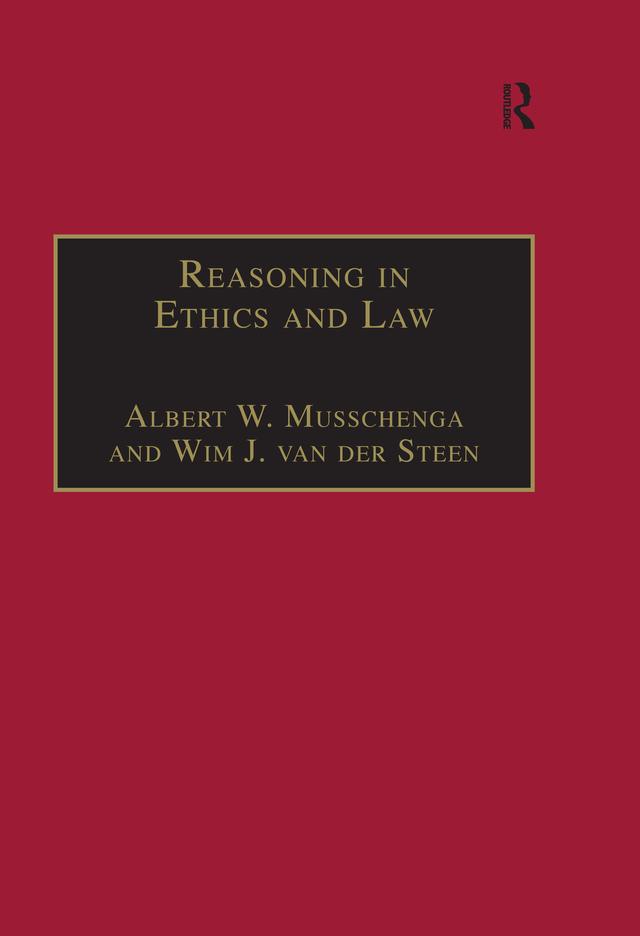
Legal and moral reasoning share much methodology, and they address similar problems. This volume charts two shared problems: the relation between theory, principles and particular judgments; and the role of facts and factual assertions in normative settings. The relation between 'theory' and 'practice' and between 'principle' and 'particular judgment' has become the subject of much debate in moral philosophy. In the ongoing debate, some moral philosophers refer to legal philosophy for a support of their views on the primacy of 'practice' over 'theory'. According to them, legal philosophy should have a more balanced view in that relation. In the contributions to Part One this claim is critically analysed. The role of the facts is underestimated in discussions on legal reasoning and legal theory, as well as moral reasoning and ethical theory. Factual statements enter into moral and legal discussions not only because they link the conclusion with a rule. They also play a role as background assumptions in supporting a theory. Its focus on the role of facts in normative reasoning makes this book of special interest to scholars of legal and moral argumentation.
Płać wygodnie kartą, Klarną, Apple Pay lub Google Pay. Nie jesteś zadowolony? Zawsze masz 14-dniową gwarancję zwrotu pieniędzy. Więcej przeczytasz w naszych warunkach. Masz pytania? Napisz do nas na hello@memmo.org.
Memmo ułatwia naukę – gdziekolwiek jesteś na świecie. U nas znajdziesz podręczniki i sprytne narzędzia do nauki w jednym miejscu: streszczenia, quizy, podcasty i fiszki. A do tego Ted, Twój kumpel do nauki, który odpowie na wszystko, co Cię nurtuje. Ponad 50 000 studentów już tu się uczy – stworzone, byś uczył się szybciej i mniej stresował.
Może Ci się spodobać
Kup książkę0