
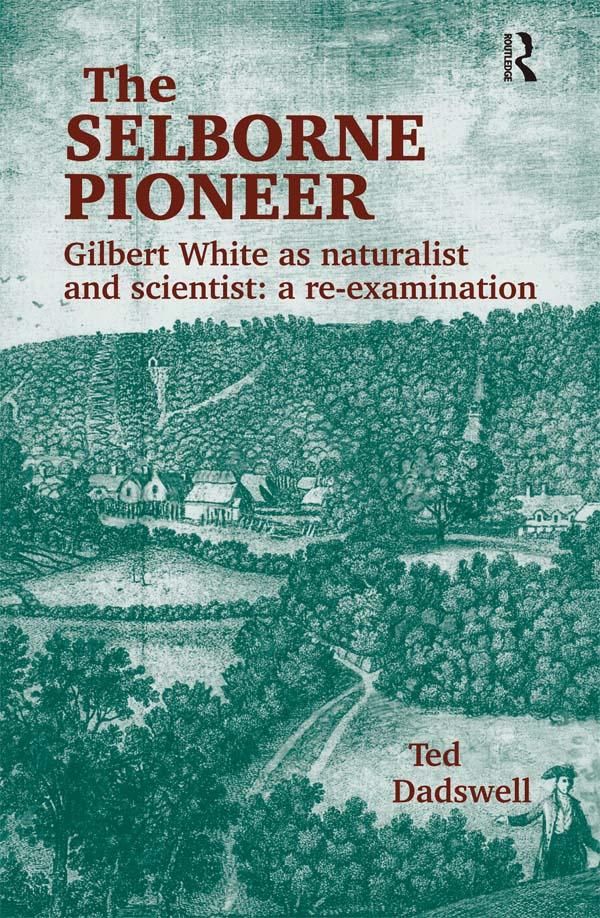
Gilbert White's name is known universally but, as Ted Dadswell insists in this book, important aspects of his work have frequently been overlooked even by scholarly editors. The Selborne naturalist (1720-1793) has been described as 'a prince of personal observers'; but a shrewd analytical questioning and comparing was also typical of his 'natural knowledge'. Exceptional even in his general aims, White studied the behaviour, the 'manners' and 'conversation', of his animals and plants. He saw, moreover, that an animal or plant and indeed a parish such as his own, was unitary in operation; again and again, a cause had numerous effects and an effect numerous causes. Observation could go forward in circumstances such as these, if one was both sharp-eyed and patient, but how could true investigation be managed? How could a particular cause or effect be isolated or tested? Here what Dadswell calls White's 'comparative habit' was put to good use. Gilbert White was a careful keeper of records, and using these comparatively he 'appealed to controls' while examining his living creatures. Questioning and testing even the 'entirely usual', White was brought back repeatedly to the notion of adaptability. His zoological findings often concerned 'changed or changing' animals (or birds) and their social and inter-personal relationships. Today, we can seem particularly well placed to appreciate his methods and factual claims; our 'ethologists' and ecologists have - seemingly - corroborated much of what he did. And yet just this corroboration renders him the more mysterious. To properly assess White as naturalist, we must be able to approach him not only scientifically but also historically. He hoped for the emergence of teams of behavioural workers but did not try to pre-empt what would be achieved only by such teams, and while he 'saw with his own eyes', as his friend John Mulso says, he was substantially affected by certain of his contemporaries and predecessors. His journals and notebooks show us the naturalist at work. When a perhaps unexpected combination of influences is allowed for, his 'unique' activities can be at least partially explained.
Strony: 272
Kategoria: Vetenskapsteori och forskningsmetod
e-ISBN: 9781351882101
Waga przesyłki: 1.2 kg
Wysyłka w ciągu: 1-2 dni
Płać wygodnie kartą, Klarną, Apple Pay lub Google Pay. Nie jesteś zadowolony? Zawsze masz 14-dniową gwarancję zwrotu pieniędzy. Więcej przeczytasz w naszych warunkach. Masz pytania? Napisz do nas na hello@memmo.org.
Memmo ułatwia naukę – gdziekolwiek jesteś na świecie. U nas znajdziesz podręczniki i sprytne narzędzia do nauki w jednym miejscu: streszczenia, quizy, podcasty i fiszki. A do tego Ted, Twój kumpel do nauki, który odpowie na wszystko, co Cię nurtuje. Ponad 50 000 studentów już tu się uczy – stworzone, byś uczył się szybciej i mniej stresował.
Może Ci się spodobać
Kup książkę0