
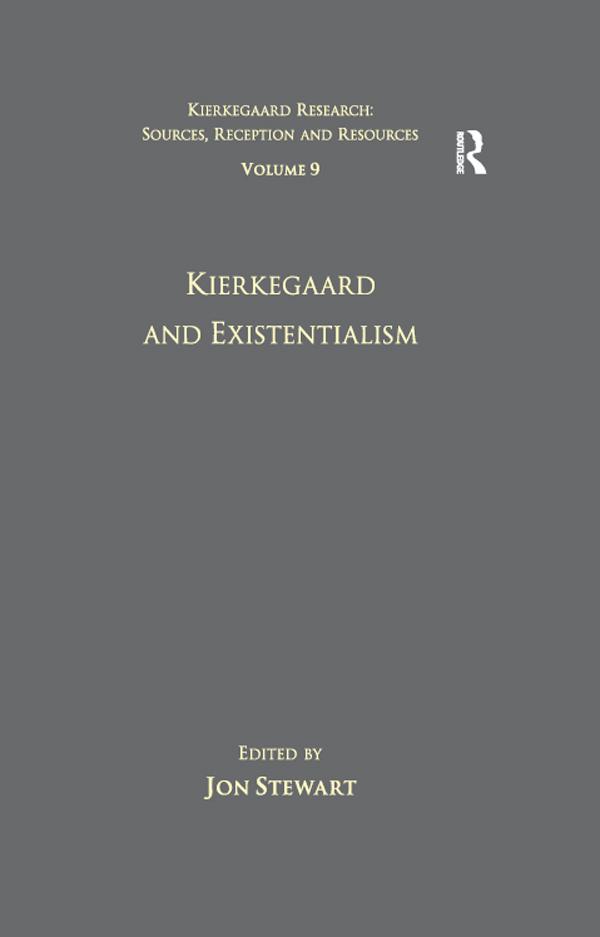
There can be no doubt that most of the thinkers who are usually associated with the existentialist tradition, whatever their actual doctrines, were in one way or another influenced by the writings of Kierkegaard. This influence is so great that it can be fairly stated that the existentialist movement was largely responsible for the major advance in Kierkegaard's international reception that took place in the twentieth century. In Kierkegaard's writings one can find a rich array of concepts such as anxiety, despair, freedom, sin, the crowd, and sickness that all came to be standard motifs in existentialist literature. Sartre played an important role in canonizing Kierkegaard as one of the forerunners of existentialism. However, recent scholarship has been attentive to his ideological use of Kierkegaard. Indeed, Sartre seemed to be exploiting Kierkegaard for his own purposes and suspicions of misrepresentation and distortions have led recent commentators to go back and reexamine the complex relation between Kierkegaard and the existentialist thinkers. The articles in the present volume feature figures from the French, German, Spanish and Russian traditions of existentialism. They examine the rich and varied use of Kierkegaard by these later thinkers, and, most importantly, they critically analyze his purported role in this famous intellectual movement.
Płać wygodnie kartą, Klarną, Apple Pay lub Google Pay. Nie jesteś zadowolony? Zawsze masz 14-dniową gwarancję zwrotu pieniędzy. Więcej przeczytasz w naszych warunkach. Masz pytania? Napisz do nas na hello@memmo.org.
Memmo ułatwia naukę – gdziekolwiek jesteś na świecie. U nas znajdziesz podręczniki i sprytne narzędzia do nauki w jednym miejscu: streszczenia, quizy, podcasty i fiszki. A do tego Ted, Twój kumpel do nauki, który odpowie na wszystko, co Cię nurtuje. Ponad 50 000 studentów już tu się uczy – stworzone, byś uczył się szybciej i mniej stresował.
Może Ci się spodobać
Kup książkę0