
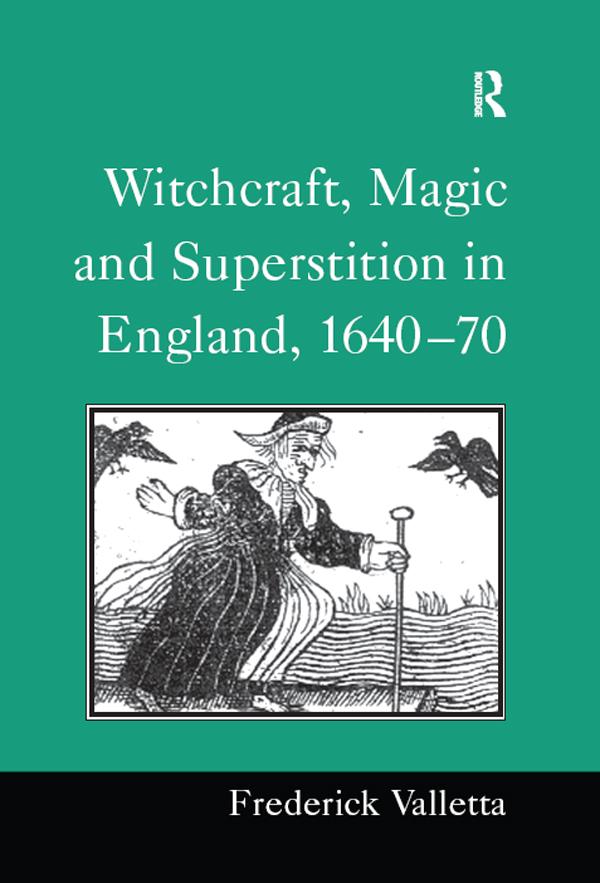
This study examines the relationship between élite and popular beliefs in witchcraft, magic and superstition in England, analyzing such beliefs against the background of political, religious and social upheaval characteristic of the Civil War, Interregnum and Restoration periods. Belief in witchcraft received new impulses because of the general ferment of religious ideas and the tendency of participants in the Civil Wars to resort to imagery drawn from beliefs about the devil and witches; or to use portents to argue for the wrongs of their opponents. Throughout the work, the author stresses that deeply held superstitions were fundamental to belief in witches, the devil, ghosts, apparitions and supernatural healing. Despite the fact that popular superstitions were often condemned, it was recognized that their propaganda value was too useful to ignore. A host of pamphlets and treatises were published during this period which unashamedly incorporated such beliefs. Valletta here explores the manner in which political and religious authorities somewhat cynically used demonic imagery and language to discredit their opponents and to manipulate popular opinion.
Płać wygodnie kartą, Klarną, Apple Pay lub Google Pay. Nie jesteś zadowolony? Zawsze masz 14-dniową gwarancję zwrotu pieniędzy. Więcej przeczytasz w naszych warunkach. Masz pytania? Napisz do nas na hello@memmo.org.
Memmo ułatwia naukę – gdziekolwiek jesteś na świecie. U nas znajdziesz podręczniki i sprytne narzędzia do nauki w jednym miejscu: streszczenia, quizy, podcasty i fiszki. A do tego Ted, Twój kumpel do nauki, który odpowie na wszystko, co Cię nurtuje. Ponad 50 000 studentów już tu się uczy – stworzone, byś uczył się szybciej i mniej stresował.
Może Ci się spodobać
Kup książkę0