
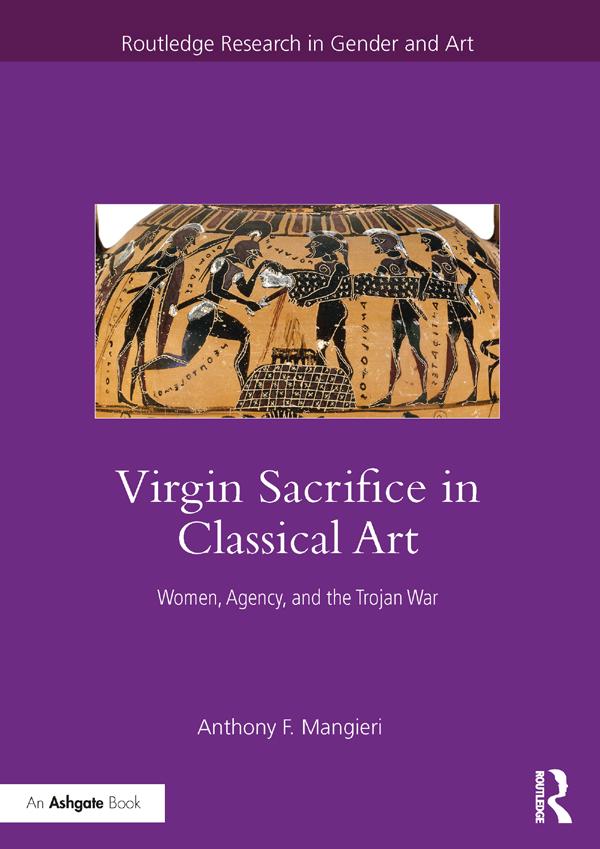
The Trojan War begins and ends with the sacrifice of a virgin princess. The gruesome killing of a woman must have captivated ancient people because the myth of the sacrificial virgin resonates powerfully in the arts of ancient Greece and Rome. Most scholars agree that the Greeks and Romans did not practice human sacrifice, so why then do the myths of virgin sacrifice appear persistently in art and literature for over a millennium? Virgin Sacrifice in Classical Art: Women, Agency, and the Trojan War seeks to answer this question.
This book tells the stories of the sacrificial maidens in order to help the reader discover the meanings bound up in these myths for historical people. In exploring the representations of Iphigeneia and Polyxena in Greek, Etruscan, and Roman art, this book offers a broader cultural history that reveals what people in the ancient world were seeking in these stories. The result is an interdisciplinary study that offers new interpretations on the meaning of the sacrificial virgin as a cultural and ideological construction. This is the first book-length study of virgin sacrifice in ancient art and the first to provide an interpretive framework within which to understand its imagery.
Płać wygodnie kartą, Klarną, Apple Pay lub Google Pay. Nie jesteś zadowolony? Zawsze masz 14-dniową gwarancję zwrotu pieniędzy. Więcej przeczytasz w naszych warunkach. Masz pytania? Napisz do nas na hello@memmo.org.
Memmo ułatwia naukę – gdziekolwiek jesteś na świecie. U nas znajdziesz podręczniki i sprytne narzędzia do nauki w jednym miejscu: streszczenia, quizy, podcasty i fiszki. A do tego Ted, Twój kumpel do nauki, który odpowie na wszystko, co Cię nurtuje. Ponad 50 000 studentów już tu się uczy – stworzone, byś uczył się szybciej i mniej stresował.