
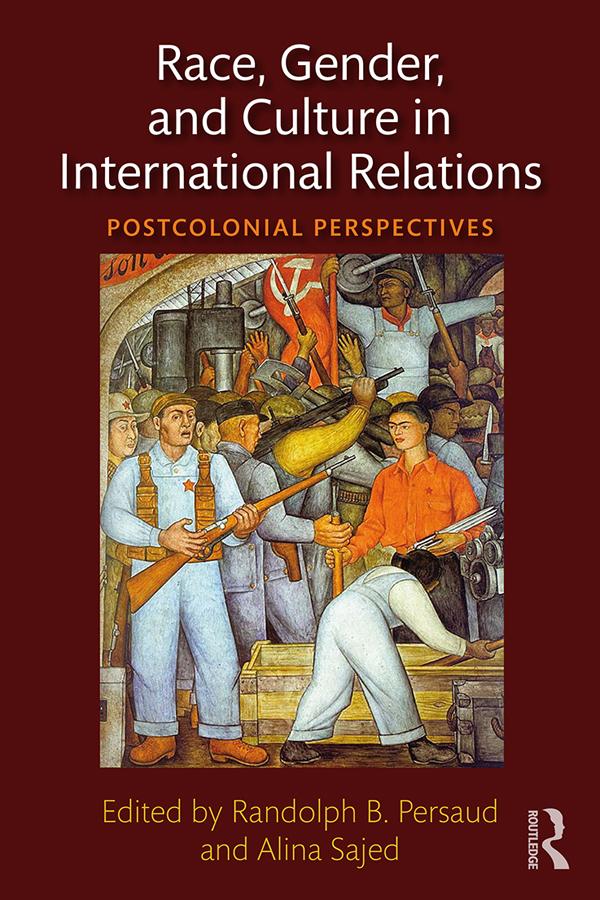
International relations theory has broadened out considerably since the end of the Cold War. Topics and issues once deemed irrelevant to the discipline have been systematically drawn into the debate and great strides have been made in the areas of culture/identity, race, and gender in the discipline. However, despite these major developments over the last two decades, currently there are no comprehensive textbooks that deal with race, gender, and culture in IR from a postcolonial perspective. This textbook fills this important gap.
Persaud and Sajed have drawn together an outstanding lineup of scholars, with each chapter illustrating the ways these specific lenses (race, gender, culture) condition or alter our assumptions about world politics.
This book:
- covers a wide range of topics including war, global inequality, postcolonialism, nation/nationalism, indigeneity, sexuality, celebrity humanitarianism, and religion;
- follows a clear structure, with each chapter situating the topic within IR, reviewing the main approaches and debates surrounding the topic and illustrating the subject matter through case studies;
- features pedagogical tools and resources in every chapter - boxes to highlight major points; illustrative narratives; and a list of suggested readings.
Drawing together prominent scholars in critical International Relations, this work shows why and how race, gender and culture matter and will be essential reading for all students of global politics and International Relations theory.
Płać wygodnie kartą, Klarną, Apple Pay lub Google Pay. Nie jesteś zadowolony? Zawsze masz 14-dniową gwarancję zwrotu pieniędzy. Więcej przeczytasz w naszych warunkach. Masz pytania? Napisz do nas na hello@memmo.org.
Memmo ułatwia naukę – gdziekolwiek jesteś na świecie. U nas znajdziesz podręczniki i sprytne narzędzia do nauki w jednym miejscu: streszczenia, quizy, podcasty i fiszki. A do tego Ted, Twój kumpel do nauki, który odpowie na wszystko, co Cię nurtuje. Ponad 50 000 studentów już tu się uczy – stworzone, byś uczył się szybciej i mniej stresował.