
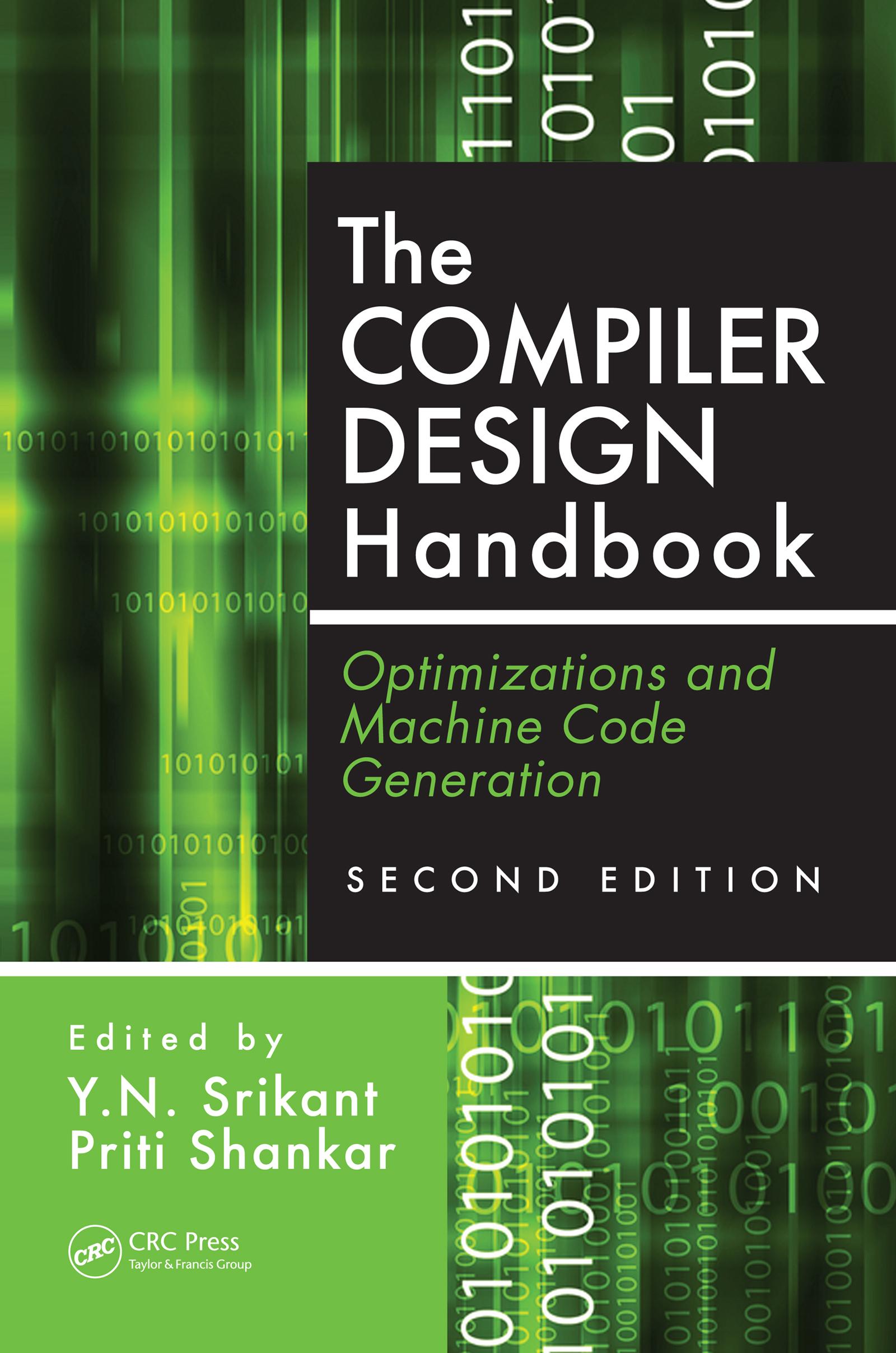
Today’s embedded devices and sensor networks are becoming more and more sophisticated, requiring more efficient and highly flexible compilers. Engineers are discovering that many of the compilers in use today are ill-suited to meet the demands of more advanced computer architectures.
Updated to include the latest techniques, The Compiler Design Handbook, Second Edition offers a unique opportunity for designers and researchers to update their knowledge, refine their skills, and prepare for emerging innovations. The completely revised handbook includes 14 new chapters addressing topics such as worst case execution time estimation, garbage collection, and energy aware compilation. The editors take special care to consider the growing proliferation of embedded devices, as well as the need for efficient techniques to debug faulty code. New contributors provide additional insight to chapters on register allocation, software pipelining, instruction scheduling, and type systems.
Written by top researchers and designers from around the world, The Compiler Design Handbook, Second Edition gives designers the opportunity to incorporate and develop innovative techniques for optimization and code generation.
Płać wygodnie kartą, Klarną, Apple Pay lub Google Pay. Nie jesteś zadowolony? Zawsze masz 14-dniową gwarancję zwrotu pieniędzy. Więcej przeczytasz w naszych warunkach. Masz pytania? Napisz do nas na hello@memmo.org.
Memmo ułatwia naukę – gdziekolwiek jesteś na świecie. U nas znajdziesz podręczniki i sprytne narzędzia do nauki w jednym miejscu: streszczenia, quizy, podcasty i fiszki. A do tego Ted, Twój kumpel do nauki, który odpowie na wszystko, co Cię nurtuje. Ponad 50 000 studentów już tu się uczy – stworzone, byś uczył się szybciej i mniej stresował.