
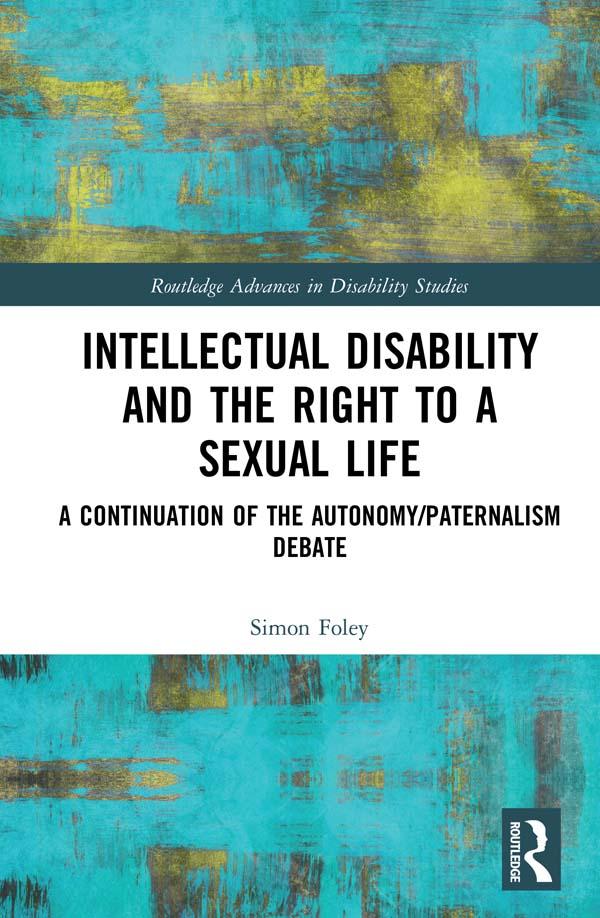
One of the perennial political/philosophical questions concerns whether it is ever justifiable for a third party to paternalistically restrict an adult’s freedom to ensure their own, or society’s, best interests are protected. Wherever one stands on this debate it remains the case that, unlike their non-impaired contemporaries, many intellectually disabled adults are subjected to a paternalistic regime of care. This is particularly the case regarding members of this population exercising more control of their sexuality.
Utilizing rare empirical data, Foucault's theory of power and Kristeva’s concept of abjection, this work shows that many non-disabled people – including family members – hold ambivalent attitudes towards people with visible disabilities expressing their sexuality. Through a careful examination of the autonomy/paternalism debate this is the first book to provide an original, provocative and philosophically compelling analysis to argue that where necessary, facilitated sex with prostitutes should be included as part of a new regime of care to ensure that sexual needs are met.
Intellectual Disability and the Right to a Sexual Life is essential reading for scholars, students and policy-makers with an interest in philosophy, sociology, political theory, social work, disability studies and sex studies. It will also be of interest to anybody who is a parent or a sibling of an adult with an intellectual disability and those with an interest in human rights and disability more generally.
Płać wygodnie kartą, Klarną, Apple Pay lub Google Pay. Nie jesteś zadowolony? Zawsze masz 14-dniową gwarancję zwrotu pieniędzy. Więcej przeczytasz w naszych warunkach. Masz pytania? Napisz do nas na hello@memmo.org.
Memmo ułatwia naukę – gdziekolwiek jesteś na świecie. U nas znajdziesz podręczniki i sprytne narzędzia do nauki w jednym miejscu: streszczenia, quizy, podcasty i fiszki. A do tego Ted, Twój kumpel do nauki, który odpowie na wszystko, co Cię nurtuje. Ponad 50 000 studentów już tu się uczy – stworzone, byś uczył się szybciej i mniej stresował.