
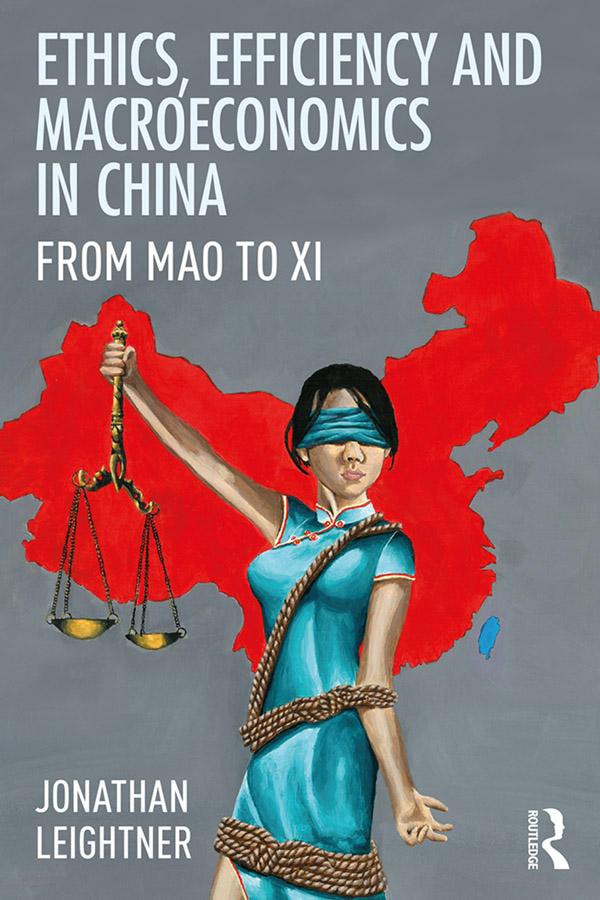
This book tells the story of how China’s leaders, from Mao to Xi, have sacrificed ethics to promote either macroeconomic performance or microeconomic efficiency. This story includes Mao’s collectivization of land, the Great Leap Forward, the Great Cultural Revolution, Deng’s opening China to international trade, Tiananmen Square, the freeing of prices, food and medicine scandals, the 2015 surge and collapse of the Chinese stock market, the falling of China’s foreign reserves, and so on. In 2008, China’s leaders correctly identified the best strategy as a "consumption-driven growth strategy" because the current world is suffering from a glut of savings. However, for that strategy to work, the Chinese need to be able to trust China’s economy and leaders. In the absence of trust, people will make decisions based on extremely short time frames which will hurt China’s long-run potential and continue to generate a series of speculative bubbles. In the absence of trust, wealthy Chinese will continue to move their assets abroad, putting tremendous downward pressure on the Chinese yuan. The Chinese will develop a long-run perspective and invest in China only when they can trust China’s future. In today’s world, trust is necessary. Trust is built on ethics.
Płać wygodnie kartą, Klarną, Apple Pay lub Google Pay. Nie jesteś zadowolony? Zawsze masz 14-dniową gwarancję zwrotu pieniędzy. Więcej przeczytasz w naszych warunkach. Masz pytania? Napisz do nas na hello@memmo.org.
Memmo ułatwia naukę – gdziekolwiek jesteś na świecie. U nas znajdziesz podręczniki i sprytne narzędzia do nauki w jednym miejscu: streszczenia, quizy, podcasty i fiszki. A do tego Ted, Twój kumpel do nauki, który odpowie na wszystko, co Cię nurtuje. Ponad 50 000 studentów już tu się uczy – stworzone, byś uczył się szybciej i mniej stresował.