
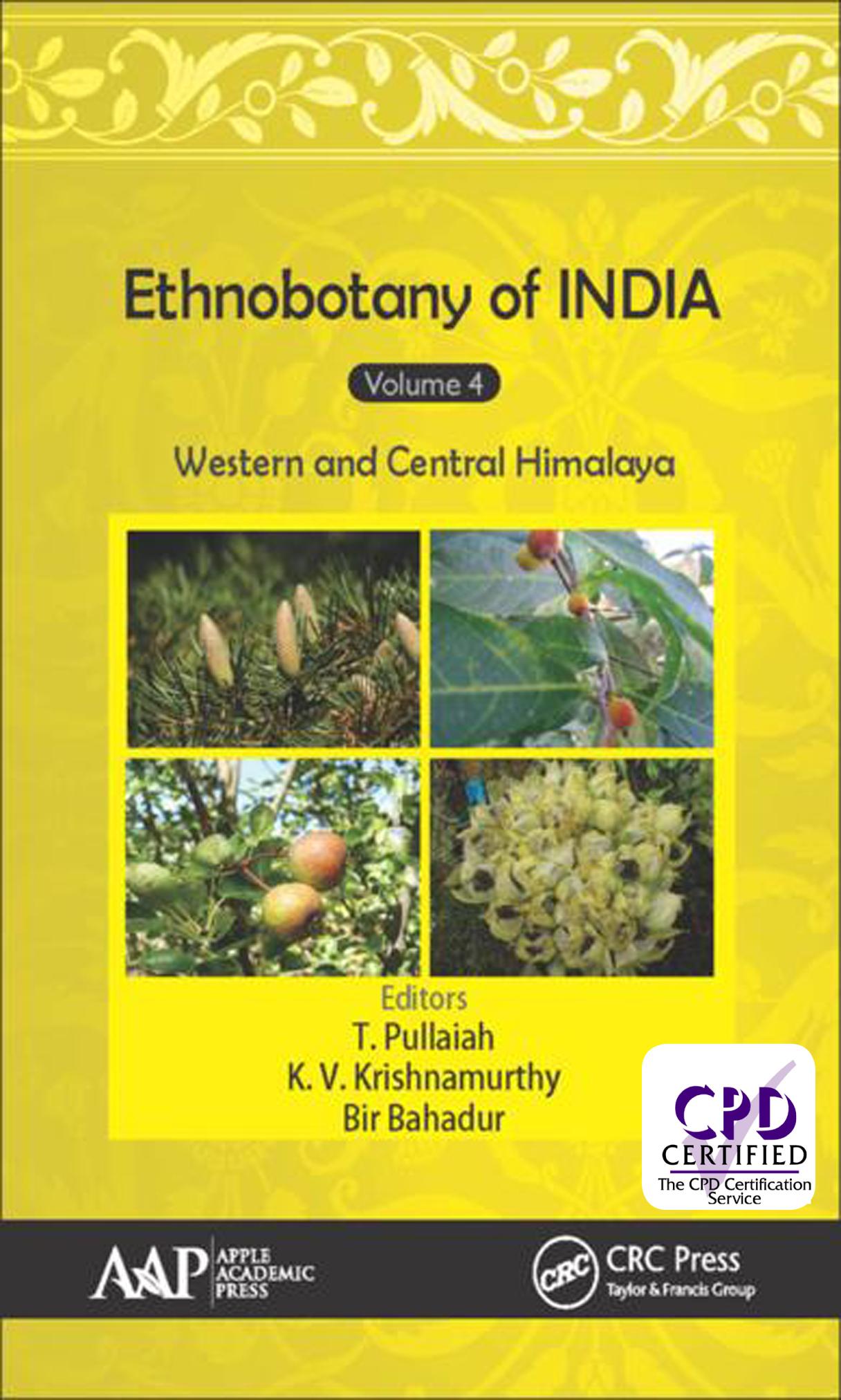
Ethnobotany of India: Volume 4: Western and Central Himalayas is the 4th volume of the 5-volume set, an informative book series on the ethnobotanical aspects of India. The books cover different regions, including
Volume 1: Eastern Ghats and Deccan
Volume 2: Western Ghats and West Coast of Peninsular India
Volume 3: North-East India and Andaman and Nicobar Islands
Volume 4: Western and Central Himalayas
Volume 5: The Indo-Gangetic Region
Each volume looks at the important ethnic plants of the specific region. Volume 4 covers the Western and Central Himalayas, the well-known mountain range on the Indian subcontinent. The unique flora and fauna of the Himalayas are varied, affected by climate, rainfall, altitude, and soils, and are vulnerable to impacts from climate change. The editors espouse that because indigenous non-Western societies form the vast majority of people now as well as in the past, a study of their plant interrelationships is necessary, and India is one of the most important regions of the old world for its ancient and culturally rich and diverse knowledge of ethnobotany. With this in mind, these volumes share a great deal of information that will be valuable to plant botanists and others working in and interested in ethnobotany.
This important volume covers the ethnobotanical aspects of many plants of the region. It looks at
- ethnic diversity of people
- ethnic food plants and food preparation
- ethnomedical aspects of plants
- psychedelic plants and their possible link to soma, a vedic ritual drink whose plant origins are a mystery
- ethnoveterinary medicinal plants
- ethno-conservation practices
- biodiversity heritage sites
The volume includes the details of the plants used, their scientific names, the parts used, and how the plants are used, providing the what, how, and why of plant usage. The book is well illustrated with 20 color and 67 b/w illustrations.
Together, the five volumes in the Ethnobotany of India series presents the available ethnobotanical knowledge of India in one place. India’s ancient and culturally rich and diverse information and use of ethnobotany will be valuable to those in the fields of botany and plant sciences, pharmacognosy and pharmacology, nutraceuticals, and others. The books also consider the threat to plant biodiversity imposed by environmental degradation, which impacts cultural diversity.
Płać wygodnie kartą, Klarną, Apple Pay lub Google Pay. Nie jesteś zadowolony? Zawsze masz 14-dniową gwarancję zwrotu pieniędzy. Więcej przeczytasz w naszych warunkach. Masz pytania? Napisz do nas na hello@memmo.org.
Memmo ułatwia naukę – gdziekolwiek jesteś na świecie. U nas znajdziesz podręczniki i sprytne narzędzia do nauki w jednym miejscu: streszczenia, quizy, podcasty i fiszki. A do tego Ted, Twój kumpel do nauki, który odpowie na wszystko, co Cię nurtuje. Ponad 50 000 studentów już tu się uczy – stworzone, byś uczył się szybciej i mniej stresował.